Kenya vs Tanzania Safari: Which Should You Choose?
Published 4 June 2026
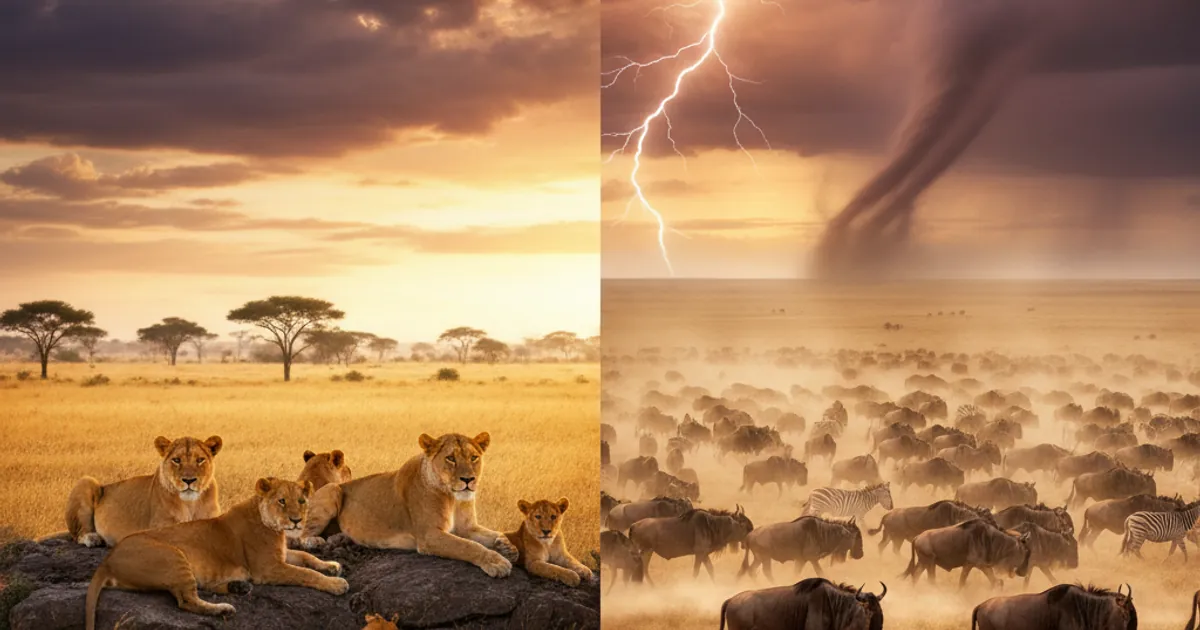
Kenya vs Tanzania: Africa's Two Great Safari Rivals
Kenya and Tanzania share borders, ecosystems, and even the Great Migration - yet they offer fundamentally different safari experiences. Choosing between them is one of the biggest decisions you'll make when planning an East African safari. This guide compares every aspect that matters, from wildlife and costs to infrastructure and beach add-ons, so you can pick the right country for your trip.
Wildlife: Where Will You See More?
Both countries are among the finest wildlife destinations on Earth. Tanzania has more total protected land area and arguably greater overall biodiversity, while Kenya's smaller, denser reserves can feel more action-packed per hour on a game drive.
Tanzania's Wildlife Edge
Tanzania's parks are vast. The Serengeti alone covers 14,750 km2 - larger than some European countries. This sheer space supports enormous populations of wildebeest (1.5 million during the migration), lions, cheetahs, and elephants. The Ngorongoro Crater is a self-contained ecosystem with one of the highest predator densities anywhere, and you're almost guaranteed Big Five sightings in a single day there.
Kenya's Wildlife Edge
Kenya's Masai Mara is famous for a reason: it packs incredible wildlife density into a relatively compact area (1,510 km2). You'll typically see more animals per game drive here than in the larger Serengeti. Kenya is also stronger for specific species - it's one of the best places for endangered Grevy's zebra (Samburu), reticulated giraffe, and large elephant herds (Amboseli against the backdrop of Kilimanjaro).
The Great Migration: Who Gets the Best Show?
The wildebeest migration is one continuous, circular journey. Where you see it depends on when you travel:
- January–March: Calving season in southern Serengeti (Tanzania). Hundreds of thousands of babies born in a few weeks - predator action is intense.
- April–June: Herds move through the western Serengeti corridor (Tanzania).
- July–October: The famous Mara River crossings - herds move between the northern Serengeti (Tanzania) and Masai Mara (Kenya). This is the iconic footage you've seen on TV.
- November–December: Herds return south through the eastern Serengeti (Tanzania).
Tanzania has the migration for roughly 9 months of the year; Kenya gets the spectacular river-crossing climax for about 3 months. If river crossings are your priority, Kenya (Aug–Oct) is the choice. For everything else, Tanzania.
Park Fees and Costs
This is where the two countries diverge significantly:
| Cost Factor | Kenya | Tanzania |
|---|---|---|
| Park fees (per person/day) | $60–80 | $70–82 (Serengeti/Ngorongoro) |
| Mid-range lodge (per person/night) | $250–500 | $350–600 |
| Luxury lodge (per person/night) | $600–1,500 | $800–2,500 |
| Budget safari (per person/day) | $150–250 | $200–350 |
| Internal flights | $100–250/sector | $200–500/sector |
| Visa | eTA ~$30–50 | $50 on arrival / e-Visa |
Verdict on cost: Kenya is generally 15–25% cheaper than Tanzania for a comparable experience, largely due to lower park fees and cheaper internal flights. Tanzania's park fees are the highest in Africa and add up quickly on multi-day itineraries.
Infrastructure and Accessibility
Kenya has better road infrastructure and shorter driving distances between parks. Nairobi is a major international hub with direct flights from London, New York, and many other cities. The Masai Mara is a 45-minute flight or 5-hour drive from Nairobi.
Tanzania requires more travel time between parks. The classic northern circuit (Serengeti, Ngorongoro, Tarangire, Lake Manyara) involves long driving days or multiple bush flights from Arusha. Kilimanjaro International Airport is the main gateway, though it has fewer direct international routes than Nairobi.
Crowds and Exclusivity
Both countries can feel crowded at peak times, but the experience differs:
- Kenya: The Masai Mara National Reserve itself can get very busy (Jul–Oct), with dozens of vehicles around a lion kill. However, Kenya's private conservancies (Olare Motorogi, Naboisho, Mara North) limit vehicle numbers and offer walking safaris and night drives - a much more exclusive experience.
- Tanzania: The Serengeti is so vast that crowding is rarely an issue outside of the central Seronera area. Ngorongoro Crater, however, has a limited number of vehicles allowed per day - yet it still feels busy because they're all in a relatively small area.
Head-to-Head: Parks Compared
Masai Mara (Kenya) vs Serengeti (Tanzania)
These two parks are actually one continuous ecosystem. The Mara is smaller but denser; the Serengeti is vast and varied. The Mara wins for concentrated action - you'll see more per hour. The Serengeti wins for epic scale and solitude, especially in the remote south and west. If you want river crossings, both deliver (Mara River crossings happen in both parks).
Amboseli (Kenya) vs Ngorongoro (Tanzania)
These aren't directly comparable but are both must-visit highlights. Amboseli offers the iconic elephant-against-Kilimanjaro shot and is relatively affordable. Ngorongoro Crater is a geological wonder with Big Five sightings almost guaranteed - but the steep fees and crater-floor vehicle limits make it expensive.
Beach Add-Ons
Both countries offer stunning Indian Ocean coastline:
- Kenya: Diani Beach and the Kenya coast - beautiful, well-developed, and easy to reach from Nairobi
- Tanzania: Zanzibar - the tropical island jewel with spice tours, Stone Town history, and pristine beaches. Generally considered the more exotic option.
Zanzibar is one of Tanzania's strongest selling points. A "bush and beach" combo of Serengeti + Zanzibar is one of Africa's classic itineraries.
Safety
Both countries are safe for tourists in safari areas. Nairobi and Dar es Salaam have typical big-city risks, but safari regions in both countries are well-managed and secure. For specific safety information, see our guides on safari safety in Kenya and safari safety in Tanzania.
When to Visit
Both countries share similar seasons with some nuances. Check our detailed guides for best time to visit Kenya and best time to visit Tanzania.
- Dry season (Jul–Oct): Peak game viewing in both countries. Migration crossings. Highest prices.
- Short rains (Nov–Dec): Quieter, good wildlife, green landscapes. Shoulder season pricing.
- Long rains (Mar–May): Wettest period, some camps close. Best prices.
- Dry warm season (Jan–Feb): Excellent time for both countries - calving season in Tanzania, good weather in Kenya.
The Verdict: Who Should Choose Which?
| You Should Choose... | Kenya If... | Tanzania If... |
|---|---|---|
| Budget | You want more for less | Money is no object |
| Experience | You want action-packed drives | You want epic wilderness and scale |
| Migration | You want river crossings (Aug–Oct) | You want the full cycle |
| Beach | Diani is enough for you | Zanzibar is on your bucket list |
| Time | You have 5–7 days | You have 8–14 days |
| Style | Conservancy exclusivity matters | You want vast, raw wilderness |
Still deciding? Compare the two countries side by side: explore Kenya and Tanzania on SafariAtlas, and browse parks, lodges, and wildlife for each destination.