Where to see Tawny Owl
The parks with the most verified sightings, out of 7 safari areas where it has been recorded.
- 1Place Al AMALRareLodges
Southwest Atlantic Coast & Souss Valley, Morocco · Rare
- 2Merja Zerga Biological ReserveRareLodges
Northwest Atlantic Coast, Morocco · Rare
- 3Parc National de ToubkalRareLodges
Central High Atlas & Marrakech Foothills, Morocco · Rare
- 4Réserve de RmilaRareLodges
Central High Atlas & Marrakech Foothills, Morocco · Rare
- 5Parc National de Souss-MassaRareLodges
Southwest Atlantic Coast & Souss Valley, Morocco · Rare
Common: 500+ verified sightings. Occasional: 50 to 499. Rare: under 50.
Tawny Owl facts
Quick facts
Facts sourced from Wikidata (CC0).
Tawny Owl: FAQs
Where can you see Tawny Owl on safari?
The parks with the most research-grade GBIF and iNaturalist records of Tawny Owl are Place Al AMAL, Merja Zerga Biological Reserve and Parc National de Toubkal. It is recorded in 7 safari areas in all.
Is the tawny owl endangered?
The IUCN Red List assesses the tawny owl as Least Concern.
Spotted something wrong? Suggest a correction
About the tawny owl
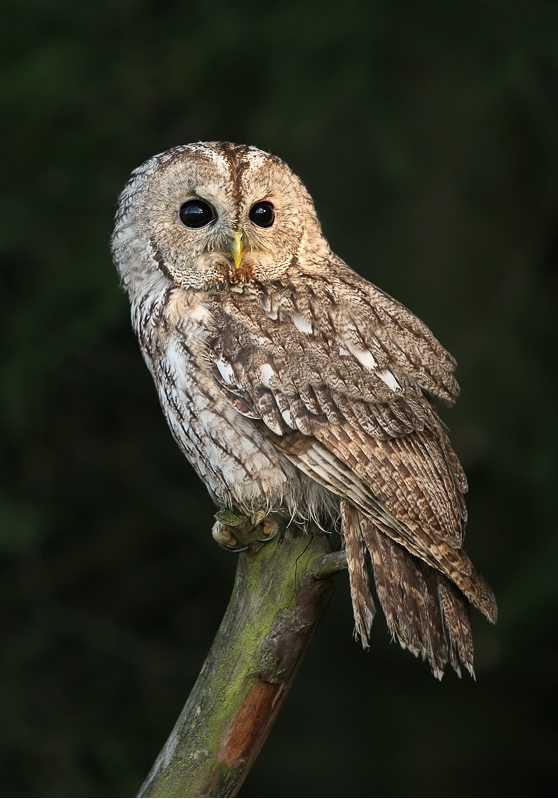
The tawny owl, also called the brown owl, is a stocky, medium-sized owl in the family Strigidae. It is commonly found in woodlands across Europe, as well as western Siberia, and has seven recognized subspecies. The tawny owl's underparts are pale with dark streaks, whilst its upper body may be either brown or grey. The tawny owl typically makes its nest in a tree hole where it can protect its eggs and young against potential predators. It is non-migratory and highly territorial: as a result, when young birds grow up and leave the parental nest, if they cannot find a vacant territory to claim as their own, they will often starve.
Adapted from Wikipedia, CC BY-SA 4.0.