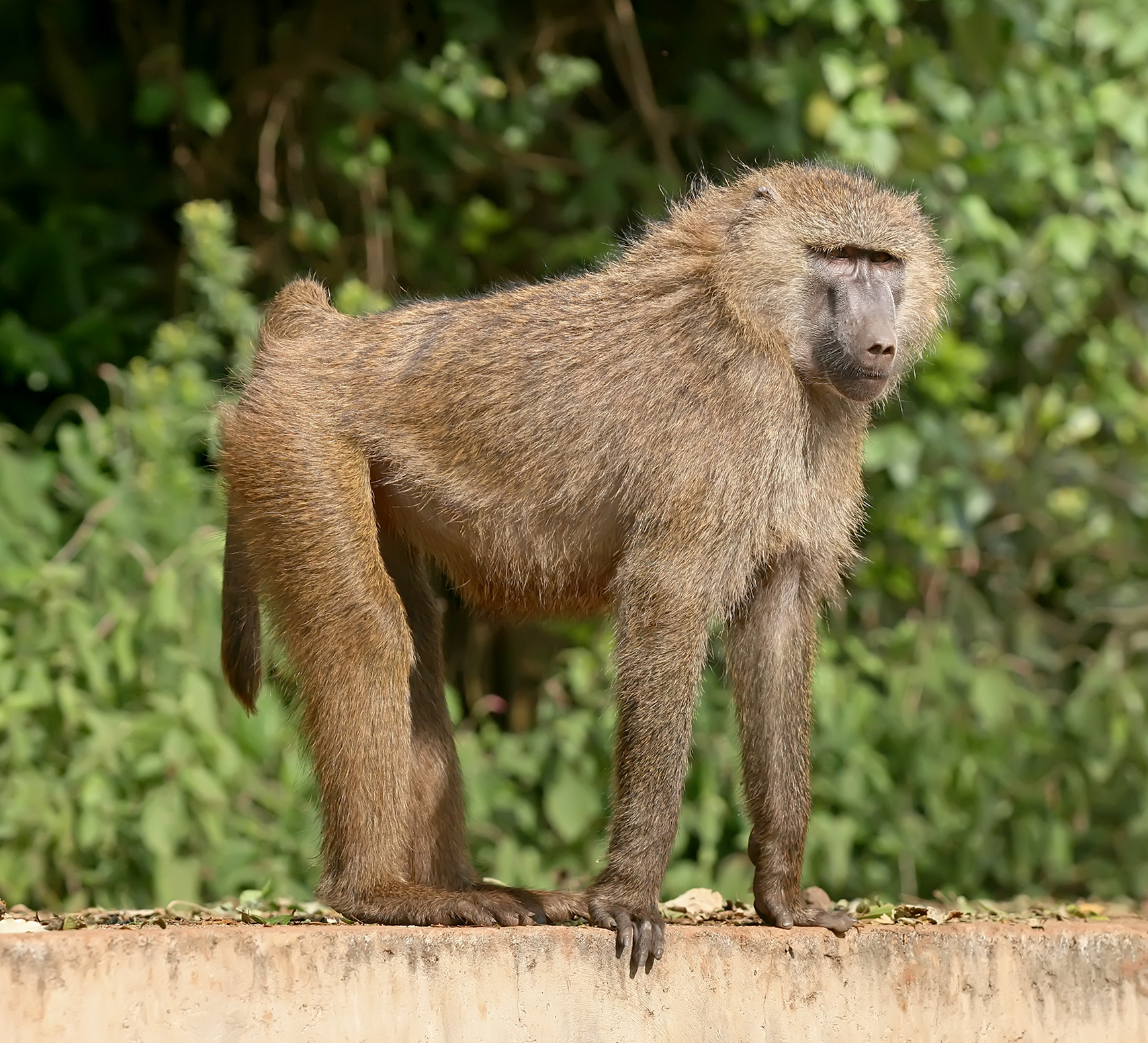
Where to see Olive Baboon
The parks with the most verified sightings, out of 121 safari areas where it has been recorded.
- 1Lake Manyara National ParkCommonLodges
Northern Tanzania Safari Circuit, Tanzania · Common
- 2Lake Nakuru National ParkCommonLodges
Rift Valley Lakes, Kenya · Common
- 3Menengai CraterCommonLodges
Rift Valley Lakes, Kenya · Common
- 4Manyara RanchCommonLodges
Northern Tanzania Safari Circuit, Tanzania · Common
- 5Queen Elizabeth National ParkOccasionalLodges
Western Rift Valley & Crater Lakes, Uganda · Occasional
Common: 500+ verified sightings. Occasional: 50 to 499. Rare: under 50.
We may earn a commission when you book through our partners. It never changes your price or our rankings. How we make money
Olive Baboon facts
Best months to spot
Most sightings recorded in Feb. Data from GBIF - a global database of verified wildlife observations by researchers and citizen scientists.
Olive Baboon: FAQs
Where can you see Olive Baboon on safari?
The parks with the most research-grade GBIF and iNaturalist records of Olive Baboon are Lake Manyara National Park, Lake Nakuru National Park and Menengai Crater. It is recorded in 121 safari areas in all.
Is the olive baboon endangered?
The IUCN Red List assesses the olive baboon as Least Concern.
When is the best time to see Olive Baboon?
Most sightings of Olive Baboon are logged in Feb, going by the months of research-grade records; it can be seen year-round where it lives.
Spotted something wrong? Suggest a correction
About the olive baboon
The olive baboon, also called the Anubis baboon, is a member of the family Cercopithecidae Old World monkeys. The species is the most wide-ranging of all baboons, being native to 25 countries throughout Africa, extending from Mali eastward to Ethiopia and Tanzania. Isolated populations are also present in some mountainous regions of the Sahara. It inhabits savannahs, steppes, and forests. The common name is derived from its coat colour, which is a shade of green-grey at a distance. A variety of communications, vocal and non-vocal, facilitate a complex social structure.
Adapted from Wikipedia, CC BY-SA 4.0.