Uganda Gorilla Trekking: The Complete Guide
Published 26 September 2026
Why Uganda for Gorilla Trekking?
Mountain gorilla trekking is one of the most profound wildlife experiences available anywhere on Earth. The sensation of sitting a few metres from a silverback gorilla in dense equatorial forest - watching him eat, groom, and interact with his family group while paying you a calm, evaluating glance - is the kind of encounter that permanently recalibrates how you think about other species and our relationship with them.
Of the world's approximately 1,063 mountain gorillas (as of the 2018 census, the most recent comprehensive count), all are confined to two areas: the Virunga Massif (shared between Uganda, Rwanda, and the Democratic Republic of Congo) and Bwindi Impenetrable Forest in Uganda. Uganda is home to more than half of the global mountain gorilla population, spread across multiple habituated groups across Bwindi and a smaller number at Mgahinga Gorilla National Park.
The choice between Uganda and Rwanda for gorilla trekking is primarily one of price and itinerary. Uganda's permits are more affordable ($700 USD per person as of 2025 versus $1,500 USD in Rwanda), and the broader Uganda itinerary - which typically includes chimpanzee tracking in Kibale Forest and savanna wildlife in Queen Elizabeth or Murchison Falls National Parks - offers more wildlife variety than a Rwanda-only trip. Our comparison of gorillas and chimpanzees, gorillas vs chimpanzees, covers the differences between these two great ape experiences in detail.
Bwindi Impenetrable National Park
Bwindi Impenetrable National Park is a UNESCO World Heritage Site and the primary destination for gorilla trekking in Uganda. The park covers approximately 321 square kilometres of montane and lowland tropical forest in south-western Uganda, and the "impenetrable" descriptor is well-earned - the vegetation is dense, the terrain is steep and slippery, and navigation without a guide would be impossible. The park is divided into four sectors - Buhoma (north), Rushaga (south), Ruhija (east), and Nkuringo (south-west) - each with habituated gorilla groups and trekking operations. Different sectors have different characters: Buhoma is the most established and has the best road access; Rushaga has the highest number of habituated groups and is a good choice when Buhoma permits sell out.
The forest itself is extraordinary beyond the gorillas. Bwindi is one of Africa's most biodiverse environments: over 350 bird species (including numerous Albertine Rift endemics), 120 mammal species, and 1,000 plant species. Afrocanarian weavers, African green broadbills, and the Shelley's Crimsonwing are among the species that draw dedicated birders to Bwindi independently of the gorillas. On the trail to the gorillas, red-tailed monkeys, black-and-white colobus, and L'Hoest's monkeys are commonly encountered.
Gorilla Permits: Everything You Need to Know
Gorilla permits must be obtained before your trek through the Uganda Wildlife Authority (UWA). As of 2025, a standard gorilla trekking permit in Uganda costs $700 USD per person. This grants you a single one-hour encounter with a habituated gorilla family group. The one-hour limit is strictly enforced - rangers manage the encounter carefully to minimise stress on the gorillas.
Permits for the peak season (June-September and December-February) sell out many months in advance - six to twelve months is not unusual for the most sought-after dates. The best strategy is to book through a licensed Ugandan safari operator who will secure your permits as part of an itinerary package. Solo permit booking directly through UWA is possible but requires more logistical planning.
A limited number of "gorilla habituation experience" permits are available at some sectors, allowing up to four hours with a semi-habituated group being acclimatised to human presence. These cost more than standard permits and offer a very different (and often more active and unpredictable) encounter. They are recommended for experienced gorilla trekkers or those wanting maximum immersion.
The Trek: What to Expect
Gorilla trekking is a genuine physical undertaking, and it is important to arrive with realistic expectations. The duration of the trek is entirely unpredictable - gorilla groups move through their ranges overnight, and your starting point on the morning of the trek will be the last known location from the previous day's tracking. On a good day, you might find the gorillas within 30-45 minutes and be back at camp by lunchtime. On a challenging day, you might trek for four to six hours through steep, muddy forest before locating the group.
Physical fitness and mobility are important. The terrain at Bwindi is uneven, slippery when wet (which is frequent - the park receives high rainfall year-round), and often requires ducking under vegetation, scrambling up slopes, and crossing streams on improvised bridges. The altitude at Bwindi ranges from approximately 1,160 to 2,607 metres above sea level. Most of the habituated group locations are at moderate altitudes (1,500-2,000 metres), but the ascents can be significant. Porters are available at each sector and are strongly recommended - they carry your bag, help you through difficult terrain, and provide a supplemental income for local communities.
Essential kit for the trek: solid waterproof hiking boots with ankle support (non-negotiable), long-sleeved shirt and long trousers (to protect against nettles and insects), waterproof jacket, gardening gloves (useful for gripping vegetation), high-SPF sunscreen, rain cover for your camera bag, insect repellent, and sufficient water and snacks. Cameras must not use flash within sight of the gorillas.
The Encounter Itself
When the rangers locate the gorilla group and signal that you can approach, the experience begins with a briefing from the lead ranger setting ground rules: stay at least 7 metres from the gorillas at all times (a rule that silverbacks occasionally override by approaching you), do not make direct eye contact with the silverback, keep noise to a minimum, and do not eat food near the group. Then you enter the undergrowth and encounter the family.
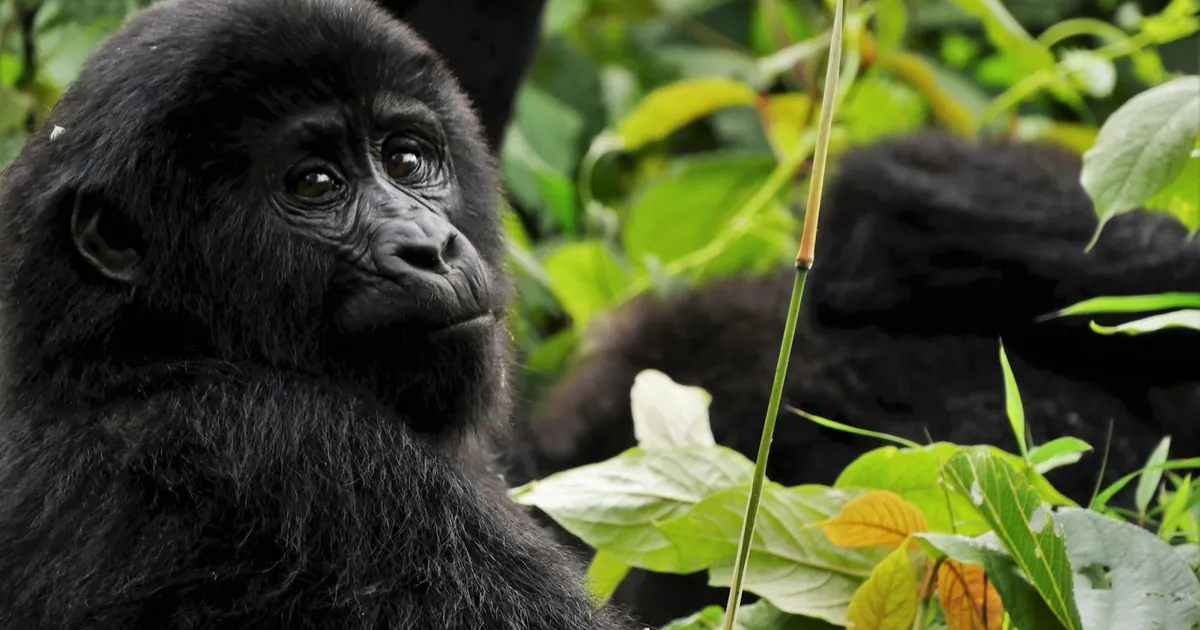
Mountain gorilla families range from small groups of six or seven individuals to large troops of twenty or more. You will typically see the dominant silverback, multiple adult females, juveniles of various ages (energetic, curious, and often the most entertaining), and infants clinging to their mothers or learning to navigate independently. The silverback is usually the calmest individual in the group, monitoring your presence periodically but largely ignoring you if you behave non-threateningly. The encounter is simultaneously intimate and awe-inspiring in a way that photographs fail to fully convey.
Photography is of course the primary activity during the hour, and it is challenging - the light under the forest canopy is low and variable, the animals move unpredictably, and the vegetation frequently obscures clear lines of sight. A lens in the 70-200mm range at f/2.8 or a similar fast telephoto is the standard recommendation; the 24-70mm zoom is useful for the wider environmental shots when gorillas are in clearings. Expect a high proportion of unsuccessful frames and a handful of extraordinary ones.
Best Time to Go
Mountain gorillas can be trekked year-round at Bwindi - the park does not close in wet season. However, the trek experience varies significantly by season. The two main dry seasons - June to September and December to February - offer the most comfortable conditions: drier trails, clearer skies, and more predictable terrain. These months are the most popular and most expensive, with permits selling out furthest in advance.
The wet seasons (March-May and October-November) make the trails slippery and the trek more physically demanding, but also greener, quieter, and considerably cheaper for surrounding accommodation. The gorillas are just as present and habituated - rainfall makes no difference to permit availability or encounter quality. For physically fit travellers who are flexible on conditions, the wet season represents excellent value.
Combining Gorilla Trekking with Other Uganda Wildlife
Uganda is often underestimated as a safari destination, but it offers an exceptional wildlife itinerary beyond gorillas. A classic two-week Uganda circuit typically includes:
- Kibale Forest National Park: The best chimpanzee tracking experience in Africa, with large, well-habituated communities and a very high encounter rate. Also home to twelve other primate species including red colobus, L'Hoest's monkeys, and grey-cheeked mangabeys.
- Queen Elizabeth National Park: Uganda's most visited national park for savanna wildlife, famous for the tree-climbing lions of the Ishasha sector and large hippo pods along the Kazinga Channel. Also good for buffalo, elephant, and Ugandan kob.
- Murchison Falls National Park: Uganda's largest national park, combining the dramatic Murchison Falls (the Nile compressed through a 7-metre-wide gap) with excellent savanna wildlife: lions, leopards, giraffes, buffalo, and the enormous Nile crocodile concentrations below the falls.
- Bwindi for gorillas: Typically two to three nights to allow acclimatisation and a single permit day, with optional additional permits for a second trek.
A well-constructed Uganda itinerary can deliver three primate species (gorillas, chimpanzees, and multiple others), savanna Big Five wildlife, extraordinary birding (Uganda has over 1,000 recorded bird species, second highest in Africa), and the dramatic waterfall and river scenery of the Nile in two weeks or less.
Getting to Bwindi
Bwindi is in the far south-west of Uganda, approximately 8-9 hours by road from Kampala or 5-6 hours from Entebbe. Scheduled charter flights connect Entebbe with Kihihi or Kisoro airstrips (near Bwindi), making it realistic to fly in and fly out if your budget allows. Road transfers are used by the majority of visitors and pass through the Rift Valley and tea plantations of Kabale - scenic in their own right. Accommodation around Bwindi ranges from budget guesthouses in Buhoma village to highly acclaimed luxury lodges positioned just outside the park boundary with views over the forest canopy.