Self-Drive vs Guided Safari: Which Is Right for You?
Published 4 August 2026
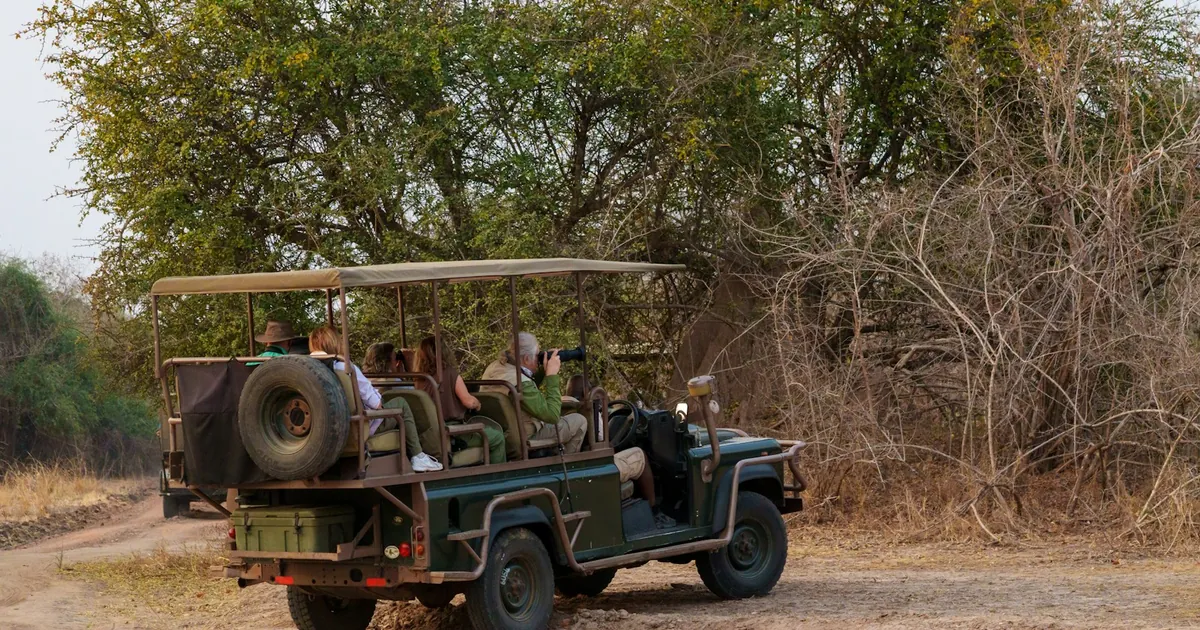
Two Very Different Ways to Experience the Bush
Africa offers two fundamentally different approaches to safari: you drive yourself, or you go with a professional guide. Both can deliver extraordinary wildlife experiences. Both have genuine disadvantages. And the right choice depends on where you are going, your experience level, your budget, and what kind of holiday you want.
Self-drive safari is a legitimate and deeply satisfying way to experience African wildlife - particularly in Namibia and South Africa, where road infrastructure, park signage, and traveller support systems make it genuinely accessible to visitors without prior experience. Guided safari, by contrast, offers expertise, exclusivity, and access to areas and activities that self-drive visitors simply cannot reach.
This guide covers the practical trade-offs of each approach - cost, experience quality, safety, flexibility, and the destinations where each works best.
The Case for Self-Drive Safari
You Set the Pace
The single greatest advantage of self-drive is freedom. You leave camp when you want. You park at a lion sighting for three hours if you choose. You skip the species you are less interested in and wait patiently at a waterhole that catches your attention. There is no group dynamic to manage, no schedule to maintain, no guide quietly looking at his watch when you want to spend another ten minutes watching a dung beetle. For visitors who want complete autonomy, self-drive is the only way to achieve it.
Cost
Self-drive safari is considerably cheaper than guided safari at comparable quality parks. In South Africa's Kruger National Park or Namibia's Etosha, you pay entrance fees, your accommodation at camp, your fuel, and your food. There is no guide fee, no concession fee, and no camp markup on a guided game drive. A couple doing a well-planned two-week self-drive through South Africa or Namibia can have an excellent wildlife experience for a fraction of the cost of a comparable guided itinerary. For detailed cost comparison, the safari cost guide breaks down what each approach costs across different destinations.
Best Destinations for Self-Drive
Self-drive safari works best where park roads are well-maintained, signage is clear, wildlife is reliably visible from roads (rather than requiring expert tracking), accommodation is available within the park, and safety protocols are clear and enforced. The best self-drive destinations in Africa are:
- Kruger National Park, South Africa: Africa's most self-drive-friendly park. Excellent tar and gravel roads, 24 accommodation options within the park, comprehensive wildlife guides, mobile signal, and wildlife so abundant that even a novice visitor will see an impressive species list without specialist tracking skills.
- Etosha National Park, Namibia: Three floodlit waterholes at rest camps, straightforward gravel road network, and waterhole-centric wildlife behaviour that makes finding game predictable. Namibia overall is the gold standard for independent travel in Africa - English widely spoken, infrastructure excellent, distances manageable. For more on Etosha specifically, the Namibia safari guide covers the park and surrounding region in detail.
- Addo Elephant National Park, South Africa: Compact, well-signposted, and with extraordinarily dense Big Five wildlife including the highest elephant and buffalo densities of any South African park. An excellent self-drive destination for families or first-timers who want high encounter rates in a contained area.
- Pilanesberg National Park, South Africa: Closest Big Five park to Johannesburg, easily driveable from the city as a day trip or short overnight. A good introduction to self-drive safari for those new to Africa.
The Case for Guided Safari
Expert Knowledge
A professional safari guide brings decades of bush knowledge that no guidebook can replicate. Reading tracks and spoor. Identifying distant animals from their shape, gait, or dust cloud. Understanding wind direction and positioning. Knowing which termite mound a leopard uses as a lookout every evening. Interpreting animal behaviour in real time - this is a stress response, that is an alert, this means a hunt may be imminent. The difference between a sighting and an understanding of what you are witnessing is almost entirely determined by who is explaining it to you.
In parks where off-road driving is permitted (most private concessions in Botswana, many conservancies in Kenya), a guide can track animals into areas inaccessible from established roads. In parks where walking safaris operate, only a licensed guide can take you on foot. These experiences simply do not exist in the self-drive framework.
Access to Remote Areas
Some of Africa's most celebrated wildlife areas have no self-drive option. Botswana's Okavango Delta requires a guide and a mokoro or motorboat. Zambia's South Luangwa walking safari tradition is built around licensed professional guides. The conservancies surrounding Kenya's Masai Mara, which offer off-road driving and night drives unavailable in the national reserve itself, operate exclusively with camp guides. If your wildlife priorities include these experiences, self-drive is simply not an option.
Safety
In high-density predator areas - particularly parks with large lion populations and remote terrain - a professional guide provides a genuine safety margin that a self-drive visitor lacks. Breakdown protocols, animal behaviour interpretation, and the ability to extract a vehicle from difficult situations are not things a first-time visitor can improvise. Most deaths and serious injuries involving wildlife and tourists involve self-drive visitors who misjudged distances, got out of their vehicle, or failed to recognise a threat signal.
Cost Comparison
The cost differential between self-drive and guided safari is significant. A rough comparison:
- Self-drive Kruger, South Africa: Park fees roughly R400-500 per adult per day, accommodation R600-2,500 per night for a rest camp chalet. Total for two people over seven nights: approximately R15,000-25,000 ($800-1,400 USD at current rates).
- Guided safari, Kruger-adjacent private reserve: All-inclusive guided camps typically start at $400-700 USD per person per night, rising to $1,000-1,500 USD at premium properties. Seven nights for two people: $5,600-21,000 USD.
- Self-drive Etosha, Namibia: Park fees NAD150 per person plus NAD100 per vehicle, NWR camp accommodation NAD800-2,000 per night. Total for two over seven nights: approximately NAD12,000-18,000 ($650-1,000 USD).
The cost difference is real and substantial. Whether it represents value depends entirely on what you want from the experience.
Hybrid Approaches
Self-drive and guided safari are not mutually exclusive. Many visitors combine both within a single itinerary:
- Self-drive through Etosha or Kruger for three to four days, then transition to an all-inclusive guided camp in a private reserve or concession for the remainder of the trip.
- Book a guided walking safari for two nights in Zambia or Botswana, then self-drive between cities independently.
- Use guided game drives at camp as the primary activity but rent a car for independent day trips to secondary areas.
This hybrid model is increasingly popular and gives visitors the best of both worlds - expert guidance where it matters most, and independent exploration where the park infrastructure makes self-drive practical and rewarding.
Which Should You Choose?
Choose self-drive if: you are visiting South Africa's Kruger or Namibia's Etosha, you are on a tighter budget, you value freedom and flexibility above guided expertise, and you have reasonable road confidence.
Choose guided safari if: you are visiting Botswana, Zambia, remote Kenya conservancies, or any park where walking safaris are the primary draw; you are visiting Africa for the first time and want your sightings explained in depth; or you want access to activities (night drives, walking, mokoro, boat) that require professional supervision.
Either way, the experience of watching Africa's wildlife in its natural environment - on your own terms or with an expert beside you - is one that justifies the journey entirely.