15 Facts About the African Elephant: Giant of the Savanna
Published 26 August 2026
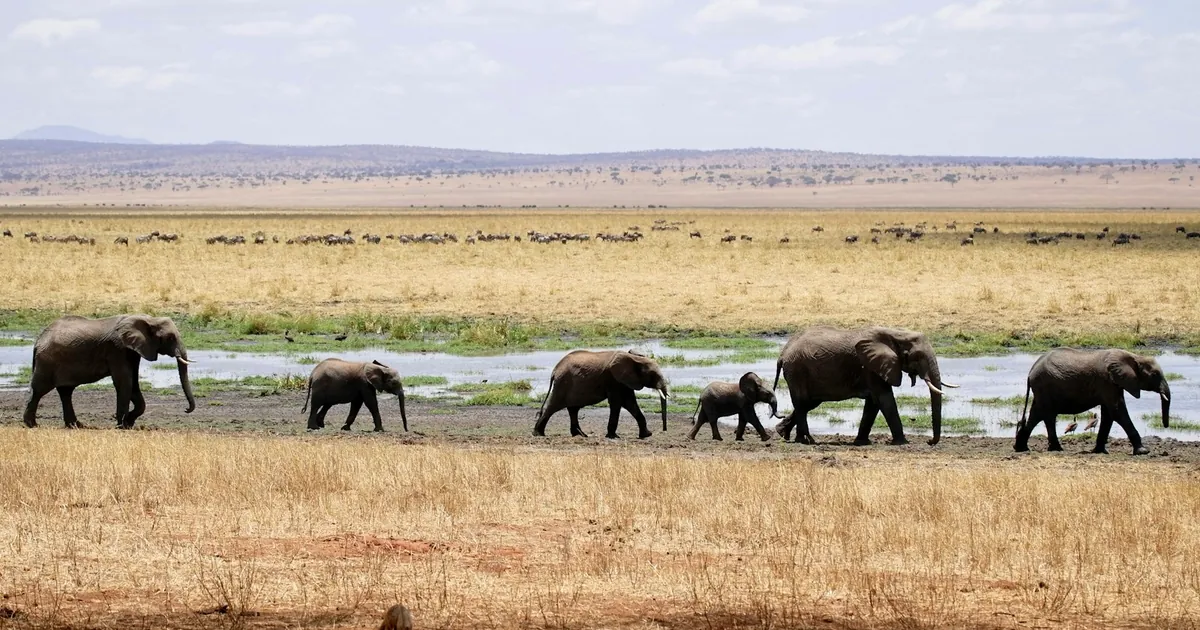
Why Elephants Define the African Safari
No other animal signals Africa quite like an elephant. Whether seen silhouetted against a sunset sky, wading through a floodplain river, or standing their ground on a dusty track, African elephants carry a presence that is simply incomparable. They are the largest land animals on Earth, the most ecologically influential herbivores on the continent, and by any measure one of the most cognitively sophisticated non-human animals alive.
A full encounter with a wild elephant herd - particularly if you are on foot or in an open vehicle with the engine off - is the kind of experience that rewires how you think about the animal kingdom. This guide covers fifteen facts that will enrich every sighting.
1. There Are Two Distinct African Elephant Species
For most of the twentieth century, scientists recognised a single species of African elephant. Genetic analysis in 2001 confirmed what field researchers had long suspected: there are two species. The African savanna elephant (Loxodonta africana) is the world's largest land animal, found across sub-Saharan savannas. The African forest elephant (Loxodonta cyclotis), smaller and darker with straighter, downward-pointing tusks, inhabits the rainforests of Central and West Africa. The two species have been diverging for 2-7 million years and rarely overlap.
Most safari-goers see the savanna elephant. The forest elephant is far harder to observe and faces an even more acute poaching crisis.
2. They Are the Largest Land Animals on Earth
Adult male savanna elephants (bulls) typically weigh 4,000-6,000 kg and stand 3.2-4 metres at the shoulder. The largest individual on record, shot in Angola in 1974, weighed an estimated 10,400 kg. Females (cows) are considerably smaller, typically reaching 2,500-3,500 kg. Despite their mass, elephants can move at up to 25 km/h - fast enough to outrun a sprinting human over rough ground.
3. The Trunk Is One of Nature's Most Versatile Tools
An elephant's trunk contains around 40,000 individual muscles and no bones. It functions simultaneously as a nose (with an extraordinarily sensitive sense of smell), a hand (capable of picking up a single blade of grass or lifting a 300 kg log), a drinking vessel (holding up to 12 litres per load), a snorkel, a trumpet, and a sensory organ that detects vibrations through the ground. Young elephants spend years learning to control their trunks; calves are often seen swinging them playfully before mastering fine motor control.
4. Elephant Memory Is Not a Myth
The popular saying holds up under scientific scrutiny. Elephants recognise individual humans, other elephants, and specific locations after decades of separation. Field researchers have documented family groups making detours of many kilometres to visit the bones of deceased relatives - pausing to touch them with their trunks in what appears to be a form of grief behaviour. Matriarchs (the eldest females who lead herds) retain mental maps of dry-season water sources, migration corridors, and safe refuges that have kept their families alive through multiple severe droughts. This accumulated knowledge is irreplaceable; when a matriarch is poached, her entire herd loses decades of survival intelligence.
5. Elephants Are Ecosystem Engineers
Few animals reshape the physical landscape as dramatically as elephants. They knock over trees to access bark and branches, opening dense woodland into mixed savanna that benefits grazers. They dig waterholes during droughts that sustain dozens of other species. Their dung seeds an estimated 30% of tree species in some African forests. Their paths become permanent tracks and roads. Without elephants, many African ecosystems would look entirely different, and biodiversity would almost certainly decline. Conservationists call them a "keystone species" - remove them and the entire structure shifts.
6. A Herd Is Led by the Oldest Female
African elephant herds are matriarchal. A typical family group consists of a matriarch, her daughters, and their offspring - usually 10-20 animals, though larger aggregations are common near water. Adult males live largely solitary lives or in small bachelor groups, joining females only for mating. The matriarch's experience is central to herd survival; studies in Amboseli, Kenya have shown that herds with older matriarchs show significantly better responses to predator calls and poaching threats than herds led by younger females.
7. Elephants Communicate Through Infrasound
Much elephant communication takes place below the threshold of human hearing. Infrasound calls - deep rumbles at frequencies as low as 14 Hz - travel through the ground and air, carrying information about location, emotional state, and reproductive readiness across distances of up to 10 kilometres. Elephants detect these rumbles through both their ears and the vibration-sensitive pads in their feet. An elephant standing motionless, leaning slightly forward with its feet flat on the ground, is often "listening" to a distant call inaudible to human observers.
8. Tusks Are Modified Incisor Teeth - and Grow Throughout Life
Elephant tusks are elongated upper incisor teeth that continue growing for an elephant's entire life. In large old bulls, tusks can exceed 3 metres in length and weigh over 100 kg each. Most elephants are either right- or left-tusked (analogous to human handedness), and the dominant tusk is typically shorter and more worn. Elephants use tusks to dig for water and minerals, strip bark, lever logs, and as weapons in combat. The African ivory trade drove catastrophic declines in elephant populations throughout the twentieth century and remains a threat today despite international bans.
9. Elephants Eat for Up to 18 Hours a Day
Sustaining a body of several tonnes requires prodigious fuel. Adult elephants consume 150-300 kg of vegetation daily - grass, bark, roots, fruits, and leaves - and drink 150-200 litres of water. Because their digestive systems are relatively inefficient (only about 45% of food is properly digested), they must spend the majority of their waking hours eating and moving between feeding areas. This near-constant movement over large home ranges - often 50-100 km per day for bulls during the dry season - is part of why elephants need vast, connected landscapes to survive.
10. Botswana Hosts the World's Largest Elephant Population
Botswana is estimated to hold around 130,000 African savanna elephants - more than any other country on Earth and roughly a third of the continental total. The Okavango Delta and Chobe National Park are world-famous for elephant concentrations, with game drives often producing sightings of hundreds of animals at a single waterhole. For a deeper comparison of elephant destinations, the Botswana vs South Africa safari guide breaks down what each country offers wildlife photographers and first-time safari-goers alike.
11. They Grieve and Show Empathy
Elephants display behaviours associated with grief, empathy, and self-awareness that are rare in the animal kingdom. Bereaved family members return repeatedly to the bones of the dead, touching skulls with their trunks and standing in apparent contemplation. Elephants comfort distressed companions with touch and low rumbles. They react differently to the calls of deceased family members played back through speakers than to strangers - suggesting something akin to recognition of the individual after death. Whether this constitutes "grief" in a human sense is debated; what is not debated is that the behaviours are extraordinary.
12. Calves Are Born After the Longest Gestation of Any Land Mammal
An elephant cow carries her calf for approximately 22 months - nearly two years. It is the longest gestation period of any land mammal. Calves are born weighing 90-120 kg and are mobile within hours of birth. They are raised communally; females in the herd (allomothers) assist with calf supervision, allowing the mother to eat and rest. Calves nurse for 3-5 years and remain closely bonded to the herd for decades.
13. They Have a Heat-Regulatory Superpower in Their Ears
An African elephant's ears are roughly the shape of the African continent and serve a critical physiological purpose beyond hearing. A dense network of blood vessels runs close to the thin skin of the ear. When an elephant fans its ears rapidly, blood circulating through these vessels is cooled by up to 9 degrees Celsius before returning to the core body. On hot days, you will frequently see elephants flapping their ears rhythmically - a built-in air conditioning system serving an animal with no sweat glands.
14. Elephants Face a Complex Conservation Picture
African elephant populations partially recovered after the 1989 international ivory trade ban, rising from an estimated 350,000 to over 400,000 by 2010. But a sharp resurgence in poaching from 2010-2016 - driven primarily by Asian demand - killed an estimated 100,000 elephants in just three years. Today, populations are again growing in some Southern African countries (particularly Botswana and Zimbabwe) while remaining critically threatened in East and West Africa. For the full context, see our overview of the Big Five safari animals and the threats each faces.
15. The Best Time to See Elephants Is During the Dry Season
Elephants concentrate around permanent water sources during the dry season when other water has evaporated. This predictability makes game drives during these months (typically June-October in East and Southern Africa) highly productive for elephant sightings. Waterholes at parks like Chobe and Etosha can attract hundreds of animals in a single afternoon.
Where to See African Elephants
Beyond Botswana, exceptional elephant sightings are possible across Southern and East Africa. The African savanna elephant species profile on SafariPlnr lists every major population, best sighting months by country, and which parks offer the most intimate encounters - from Chobe's famous boat safaris to Amboseli's backdrop of Kilimanjaro.
- Chobe National Park, Botswana - river cruises past herds of 300+
- Amboseli National Park, Kenya - bull elephants under Kilimanjaro
- Hwange National Park, Zimbabwe - one of Africa's highest densities
- Addo Elephant National Park, South Africa - Big Five reserve specifically established to protect elephants
- Tarangire National Park, Tanzania - November-May gathering of thousands
Few wildlife experiences on Earth match watching a large elephant herd move through African savanna at dusk. Planning your visit around the dry season and choosing a park with a known concentration will maximise your chances of witnessing the full social spectacle that makes these animals so unforgettable.