Botswana vs South Africa Safari: Compared
Published 12 June 2026
Two Philosophies of Safari
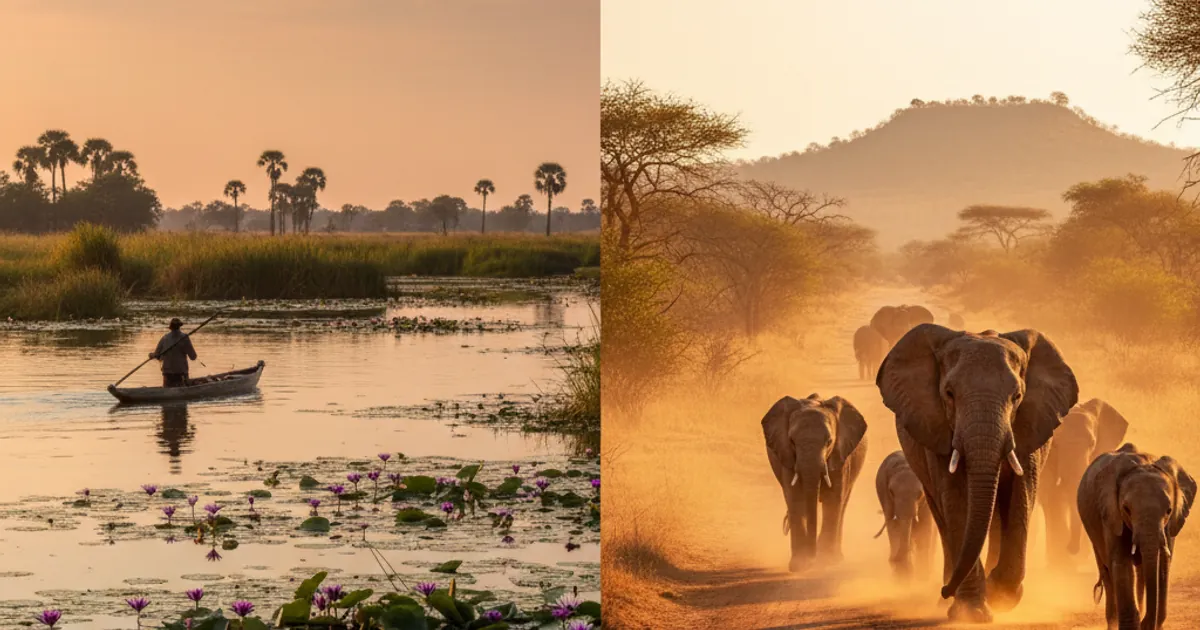
Botswana and South Africa represent two radically different approaches to safari tourism. Botswana embraces a high-cost, low-volume model that keeps visitor numbers low and wilderness pristine. South Africa offers the most accessible safari experience in Africa - self-drive friendly, family-oriented, and available at every price point. Both are world-class. The right choice depends entirely on what you want from your safari.
Botswana: The Exclusive Wilderness
Botswana has deliberately positioned itself at the premium end of the safari market. Government policy limits the number of beds in national parks and concessions, which means fewer tourists, less vehicle traffic, and a genuine sense of being alone in the wild. The trade-off is cost: a mid-range Botswana safari starts at around $400–800 per person per day, and luxury camps in the Okavango Delta routinely charge $1,500–3,000 per night.
What you get for that money is extraordinary. The Okavango Delta is one of Africa's most unique ecosystems - a vast inland delta where crystal-clear channels weave through papyrus islands, and you explore by traditional mokoro (dugout canoe) as elephants wade through the shallows. Chobe National Park has the largest elephant concentration in Africa - herds of 50–100 are routine. The Kalahari offers desert-adapted wildlife and Bushmen cultural experiences.
Botswana's Strengths
- Exclusivity: Fewer tourists means more intimate wildlife encounters. Some camps see no other vehicles all day.
- Water-based safaris: Mokoro rides, boat cruises, and island-hopping are unique to the Delta.
- Untouched wilderness: Vast areas with no roads, no fences, and no development.
- Community tourism: Strong partnerships with local communities, especially in the Delta concessions.
- Wild dog populations: Some of Africa's healthiest wild dog packs roam the Linyanti and northern Botswana.
Botswana's Drawbacks
- Cost: Botswana is one of the most expensive safari destinations in Africa. Budget options exist (self-drive through Chobe or Makgadikgadi) but are limited.
- Accessibility: Many camps are fly-in only. Bush flights add $200–600 per sector.
- Not ideal for self-drive beginners: Remote areas, deep sand tracks, and limited infrastructure make self-driving challenging outside of a few parks.
- Malaria risk: Present across most safari areas, year-round. Prophylaxis required.
South Africa: The Accessible All-Rounder
South Africa is where most people start their safari journey, and for good reason. Kruger National Park is arguably the world's best self-drive safari destination - a park the size of Wales with paved roads, affordable rest camps, petrol stations, and an app that helps you find animals. You can experience world-class Big Five viewing for under $100 per person per day.
Beyond Kruger, South Africa's private reserves (Sabi Sand, Timbavati, Klaserie) offer luxury experiences that rival anything in Africa. These unfenced reserves share boundaries with Kruger, so animals move freely, but vehicle numbers are strictly limited. This is where you go for close leopard sightings, exclusive bush dining, and some of the continent's finest lodges.
South Africa's Strengths
- Self-drive paradise: Excellent road infrastructure, well-marked routes, and comprehensive facilities inside national parks.
- Every budget: From $30/night rest camp huts to $3,000/night ultra-luxury suites - South Africa caters to everyone.
- Malaria-free options: Several excellent reserves (Madikwe, Shamwari, Phinda, Pilanesberg, Eastern Cape reserves) are completely malaria-free - ideal for families with young children.
- Family-friendly: Many lodges welcome children of all ages, with dedicated kids' programs, child-friendly game drives, and family suites.
- Infrastructure: Direct international flights to Johannesburg and Cape Town, excellent domestic flight network, reliable roads.
- Diversity beyond safari: Cape Town, the Winelands, the Garden Route, and the Drakensberg add non-safari experiences to your trip.
South Africa's Drawbacks
- Crowds in Kruger: During school holidays (especially July, December), Kruger's main roads and popular waterholes can feel busy.
- Fenced parks: Most national parks (including Kruger) are fenced, which some purists feel diminishes the wilderness experience.
- Less "wild" feel: Paved roads and rest camp shops are convenient but can feel less adventurous than Botswana's fly-in camps.
- Crime concerns: While safari areas are very safe, Johannesburg and some urban areas require standard big-city precautions.
Parks Compared
Okavango Delta (Botswana) vs Kruger (South Africa)
These are not really comparable - they're completely different experiences. The Okavango Delta is a water wilderness explored by mokoro and motorboat, with islands, channels, and floodplains. Kruger is a classic bushveld park with extensive road networks. The Delta is fly-in, exclusive, and expensive. Kruger is drive-in, accessible, and affordable. If you can only do one Southern African safari, Kruger offers more reliable Big Five sighting opportunities at a fraction of the cost. If you've done Kruger and want something completely different, the Delta is magical.
Chobe (Botswana) vs Sabi Sand (South Africa)
Chobe is famous for vast elephant herds and river-based game viewing. Sabi Sand is famous for the best leopard sightings in Africa and exclusive, vehicle-limited traversing areas. Chobe has the spectacle of hundreds of elephants; Sabi Sand has the intimacy of a leopard at 5 metres. Both are bucket-list experiences.
The Comparison Table
| Factor | Botswana | South Africa |
|---|---|---|
| Budget per day | $400–3,000+ | $100–3,000+ |
| Self-drive | Difficult (remote, sand tracks) | Excellent (Kruger, Etosha) |
| Big Five | Good (rhino harder to find) | Excellent (all five reliable) |
| Exclusivity | Very high (few vehicles) | Varies (private reserves = exclusive) |
| Malaria risk | Present across safari areas | Malaria-free options available |
| Family-friendly | Limited (age restrictions at many camps) | Excellent (all-ages options) |
| Water safaris | World-class (mokoro, boats) | Limited |
| Birdlife | Exceptional (Delta = 500+ species) | Excellent (Kruger = 500+ species) |
| Accessibility | Fly-in for most camps | Drive from Johannesburg (5hrs to Kruger) |
Which Should You Choose?
Choose Botswana if: You want the ultimate exclusive wilderness experience, water-based safaris, minimal tourist crowds, and budget isn't your primary concern. Ideal for repeat safari visitors looking for something different and travellers seeking genuine remoteness.
Choose South Africa if: You're a first-time safari visitor, travelling with family (especially young children), want self-drive flexibility, need malaria-free options, or want to combine safari with other experiences (Cape Town, wine country, coast). Also the clear choice for budget-conscious travellers.
The dream combination: Many travellers combine both - a self-drive week in Kruger followed by a 3-night fly-in to the Okavango Delta. This gives you accessibility, affordability, and exclusivity in one trip.
Explore both destinations: Browse Botswana and South Africa on SafariAtlas to compare parks, lodges, and wildlife. Read about staying safe in South Africa and discover malaria-free safari parks across the continent.