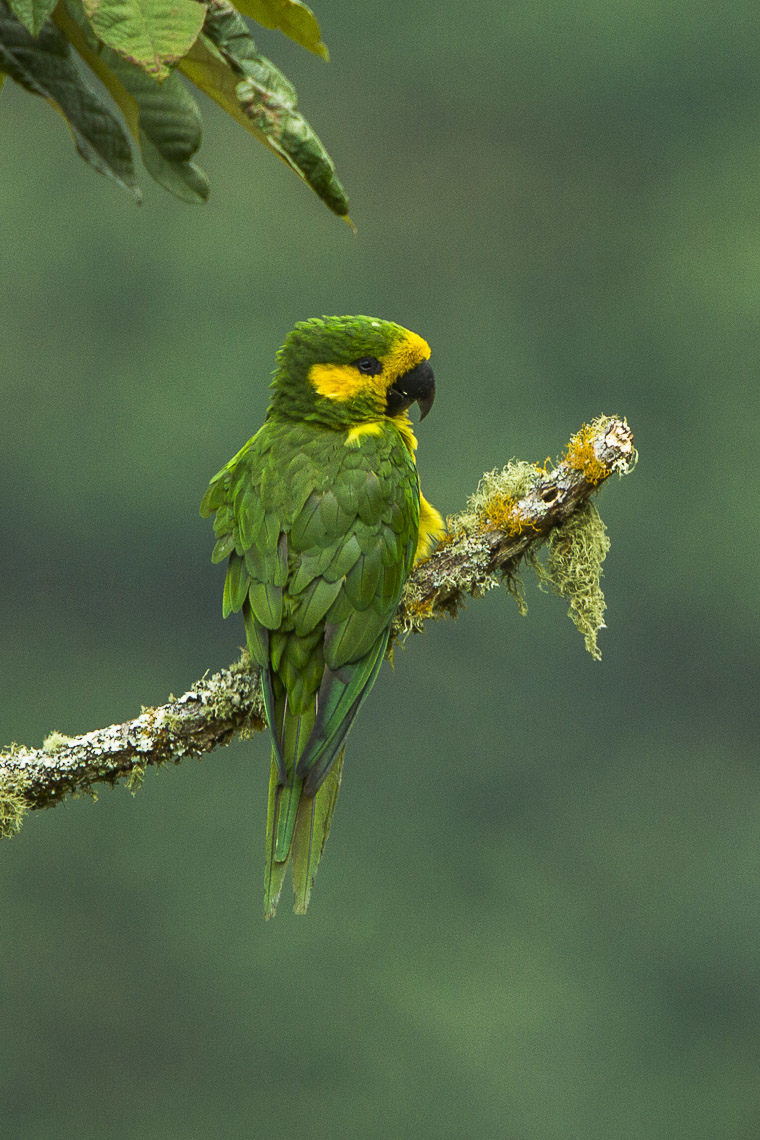
Where to see Yellow-eared Parrot
The parks with the most verified sightings, out of 3 safari areas where it has been recorded.
- 1Parque Natural Regional UcumaríOccasionalLodges
Andes - Northern & Central Cordilleras, Colombia · Occasional
- 2Parque Natural Regional Loros AndinosRareLodges
Andes - Northern & Central Cordilleras, Colombia · Rare
- 3Parque Natural Regional Anaime-ChilíRareLodges
Andes - Northern & Central Cordilleras, Colombia · Rare
Common: 500+ verified sightings. Occasional: 50 to 499. Rare: under 50.
Conservation status
Faces a high risk of extinction in the wild.
The yellow-eared parrot was once thought extinct but has seen a remarkable recovery thanks to dedicated conservation efforts. Its primary threats include habitat loss and the pet trade. Responsible tourism, by supporting local communities and conservation initiatives, plays a vital role in protecting this parrot's Andean habitat and ensuring its continued survival.
Conservation hubYellow-eared Parrot: FAQs
Where can you see Yellow-eared Parrot on safari?
The parks with the most research-grade GBIF and iNaturalist records of Yellow-eared Parrot are Parque Natural Regional Ucumarí, Parque Natural Regional Loros Andinos and Parque Natural Regional Anaime-Chilí. It is recorded in 3 safari areas in all.
Is the yellow-eared parrot endangered?
The IUCN Red List assesses the yellow-eared parrot as Vulnerable.
Spotted something wrong? Suggest a correction
About the yellow-eared parrot
The yellow-eared parrot is a vulnerable parrot found in the Andes of Colombia. It was thought to be extinct up until April 1999, when a group of researchers that were sponsored by ABC and Fundación Loro Parque, discovered a total of 81 individuals in the Colombian Andes. It is currently enlisted as vulnerable on the International Union for Conservation of Nature (IUCN) Red List. Its current population trend is increasing, in part due to conservation measures implemented to protect the existing populations of the species. It is closely associated with the wax palm.
Adapted from Wikipedia, CC BY-SA 4.0.