Where to see Wood Stork
The parks with the most verified sightings, out of 200+ safari areas where it has been recorded.
- 1Bacab Eco ParkOccasionalLodges
Central Belize & Coastal Plain, Belize · Occasional
- 2Dolphin ParkOccasionalLodges
Central Belize & Coastal Plain, Belize · Occasional
- 3Krooman Public ReserveOccasionalLodges
Central Belize & Coastal Plain, Belize · Occasional
- 4Peccary Hills National ParkOccasionalLodges
Central Belize & Coastal Plain, Belize · Occasional
- 5Runaway Creek Forest ReserveOccasionalPark
Central Belize & Coastal Plain, Belize · Occasional
Common: 500+ verified sightings. Occasional: 50 to 499. Rare: under 50.
Wood Stork: FAQs
Where can you see Wood Stork on safari?
The parks with the most research-grade GBIF and iNaturalist records of Wood Stork are Bacab Eco Park, Dolphin Park and Krooman Public Reserve. It is recorded in 200+ safari areas in all.
Is the wood stork endangered?
The IUCN Red List assesses the wood stork as Least Concern.
Spotted something wrong? Suggest a correction
About the wood stork
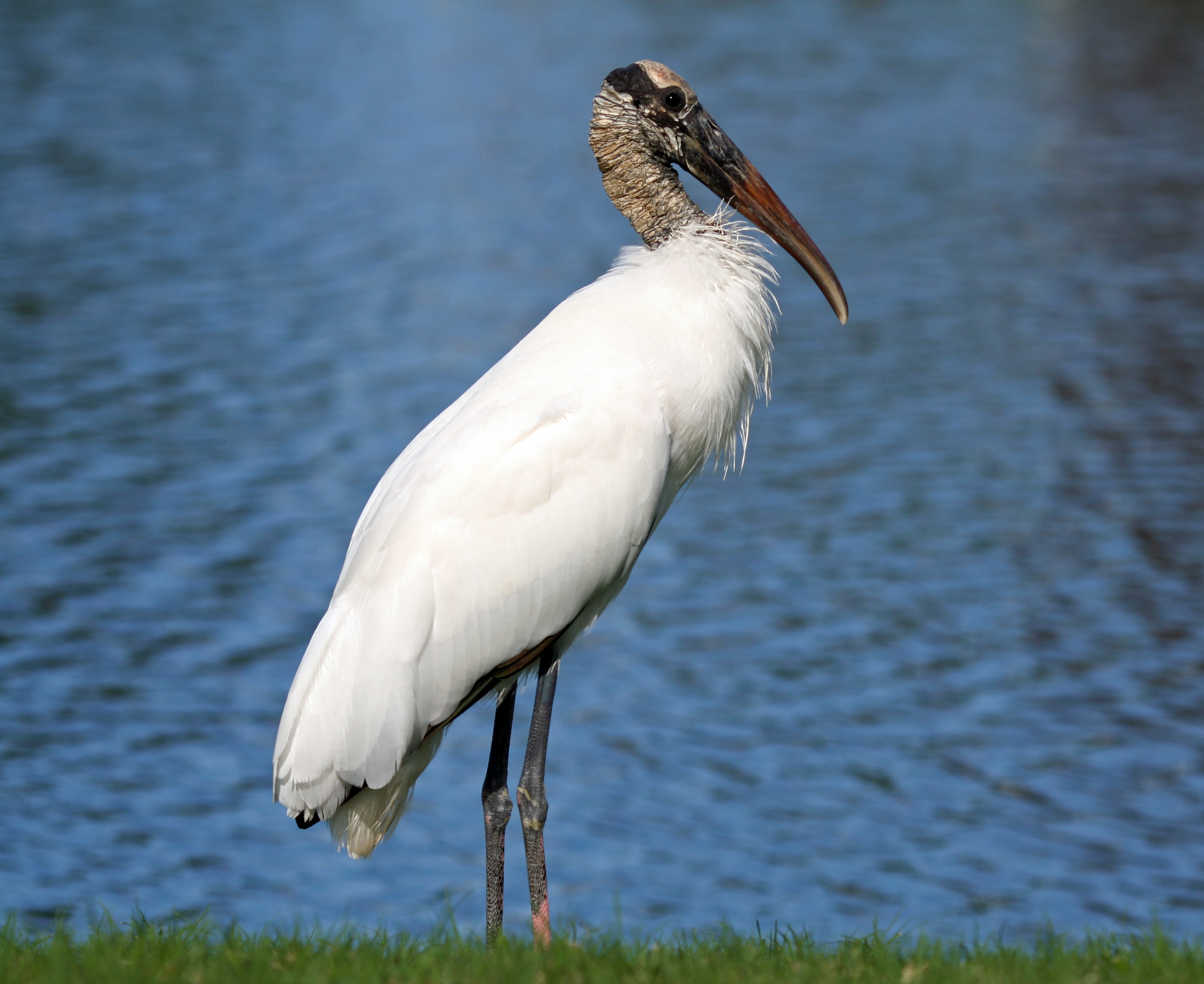
The wood stork is a large wading bird in the family Ciconiidae (storks). Originally described in 1758 by Carl Linnaeus, this stork is native to the subtropics and tropics of the Americas where it persists in habitats with fluctuating water levels. It is the only stork species that breeds in North America. The head and neck are bare of feathers, and dark grey in colour. The plumage is mostly white, with the exception of the tail and some of the wing feathers, which are black with a greenish-purplish sheen.
Adapted from Wikipedia, CC BY-SA 4.0.