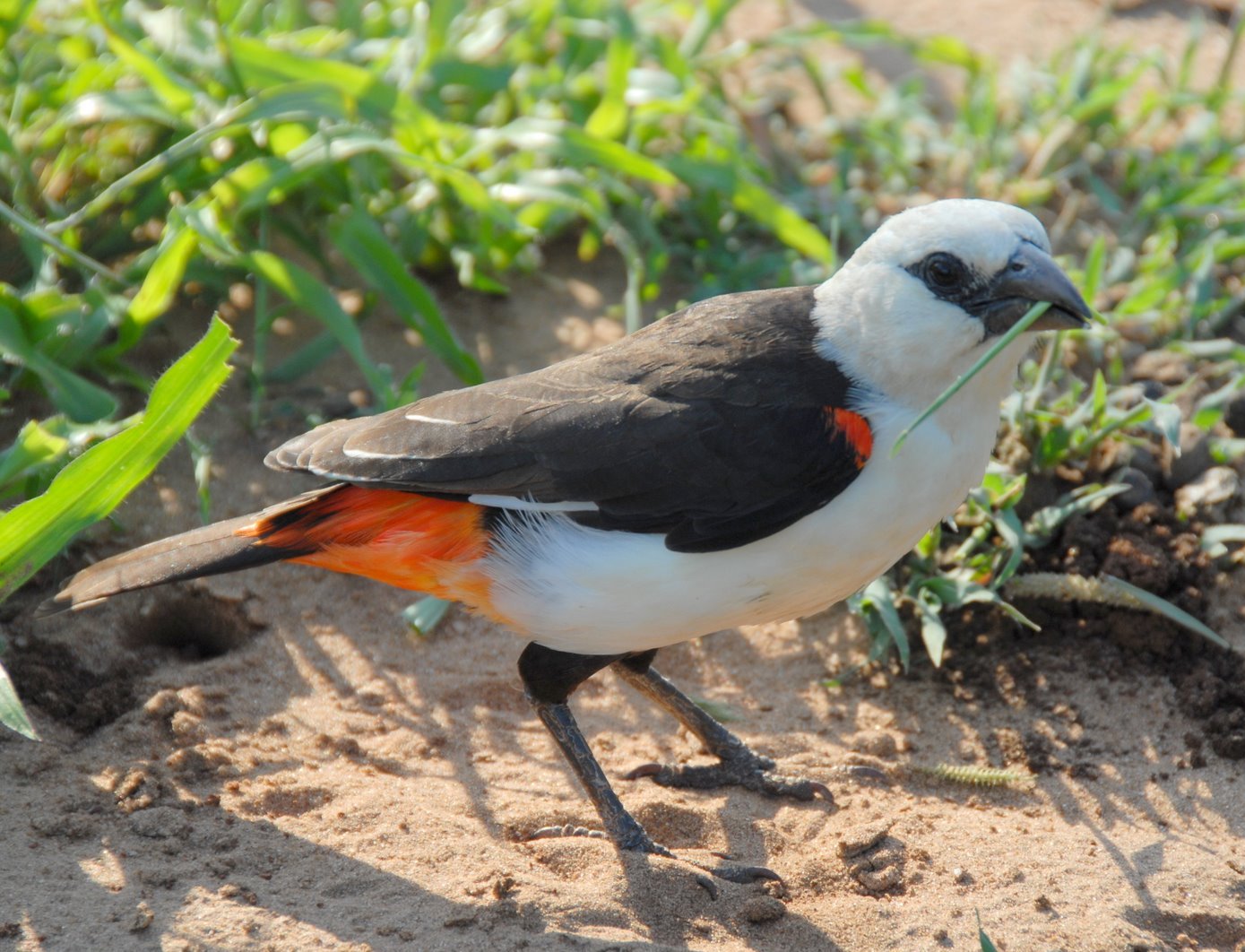
Where to see White-headed Buffalo-Weaver
The parks with the most verified sightings, out of 54 safari areas where it has been recorded.
- 1Borana ConservancyRareLodges
Laikipia & Mount Kenya Region, Kenya · Rare
- 2Buffalo Springs National ReserveRareLodges
Samburu & Northern Rangelands, Kenya · Rare
- 3Lewa Wildlife ConservancyRareLodges
Laikipia & Mount Kenya Region, Kenya · Rare
- 4Nalowuon Section of Namunyak ConservancyRareLodges
Samburu & Northern Rangelands, Kenya · Rare
- 5Ngare NdareRareLodges
Laikipia & Mount Kenya Region, Kenya · Rare
Common: 500+ verified sightings. Occasional: 50 to 499. Rare: under 50.
We may earn a commission when you book through our partners. It never changes your price or our rankings. How we make money
White-headed Buffalo-Weaver facts
Quick facts
Facts sourced from Wikidata (CC0).
White-headed Buffalo-Weaver: FAQs
Where can you see White-headed Buffalo-Weaver on safari?
The parks with the most research-grade GBIF and iNaturalist records of White-headed Buffalo-Weaver are Borana Conservancy, Buffalo Springs National Reserve and Lewa Wildlife Conservancy. It is recorded in 54 safari areas in all.
Is the white-headed buffalo-weaver endangered?
The IUCN Red List assesses the white-headed buffalo-weaver as Least Concern.
Spotted something wrong? Suggest a correction
About the white-headed buffalo-weaver
The white-headed buffalo weaver or white-faced buffalo-weaver is a species of passerine bird in the family Ploceidae native to East Africa. The buffalo part of its name derives from its habit of following the African buffalo, feeding on disturbed insects. Two subspecies are recognized.