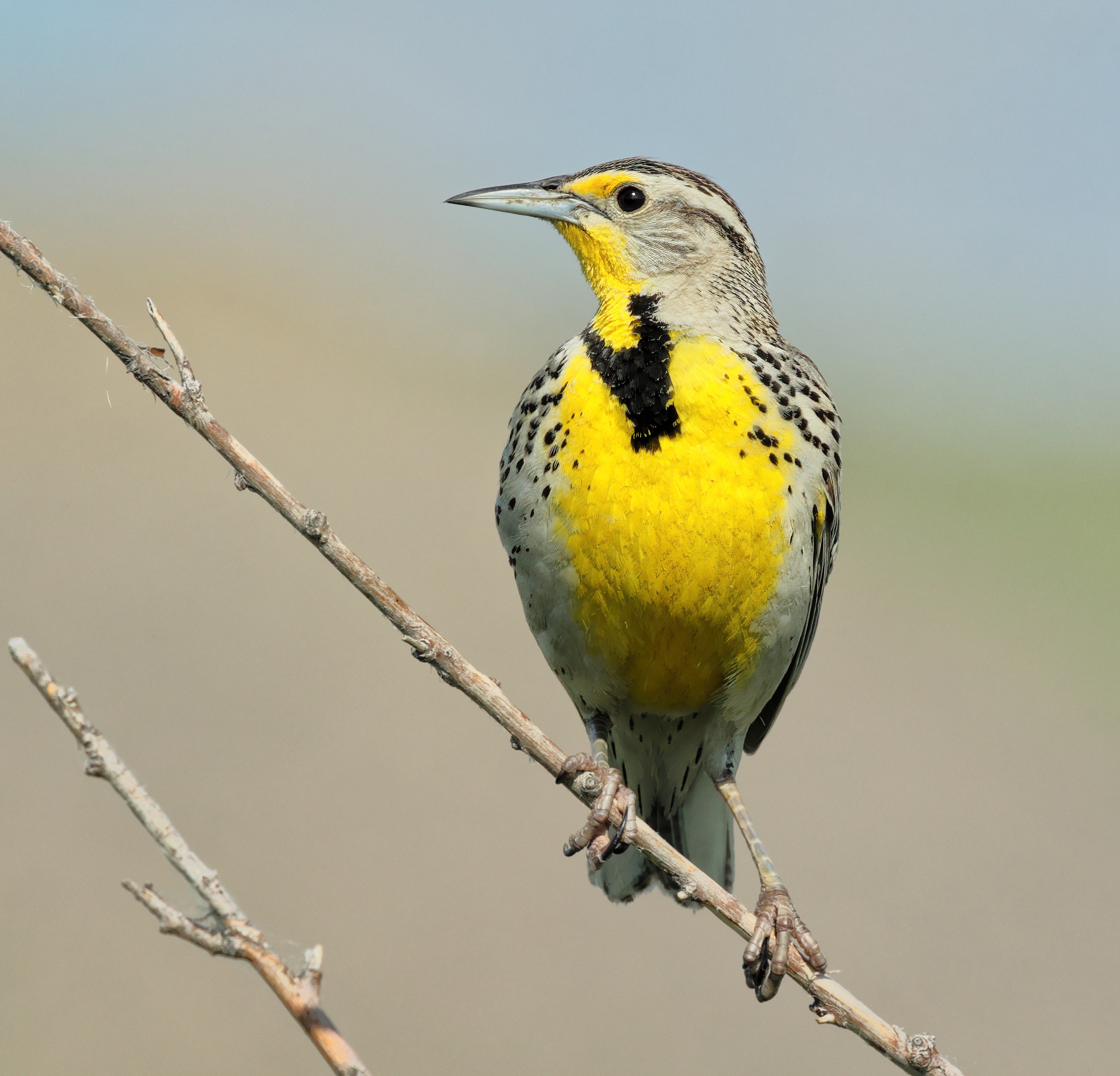
Where to see Western Meadowlark
The parks with the most verified sightings, out of 43 safari areas where it has been recorded.
- 1Kings Canyon National ParkRareLodges
California Sierra & Deserts, United States · Rare
- 2Souris River Bend Wildlife Management AreaRareLodges
Prairie & Boreal Plains, Canada · Rare
- 3Theodore Roosevelt National ParkRareLodges
Rocky Mountains & Northern Plains, United States · Rare
- 4Pacific Rim National Park Reserve - Broken Group Islands UnitRareLodges
Pacific Coast & Interior British Columbia, Canada · Rare
- 5Pacific Rim National Park Reserve - Long Beach UnitRarePark
Pacific Coast & Interior British Columbia, Canada · Rare
Common: 500+ verified sightings. Occasional: 50 to 499. Rare: under 50.
Western Meadowlark facts
Quick facts
Facts sourced from Wikidata (CC0).
Western Meadowlark: FAQs
Where can you see Western Meadowlark on safari?
The parks with the most research-grade GBIF and iNaturalist records of Western Meadowlark are Kings Canyon National Park, Souris River Bend Wildlife Management Area and Theodore Roosevelt National Park. It is recorded in 43 safari areas in all.
Is the western meadowlark endangered?
The IUCN Red List assesses the western meadowlark as Least Concern.
Spotted something wrong? Suggest a correction
About the western meadowlark
The western meadowlark is a medium-sized icterid bird, about 20 cm (7.9 in) in length. It is found across western and central North America and is a partial migrant, breeding in western Canada and western United States west of the Great Lakes, and in northern Mexico. In the northern half of the breeding range, the birds migrate south for the winter, while further south they are resident all year. The winter range also extends south and southeast of the breeding range, as far as central Mexico, and east to western Florida. The western meadowlark nests on the ground in open grasslands and shrublands. It feeds on bugs and seeds. The western meadowlark has distinctive calls described as watery or flute-like, which distinguish it from the closely related eastern meadowlark. The western meadowlark is the state bird of six states; in Kansas, Montana, Nebraska, North Dakota, Oregon, and Wyoming.
Adapted from Wikipedia, CC BY-SA 4.0.