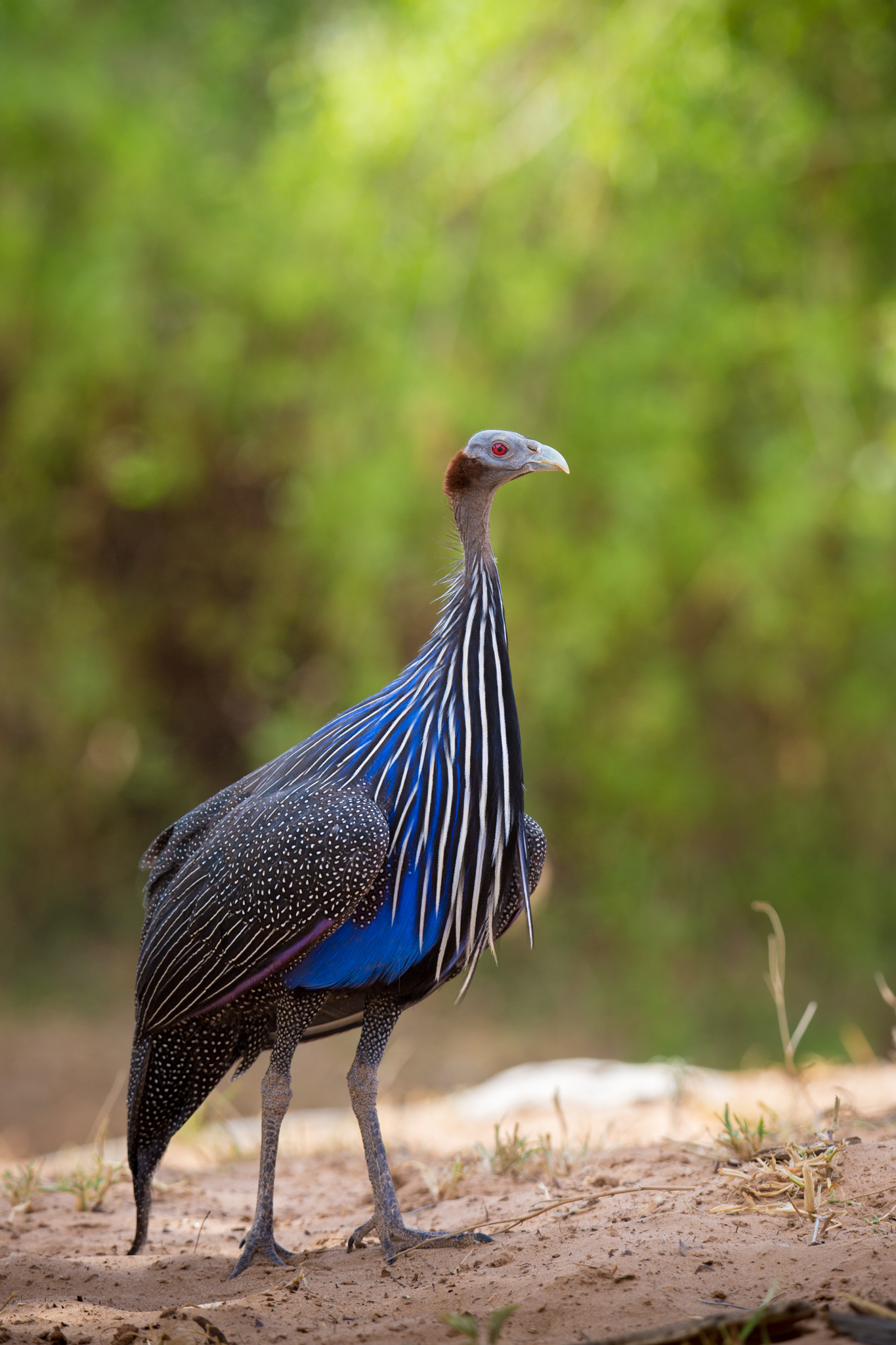
Where to see Vulturine Guineafowl
The parks with the most verified sightings, out of 18 safari areas where it has been recorded.
- 1Chyulu Hills National ParkOccasionalLodges
Tsavo & Amboseli Ecosystem, Kenya · Occasional
- 2Mago National ParkRareLodges
South Omo & Southwest Lowlands, Ethiopia · Rare
- 3Borana ConservancyRareLodges
Laikipia & Mount Kenya Region, Kenya · Rare
- 4Buffalo Springs National ReserveRareLodges
Samburu & Northern Rangelands, Kenya · Rare
- 5Lewa Wildlife ConservancyRareLodges
Laikipia & Mount Kenya Region, Kenya · Rare
Common: 500+ verified sightings. Occasional: 50 to 499. Rare: under 50.
We may earn a commission when you book through our partners. It never changes your price or our rankings. How we make money
Vulturine Guineafowl facts
Quick facts
Facts sourced from Wikidata (CC0).
Vulturine Guineafowl: FAQs
Where can you see Vulturine Guineafowl on safari?
The parks with the most research-grade GBIF and iNaturalist records of Vulturine Guineafowl are Chyulu Hills National Park, Mago National Park and Borana Conservancy. It is recorded in 18 safari areas in all.
Is the vulturine guineafowl endangered?
The IUCN Red List assesses the vulturine guineafowl as Least Concern.
Spotted something wrong? Suggest a correction
About the vulturine guineafowl
The vulturine guinea fowl is the largest extant species of guinea fowl. Systematically, it is only distantly related to other guinea fowl genera. Its closest living relative, the white breasted guinea fowl, Agelastes meleagrides inhabit primary forests in Central Africa. It is a member of the bird family Numididae, and is the only member of the genus Acryllium. It is a resident breeder in northeast Africa, from southern Ethiopia and Somalia through Kenya and just into northern Tanzania.
Adapted from Wikipedia, CC BY-SA 4.0.