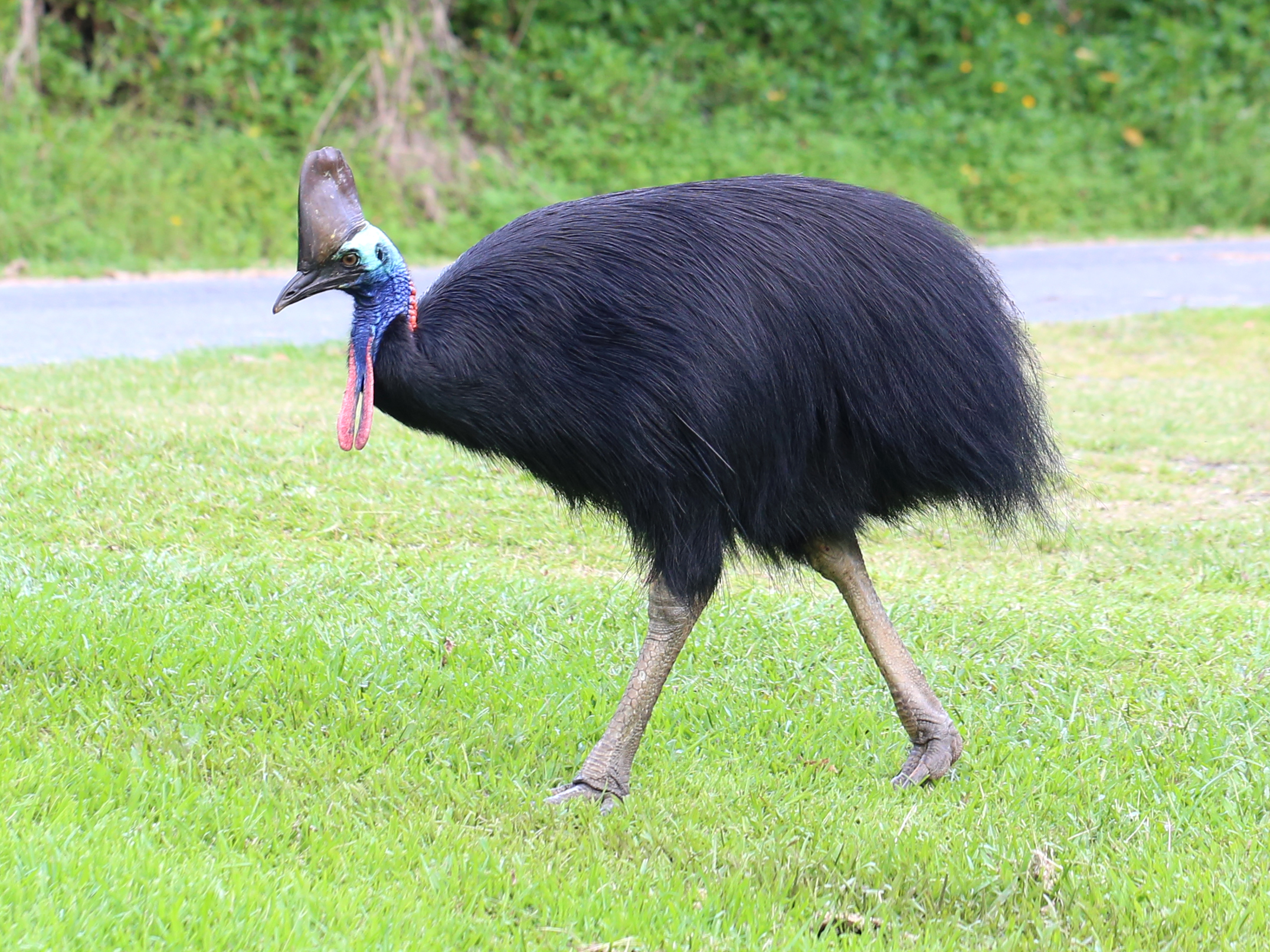
Where to see Southern Cassowary
The parks with the most verified sightings, out of 71 safari areas where it has been recorded.
- 1Basilisk Range National ParkCommonPark
Far North Queensland & Cape York, Australia · Common
- 2Japoon National ParkCommonLodges
Far North Queensland & Cape York, Australia · Common
- 3Kurrimine Beach National ParkCommonLodges
Far North Queensland & Cape York, Australia · Common
- 4Maria Creek National ParkCommonLodges
Far North Queensland & Cape York, Australia · Common
- 5Barnard Island Group National ParkCommonLodges
Far North Queensland & Cape York, Australia · Common
Common: 500+ verified sightings. Occasional: 50 to 499. Rare: under 50.
Southern Cassowary facts
Quick facts
Facts sourced from Wikidata (CC0).
Best months to spot
Most sightings recorded in Jul, Sep, Oct, Nov. Data from GBIF - a global database of verified wildlife observations by researchers and citizen scientists.
Southern Cassowary: FAQs
Where can you see Southern Cassowary on safari?
The parks with the most research-grade GBIF and iNaturalist records of Southern Cassowary are Basilisk Range National Park, Japoon National Park and Kurrimine Beach National Park. It is recorded in 71 safari areas in all.
Is the southern cassowary endangered?
The IUCN Red List assesses the southern cassowary as Least Concern.
When is the best time to see Southern Cassowary?
Most sightings of Southern Cassowary are logged in Jul, Sep, Oct, Nov, going by the months of research-grade records; it can be seen year-round where it lives.
Spotted something wrong? Suggest a correction
About the southern cassowary
The southern cassowary, also known as double-wattled cassowary, Australian cassowary, or two-wattled cassowary, is a large, flightless, mostly black bird, found in Indonesia, Papua New Guinea, and northeastern Australia. It is one of the three living species of cassowary, alongside the dwarf cassowary and the northern cassowary. It is a ratite and therefore related to the emu, ostrich, rhea and kiwi. Southern cassowaries are among the largest birds in the world, only weighing less than ostriches.
Adapted from Wikipedia, CC BY-SA 4.0.