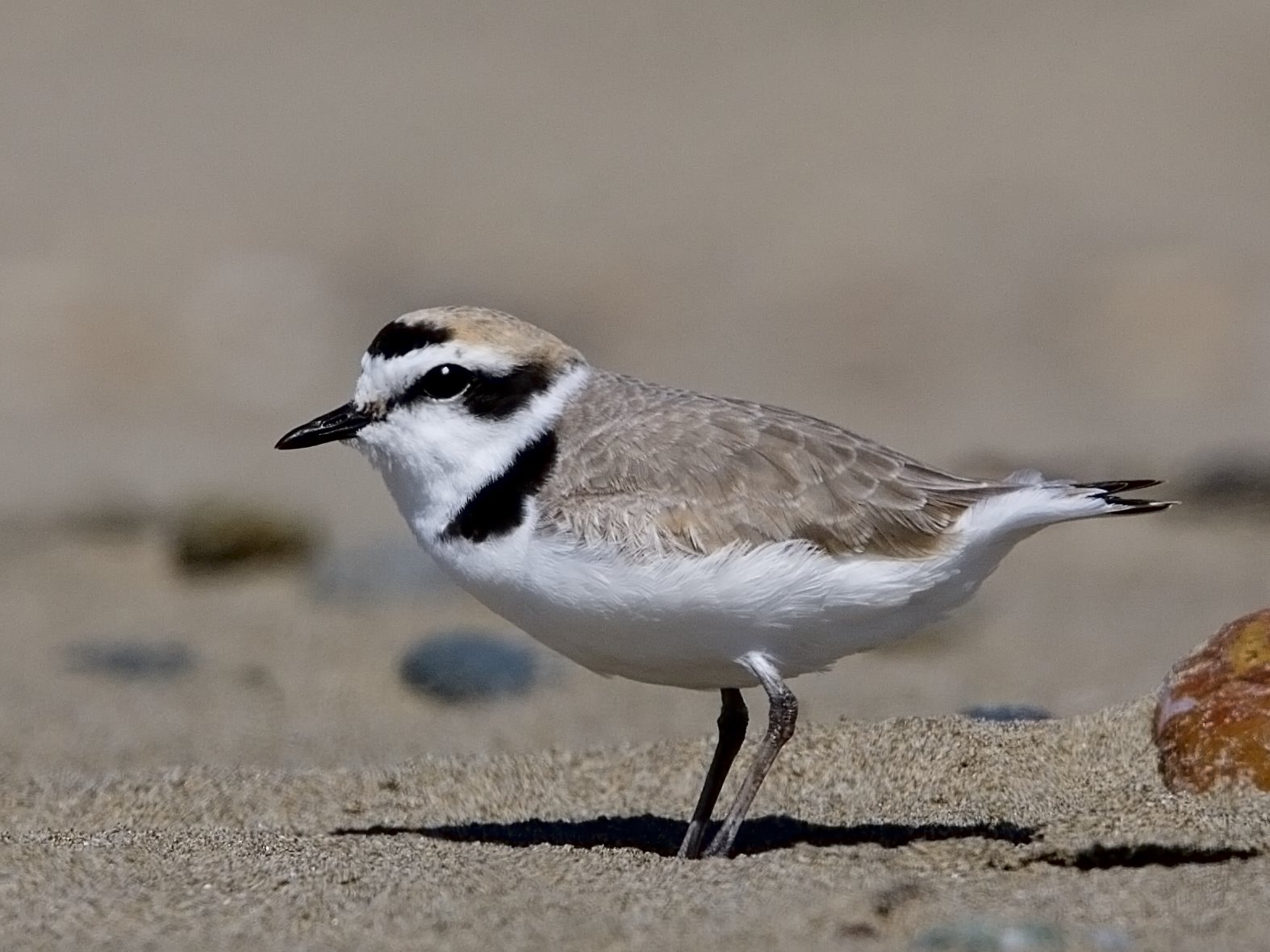
Where to see Snowy Plover
The parks with the most verified sightings, out of 22 safari areas where it has been recorded.
- 1Reserva Nacional Las ChinchillasRareLodges
Central Chile & Valleys, Chile · Rare
- 2Reserva Nacional El YaliRareLodges
Central Chile & Valleys, Chile · Rare
- 3Reserva Nacional Lago PeñuelasRareLodges
Central Chile & Valleys, Chile · Rare
- 4Reserva Nacional La ChimbaRareLodges
Atacama Desert & Norte Chico, Chile · Rare
- 5Comunidad Ecológica Bosques de ChiloéRareLodges
Northern Patagonia & Chiloé, Chile · Rare
Common: 500+ verified sightings. Occasional: 50 to 499. Rare: under 50.
Conservation status
Close to qualifying as threatened in the near future.
The snowy plover faces threats from habitat loss and degradation, particularly nesting beaches, and increased predation. Conservation efforts focus on protecting nesting sites and managing invasive species. Responsible safari tourism can help by raising awareness and funding conservation initiatives through park fees and eco-friendly practices that minimize disturbance to sensitive coastal habitats.
Conservation hubSnowy Plover: FAQs
Where can you see Snowy Plover on safari?
The parks with the most research-grade GBIF and iNaturalist records of Snowy Plover are Reserva Nacional Las Chinchillas, Reserva Nacional El Yali and Reserva Nacional Lago Peñuelas. It is recorded in 22 safari areas in all.
Is the snowy plover endangered?
The IUCN Red List assesses the snowy plover as Near Threatened.
Spotted something wrong? Suggest a correction
About the snowy plover
The snowy plover is a small shorebird found in the Americas. It is a member of the bird family Charadriidae, which includes the plovers, dotterels, and lapwings. The snowy plover was originally described by John Cassin in 1858, but was classified as a subspecies of the Kentish plover in 1922. Since 2011, the snowy plover has been recognized as a distinct species based on genetic and anatomical differences from the Kentish plover. Two or three subspecies are recognized, distributed along the Pacific coast of North America, Ecuador, Peru, and Chile, in several inland areas of the US and Mexico, along the Gulf Coast, and on Caribbean islands. The coastal populations consist of both residential and migratory birds, whereas the inland populations are mostly migratory. It is one of the best studied endemic shorebirds of the Americas, and one of the rarest.
Adapted from Wikipedia, CC BY-SA 4.0.