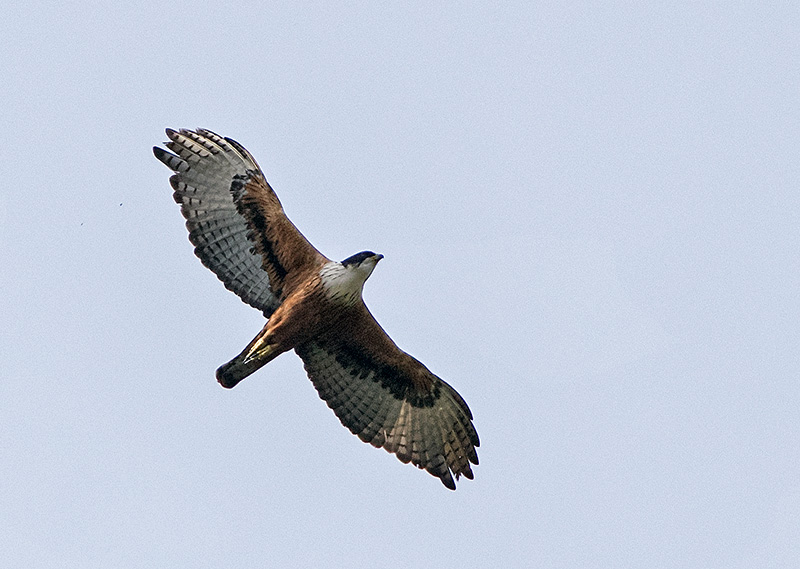
Where to see Rufous-bellied Eagle
The parks with the most verified sightings, out of 34 safari areas where it has been recorded.
- 1Bhadra WLS/Tiger ReserveRareLodges
Western Ghats & Deccan Plateau, India · Rare
- 2Valley of Flowers National ParkRareLodges
The Himalayan Heights, India · Rare
- 3Anamudi Shola National ParkRareLodges
Western Ghats & Deccan Plateau, India · Rare
- 4Buxa National ParkRareLodges
Eastern Plateau & Coastal Wetlands, India · Rare
- 5Eravikulam National ParkRareLodges
Western Ghats & Deccan Plateau, India · Rare
Common: 500+ verified sightings. Occasional: 50 to 499. Rare: under 50.
Conservation status
Close to qualifying as threatened in the near future.
The main threats to the Rufous-bellied Eagle are habitat loss and degradation due to deforestation and agricultural expansion. While specific recovery programs are limited, the species benefits from general forest conservation efforts. Responsible safari tourism helps protect this eagle by raising awareness, funding local conservation initiatives through park fees, and providing an economic incentive to preserve the habitats it relies on.
Conservation hubRufous-bellied Eagle: FAQs
Where can you see Rufous-bellied Eagle on safari?
The parks with the most research-grade GBIF and iNaturalist records of Rufous-bellied Eagle are Bhadra WLS/Tiger Reserve, Valley of Flowers National Park and Anamudi Shola National Park. It is recorded in 34 safari areas in all.
Is the rufous-bellied eagle endangered?
The IUCN Red List assesses the rufous-bellied eagle as Near Threatened.
Spotted something wrong? Suggest a correction
About the rufous-bellied eagle
The rufous-bellied eagle or rufous-bellied hawk-eagle is a bird of prey in the family Accipitridae that is found in the forested regions of tropical Asia. Relatively small for eagles and contrastingly patterned like a falcon, this species was earlier placed in the genus Hieraaetus and sometimes also in the genus Aquila but thought to be distinctive enough to belong to a separate genus.
Adapted from Wikipedia, CC BY-SA 4.0.