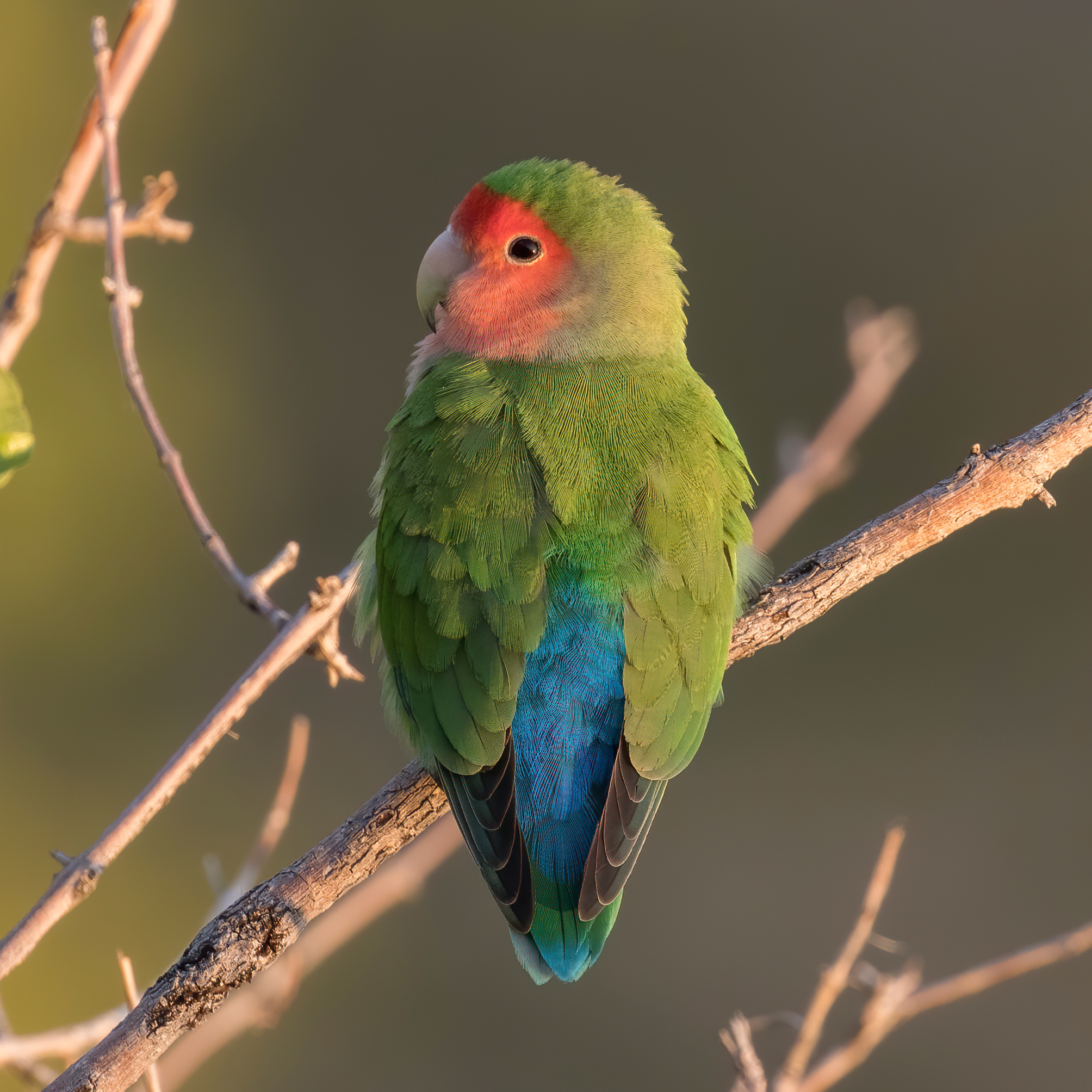
Where to see Rosy-faced Lovebird
The parks with the most verified sightings, out of 17 safari areas where it has been recorded.
- 1Erongo Mountain Nature SanctuaryRareLodges
Central Coast & Erongo, Namibia · Rare
- 2Erindi Private Wildlife ReserveRareLodges
Central Namibia & Eastern Kalahari Fringe, Namibia · Rare
- 3Palmwag Tourism ConcessionRareLodges
Damaraland & Kaokoveld, Namibia · Rare
- 4Torra ConservancyRareLodges
Damaraland & Kaokoveld, Namibia · Rare
- 5Daan Viljoen Game ParkRareLodges
Central Namibia & Eastern Kalahari Fringe, Namibia · Rare
Common: 500+ verified sightings. Occasional: 50 to 499. Rare: under 50.
We may earn a commission when you book through our partners. It never changes your price or our rankings. How we make money
Rosy-faced Lovebird facts
Quick facts
Facts sourced from Wikidata (CC0).
Rosy-faced Lovebird: FAQs
Where can you see Rosy-faced Lovebird on safari?
The parks with the most research-grade GBIF and iNaturalist records of Rosy-faced Lovebird are Erongo Mountain Nature Sanctuary, Erindi Private Wildlife Reserve and Palmwag Tourism Concession. It is recorded in 17 safari areas in all.
Is the rosy-faced lovebird endangered?
The IUCN Red List assesses the rosy-faced lovebird as Least Concern.
Spotted something wrong? Suggest a correction
About the rosy-faced lovebird
The rosy-faced lovebird, also known as the rosy-collared or peach-faced lovebird, is a species of lovebird native to the Namibian savanna woodlands. Loud and constant chirpers, these birds are very social animals and often congregate in small groups in the wild. They eat throughout the day and take frequent baths. Coloration can vary widely among populations. Plumage is identical in males and females. Lovebirds are renowned for their sleep position in which they sit side-by-side and turn their faces in towards each other. Also, females are well noted to tear raw materials into long strips, "twisty-tie" them onto their backs, and fly substantial distances back to make a nest. These birds are common in the pet industry.
Adapted from Wikipedia, CC BY-SA 4.0.