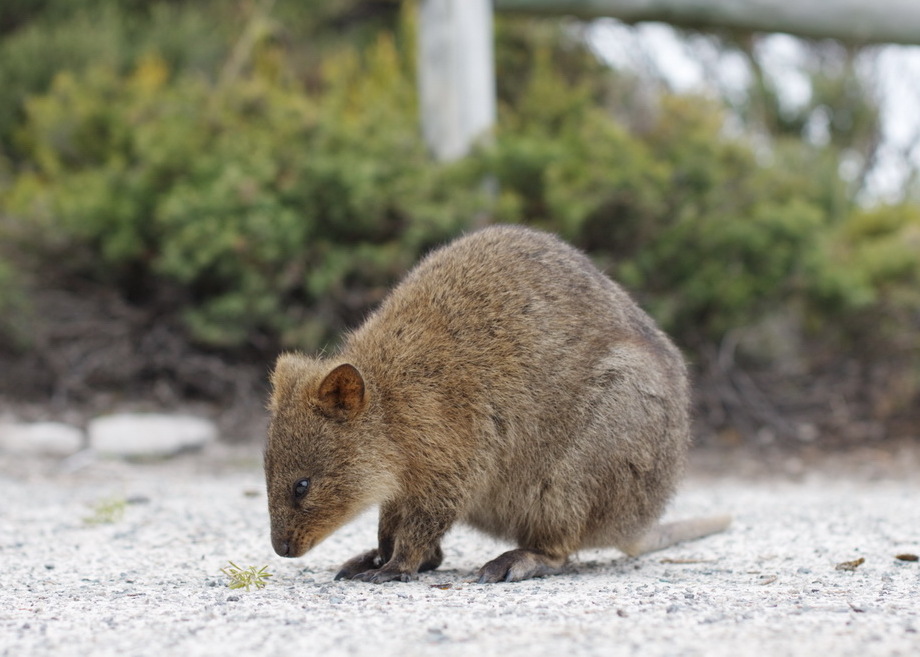
Where to see Quokka
The parks with the most verified sightings, out of 41 safari areas where it has been recorded.
- 1Two Rocks National Park ZoneCommonPark
South West Western Australia, Australia · Common
- 2Unnamed WA49220 Conservation ParkCommonLodges
South West Western Australia, Australia · Common
- 3Unnamed WA43290 Conservation ParkCommonLodges
South West Western Australia, Australia · Common
- 4Unnamed WA53632 Conservation ParkCommonPark
South West Western Australia, Australia · Common
- 5Unnamed WA39584 Conservation ParkCommonLodges
South West Western Australia, Australia · Common
Common: 500+ verified sightings. Occasional: 50 to 499. Rare: under 50.
Quokka facts
Quick facts
Facts sourced from Wikidata (CC0).
Best months to spot
Most sightings recorded in Jan, Feb, Aug, Sep, Oct, Nov, Dec. Data from GBIF - a global database of verified wildlife observations by researchers and citizen scientists.
Conservation status
Faces a high risk of extinction in the wild.
Quokkas face threats from habitat loss due to development and agriculture, as well as predation by introduced species like foxes and cats. Conservation efforts focus on habitat restoration and managing introduced predators on islands where quokkas are found. Responsible tourism helps by funding conservation projects and raising awareness, while visitors are encouraged to observe quokkas from a distance to avoid stressing them.
Conservation hubQuokka: FAQs
Where can you see Quokka on safari?
The parks with the most research-grade GBIF and iNaturalist records of Quokka are Two Rocks National Park Zone, Unnamed WA49220 Conservation Park and Unnamed WA43290 Conservation Park. It is recorded in 41 safari areas in all.
Is the quokka endangered?
The IUCN Red List assesses the quokka as Vulnerable.
When is the best time to see Quokka?
Most sightings of Quokka are logged in Aug–Feb, going by the months of research-grade records; it can be seen year-round where it lives.
Spotted something wrong? Suggest a correction
About the quokka
The quokka is a small macropod about the size of a domestic cat. It is the only member of the genus Setonix. Like other marsupials in the macropod family, the quokka is herbivorous and mainly nocturnal.
Adapted from Wikipedia, CC BY-SA 4.0.