Where to see Malabar Gray Hornbill
The parks with the most verified sightings, out of 16 safari areas where it has been recorded.
- 1Mathikettan Shola National ParkRareLodges
Western Ghats & Deccan Plateau, India · Rare
- 2Periyar National Park Tiger ReserveRareLodges
Western Ghats & Deccan Plateau, India · Rare
- 3Periyar WLS Tiger ReserveRareLodges
Western Ghats & Deccan Plateau, India · Rare
- 4Anamudi Shola National ParkRareLodges
Western Ghats & Deccan Plateau, India · Rare
- 5Bhagwan Mahaveer National ParkRareLodges
Western Ghats & Deccan Plateau, India · Rare
Common: 500+ verified sightings. Occasional: 50 to 499. Rare: under 50.
Conservation status
Faces a high risk of extinction in the wild.
The Malabar Gray Hornbill faces threats from habitat loss and fragmentation due to deforestation for agriculture and development. While specific large-scale recovery programs are limited, ongoing conservation efforts in the Western Ghats aim to protect its forest habitat. Responsible safari tourism helps by raising awareness, funding local conservation initiatives through park fees, and providing economic incentives for communities to protect wildlife and their habitats.
Conservation hubMalabar Gray Hornbill: FAQs
Where can you see Malabar Gray Hornbill on safari?
The parks with the most research-grade GBIF and iNaturalist records of Malabar Gray Hornbill are Mathikettan Shola National Park, Periyar National Park Tiger Reserve and Periyar WLS Tiger Reserve. It is recorded in 16 safari areas in all.
Is the malabar gray hornbill endangered?
The IUCN Red List assesses the malabar gray hornbill as Vulnerable.
Spotted something wrong? Suggest a correction
About the malabar gray hornbill
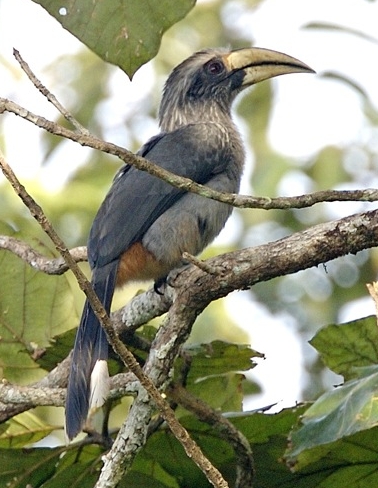
The Malabar gray hornbill is a hornbill endemic to the Western Ghats and associated hills of southern India. They have a large beak but lack the casque that is prominent in some other hornbill species. They are found mainly in dense forest and around rubber, arecanut or coffee plantations. They move around in pairs or small groups, feeding on figs and other forest fruits. Their loud cackling and laughing call makes them familiar to people living in the region.
Adapted from Wikipedia, CC BY-SA 4.0.