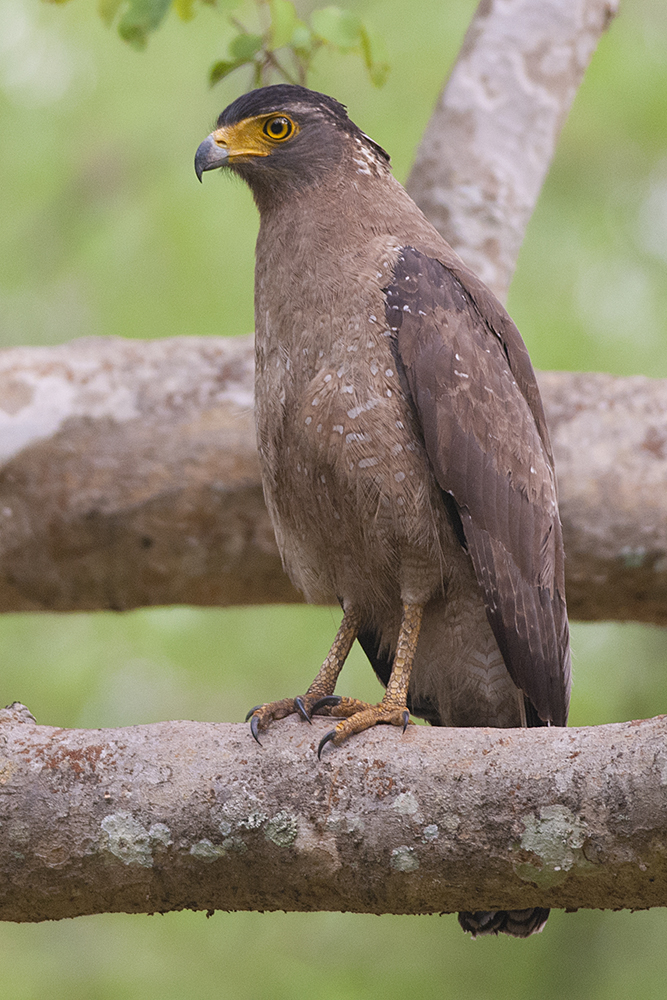
Where to see Crested Serpent-Eagle
The parks with the most verified sightings, out of 200+ safari areas where it has been recorded.
- 1Kawasan Gunung AgungRareLodges
East Java & Bali Volcanic Arc, Indonesia · Rare
- 2Dudhwa National ParkRareLodges
North Indian Plains & Deserts, India · Rare
- 3Panna National ParkRareLodges
Central Indian Highlands, India · Rare
- 4Ussangoda National ParkRarePark
Southern & Southeastern Dry Zone, Sri Lanka · Rare
- 5Anamudi Shola National ParkRareLodges
Western Ghats & Deccan Plateau, India · Rare
Common: 500+ verified sightings. Occasional: 50 to 499. Rare: under 50.
Crested Serpent-Eagle: FAQs
Where can you see Crested Serpent-Eagle on safari?
The parks with the most research-grade GBIF and iNaturalist records of Crested Serpent-Eagle are Kawasan Gunung Agung, Dudhwa National Park and Panna National Park. It is recorded in 200+ safari areas in all.
Is the crested serpent-eagle endangered?
The IUCN Red List assesses the crested serpent-eagle as Least Concern.
Spotted something wrong? Suggest a correction
About the crested serpent-eagle
The crested serpent eagle is a medium-sized bird of prey that is found in forested habitats across tropical Asia. Within its widespread range across the Indian subcontinent, Southeast Asia and East Asia, there are considerable variations and some authorities prefer to treat several of its subspecies as completely separate species. In the past, several species including the Philippine serpent eagle, Andaman serpent eagle and South Nicobar serpent eagle were treated as subspecies of the crested serpent eagle. All members within the species complex have a large-looking head with long feathers on the back, giving them a maned and crested appearance. The face is bare and yellow joining up with the ceres while the powerful feet are unfeathered and heavily scaled. They fly over the forest canopy on broad wings and tail have wide white and black bars. They call often with a loud, piercing and familiar three or two-note call. They often feed on snakes, giving them their name and are placed along with the Circaetus snake-eagles in the subfamily Circaetinae.
Adapted from Wikipedia, CC BY-SA 4.0.