Where to see Caracal
The parks with the most verified sightings, out of 22 safari areas where it has been recorded.
- 1Buffelsfontein Game & Nature ReserveOccasionalLodges
Western Cape & Garden Route, South Africa · Occasional
- 2West Coast National ParkOccasionalLodges
Western Cape & Garden Route, South Africa · Occasional
- 3Addo Elephant Park (Nyati Section)RareLodges
Eastern Cape Safaris, South Africa · Rare
- 4Addo Elephant National Park (Zuurberg Section)RareLodges
Eastern Cape Safaris, South Africa · Rare
- 5Matusadona National ParkRareLodges
Zambezi Valley & Kariba, Zimbabwe · Rare
Common: 500+ verified sightings. Occasional: 50 to 499. Rare: under 50.
We may earn a commission when you book through our partners. It never changes your price or our rankings. How we make money
Caracal facts
Quick facts
Facts sourced from Wikidata (CC0).
Best months to spot
Most sightings recorded in Apr, May. Data from GBIF - a global database of verified wildlife observations by researchers and citizen scientists.
Caracal: FAQs
Where can you see Caracal on safari?
The parks with the most research-grade GBIF and iNaturalist records of Caracal are Buffelsfontein Game & Nature Reserve, West Coast National Park and Addo Elephant Park (Nyati Section). It is recorded in 22 safari areas in all.
Is the caracal endangered?
The IUCN Red List assesses the caracal as Least Concern.
When is the best time to see Caracal?
Most sightings of Caracal are logged in Apr, May, going by the months of research-grade records; it can be seen year-round where it lives.
Spotted something wrong? Suggest a correction
About the caracal
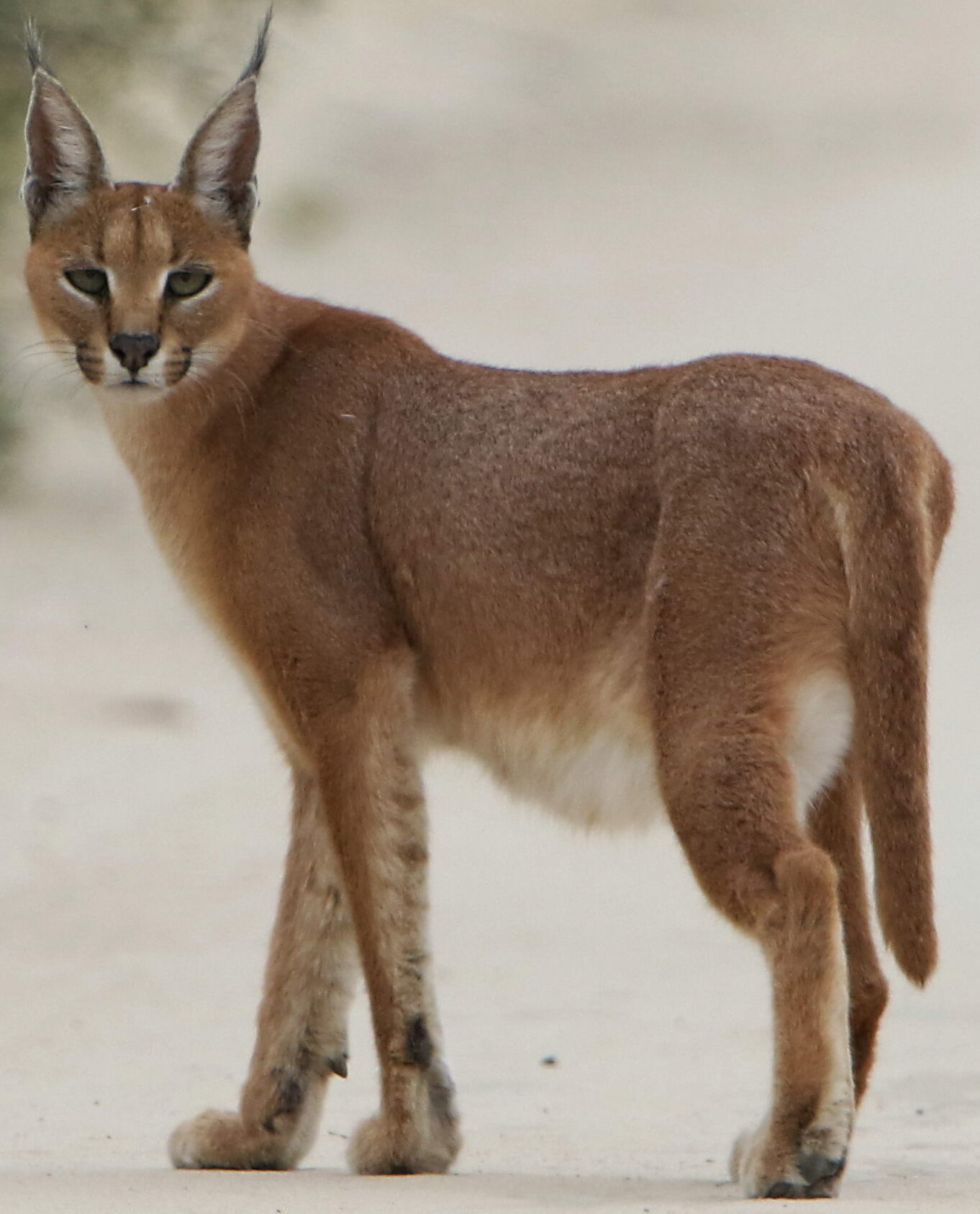
The caracal is a wild cat native to Africa, the Middle East, Central Asia, and arid areas of Pakistan and northwestern India. It is characterised by a robust build, long legs, a short face, long tufted ears, relatively short tail, and long canine teeth. Its coat is uniformly reddish tan or sandy, while the ventral parts are lighter with small reddish markings. It reaches 40–50 cm (16–20 in) at the shoulder and weighs 8–19 kg (18–42 lb). It was first scientifically described by German naturalist Johann Christian Daniel von Schreber in 1776. Three subspecies are recognised.
Adapted from Wikipedia, CC BY-SA 4.0.