Where to see Blue-winged Pitta
The parks with the most verified sightings, out of 77 safari areas where it has been recorded.
- 1Hutan Simpanan Kekal Ampang PechahRarePark
Central Peninsular Malaysia, Malaysia · Rare
- 2Hutan Simpanan Kekal Bukit BelataRarePark
Central Peninsular Malaysia, Malaysia · Rare
- 3Hutan Simpanan Kekal Bukit Belata TambahanRarePark
Central Peninsular Malaysia, Malaysia · Rare
- 4Hutan Simpanan Kekal Bukit Belata Tambahan 2RarePark
Central Peninsular Malaysia, Malaysia · Rare
- 5Hutan Simpanan Kekal Bukit KutuRareLodges
Central Peninsular Malaysia, Malaysia · Rare
Common: 500+ verified sightings. Occasional: 50 to 499. Rare: under 50.
Blue-winged Pitta: FAQs
Where can you see Blue-winged Pitta on safari?
The parks with the most research-grade GBIF and iNaturalist records of Blue-winged Pitta are Hutan Simpanan Kekal Ampang Pechah, Hutan Simpanan Kekal Bukit Belata and Hutan Simpanan Kekal Bukit Belata Tambahan. It is recorded in 77 safari areas in all.
Is the blue-winged pitta endangered?
The IUCN Red List assesses the blue-winged pitta as Least Concern.
Spotted something wrong? Suggest a correction
About the blue-winged pitta
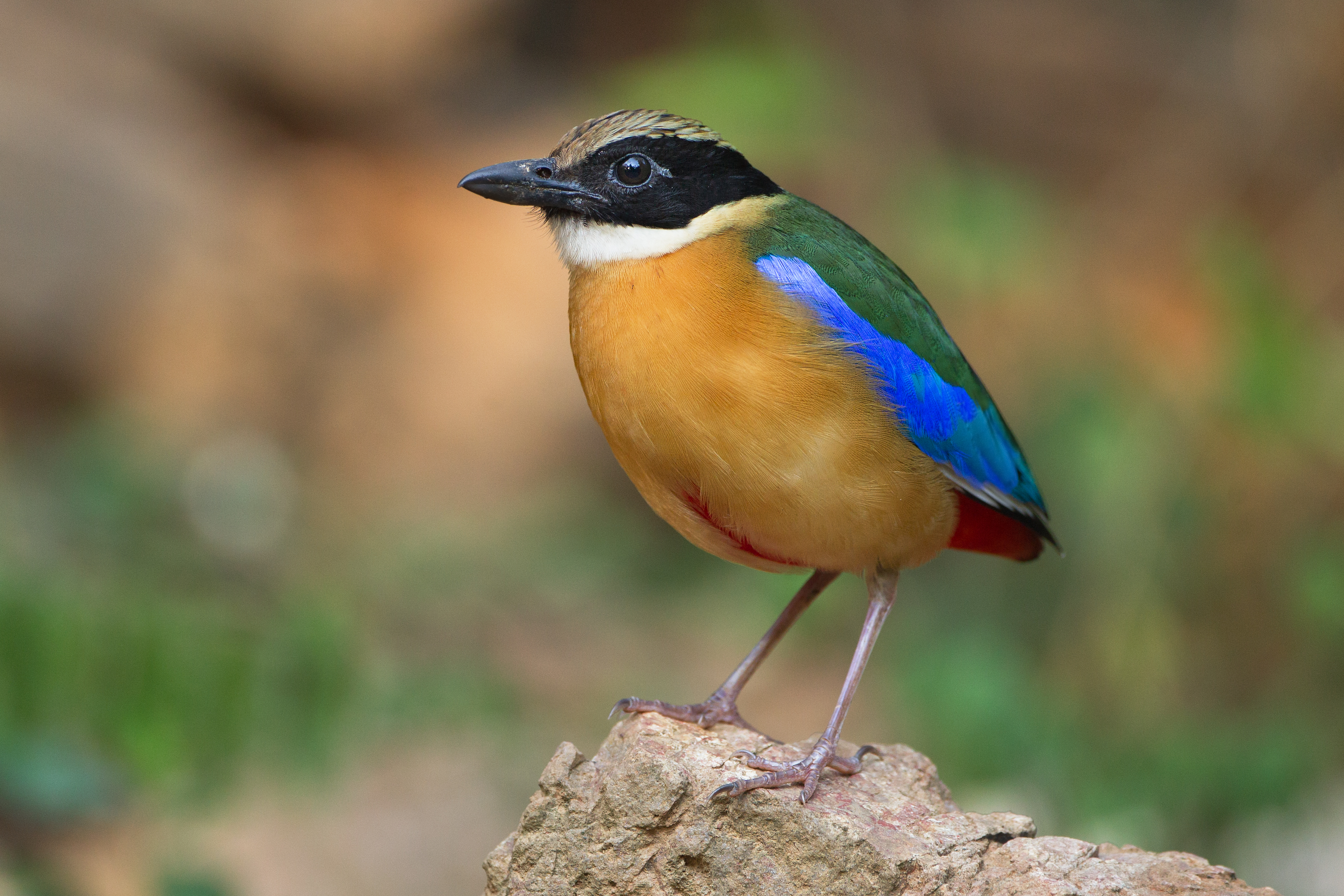
The blue-winged pitta is a passerine bird in the family Pittidae. It forms a superspecies with three other pittas, the Indian pitta, the fairy pitta and the mangrove pitta. A colourful bird, it has a black head with a buff stripe above the eye, a white collar, greenish upper parts, blue wings, buff underparts and a reddish vent area. Its range extends from India to Malaysia, Indonesia, southern China and the Philippines. Its habitat is moist woodland, parks and gardens and it avoids dense forest. It feeds mainly on insects and worms. It breeds in the spring, building an untidy spherical nest on the ground, often near water and between tree roots. A clutch of about five eggs is laid and incubated by both parents, hatching after about sixteen days.
Adapted from Wikipedia, CC BY-SA 4.0.