Where to see Blue-headed Parrot
The parks with the most verified sightings, out of 105 safari areas where it has been recorded.
- 1AmagusaRareLodges
Northern Andes & Cloud Forests, Ecuador · Rare
- 2Milpe GardensRareLodges
Northern Andes & Cloud Forests, Ecuador · Rare
- 3Parque Nacional Bahuaja SoneneRareLodges
Southeastern Amazon (Madre de Dios & Ucayali), Peru · Rare
- 4Reserva Ecológica Comunal Loma AltaRareLodges
Southern Pacific Coast & Lowlands, Ecuador · Rare
- 5Reserva de Producción Faunística CuyabenoRareLodges
Northern Amazon Basin, Ecuador · Rare
Common: 500+ verified sightings. Occasional: 50 to 499. Rare: under 50.
Conservation status
Faces a very high risk of extinction in the wild.
The blue-headed parrot faces threats from habitat loss due to deforestation and the illegal pet trade. While specific recovery programs are not widely publicized, conservation efforts often focus on protecting its natural habitat. Responsible safari tourism helps by raising awareness, funding local conservation initiatives through park fees, and providing economic alternatives to activities that harm wildlife.
Conservation hubBlue-headed Parrot: FAQs
Where can you see Blue-headed Parrot on safari?
The parks with the most research-grade GBIF and iNaturalist records of Blue-headed Parrot are Amagusa, Milpe Gardens and Parque Nacional Bahuaja Sonene. It is recorded in 105 safari areas in all.
Is the blue-headed parrot endangered?
The IUCN Red List assesses the blue-headed parrot as Endangered.
Spotted something wrong? Suggest a correction
About the blue-headed parrot
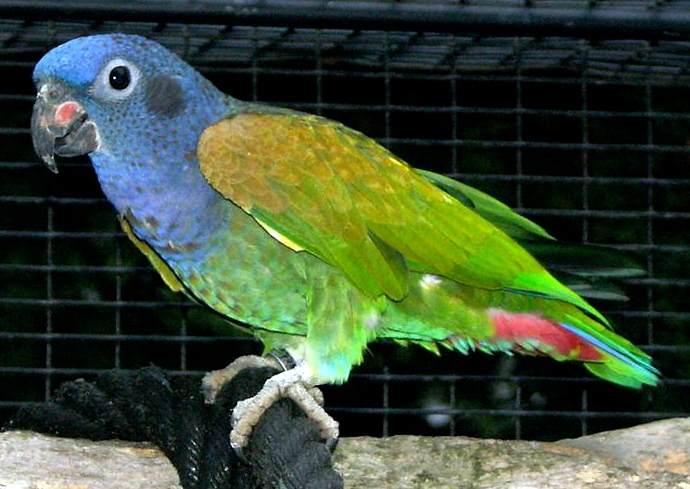
The blue-headed parrot, also known as the blue-headed pionus is a medium-sized parrot of about 27 cm (11 in) in length. The body is mostly green, with a blue head and neck, and red undertail coverts. It is a resident in tropical and subtropical South America and southern Central America, from Costa Rica, Venezuela and the Caribbean island of Trinidad south to Bolivia and Brazil.
Adapted from Wikipedia, CC BY-SA 4.0.