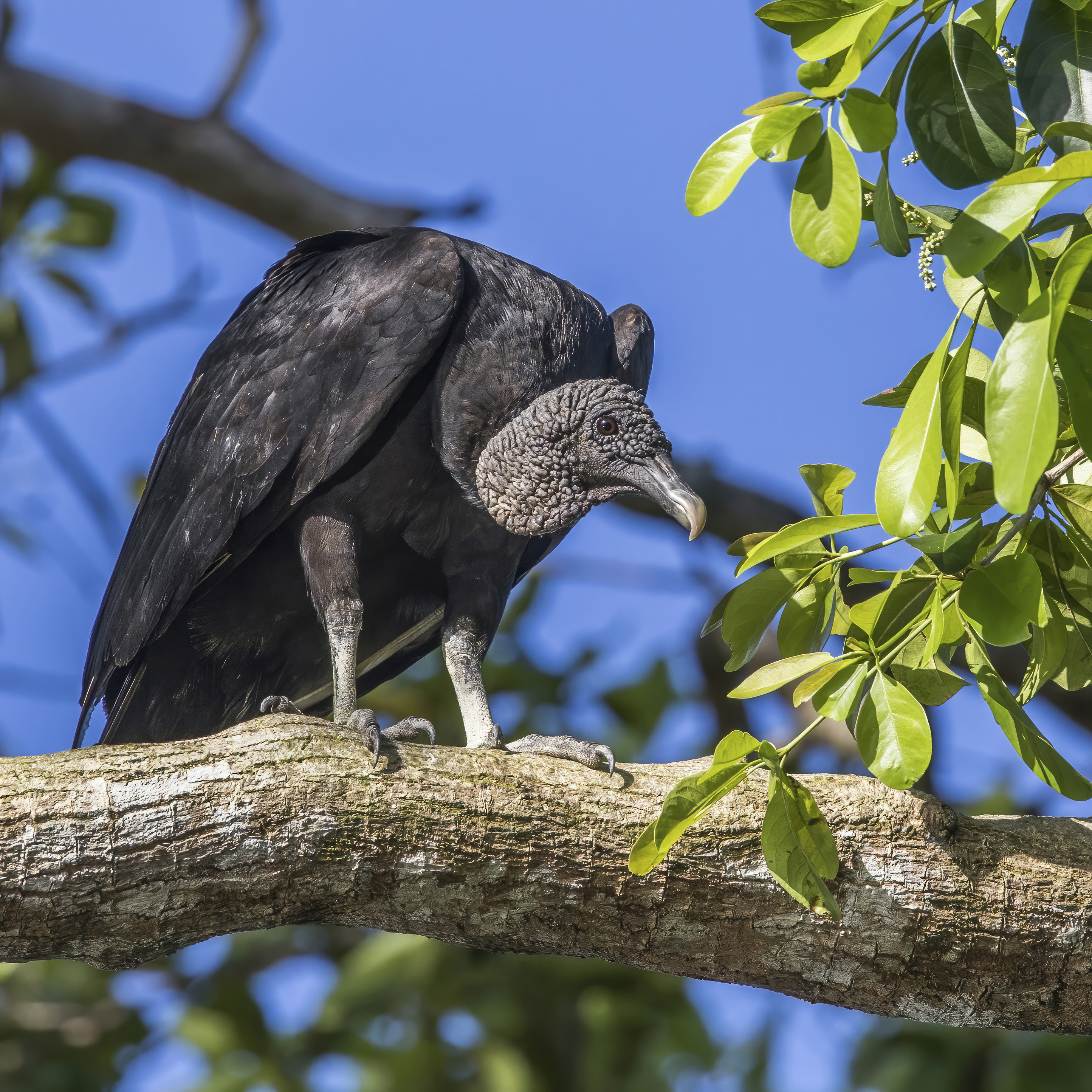
Where to see Black Vulture
The parks with the most verified sightings, out of 200+ safari areas where it has been recorded.
- 1Parque Turístico e Ecológico do MiranteOccasionalPark
Southern Brazil & Pampa, Brazil · Occasional
- 2Parque Nacional Natural Uramba Bahía MálagaOccasionalLodges
Pacific Coast & Chocó Biogeográfico, Colombia · Occasional
- 3Parque Nacional Bahuaja SoneneRareLodges
Southeastern Amazon (Madre de Dios & Ucayali), Peru · Rare
- 4Reserva Nacional Federico AlbertRareLodges
Central Chile & Valleys, Chile · Rare
- 5Reserva Nacional Los QueulesRareLodges
Central Chile & Valleys, Chile · Rare
Common: 500+ verified sightings. Occasional: 50 to 499. Rare: under 50.
Black Vulture: FAQs
Where can you see Black Vulture on safari?
The parks with the most research-grade GBIF and iNaturalist records of Black Vulture are Parque Turístico e Ecológico do Mirante, Parque Nacional Natural Uramba Bahía Málaga and Parque Nacional Bahuaja Sonene. It is recorded in 200+ safari areas in all.
Is the black vulture endangered?
The IUCN Red List assesses the black vulture as Least Concern.
Spotted something wrong? Suggest a correction
About the black vulture
The black vulture, also known as the American black vulture, Mexican vulture, zopilote, urubu, or gallinazo, is a bird in the New World vulture family whose range extends from the southeastern United States to Peru, Central Chile and Uruguay in South America, and common throughout Brazil where it can be seen in large scavenging groups. Although a common and widespread species, it has a somewhat more restricted distribution than its compatriot, the turkey vulture, which breeds well into Canada and all the way south to Tierra del Fuego. It is the only extant member of the genus Coragyps, which is in the family Cathartidae. Despite the similar name and appearance, this species is not closely related to the Eurasian black vulture, an Old World vulture, of the family Accipitridae. For ease of locating animal corpses, black vultures tend to inhabit relatively open areas with scattered trees, such as chaparral, in addition to subtropical forested areas and parts of the Brazilian pantanal.
Adapted from Wikipedia, CC BY-SA 4.0.