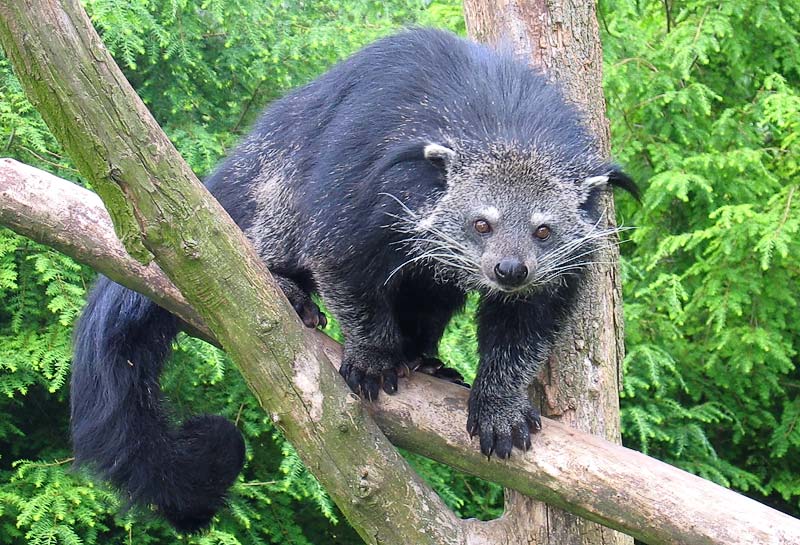
Where to see Binturong
The parks with the most verified sightings, out of 17 safari areas where it has been recorded.
- 1Deramakot Forest ReserveRareLodges
Sabah, Malaysian Borneo, Malaysia · Rare
- 2Hutan Simpanan Kekal JeliRarePark
Eastern Peninsular Malaysia, Malaysia · Rare
- 3Hutan Simpanan Kekal Gunung BasurRarePark
Eastern Peninsular Malaysia, Malaysia · Rare
- 4Taman Negara KelantanRareLodges
Eastern Peninsular Malaysia, Malaysia · Rare
- 5Taman Nasional Bukit Barisan SelatanRareLodges
Sumatran Wilderness, Indonesia · Rare
Common: 500+ verified sightings. Occasional: 50 to 499. Rare: under 50.
Binturong facts
Quick facts
Facts sourced from Wikidata (CC0).
Best months to spot
Most sightings recorded in Jun, Aug. Data from GBIF - a global database of verified wildlife observations by researchers and citizen scientists.
Conservation status
Faces a high risk of extinction in the wild.
The binturong faces significant threats from habitat loss due to deforestation for agriculture and logging, as well as illegal pet trade. While specific large-scale recovery programs are limited, conservation efforts focus on protecting its forest habitats which benefits many species. Responsible safari tourism can help by raising awareness, supporting local economies that rely on intact ecosystems, and providing funding for anti-poaching patrols and habitat preservation initiatives.
Conservation hubBinturong: FAQs
Where can you see Binturong on safari?
The parks with the most research-grade GBIF and iNaturalist records of Binturong are Deramakot Forest Reserve, Hutan Simpanan Kekal Jeli and Hutan Simpanan Kekal Gunung Basur. It is recorded in 17 safari areas in all.
Is the binturong endangered?
The IUCN Red List assesses the binturong as Vulnerable.
When is the best time to see Binturong?
Most sightings of Binturong are logged in Jun, Aug, going by the months of research-grade records; it can be seen year-round where it lives.
Spotted something wrong? Suggest a correction
About the binturong
The binturong, also known as the bearcat, is an arboreal viverrid native to South and Southeast Asia. It is the only species in the genus Arctictis, which is further divided into nine subspecies. It has long, thick hair, and is primarily dark in appearance, but can also have a whitish speckled pelage. It is unique in morphology with its popcorn-scented musk glands, and its long, bushy, prehensile tail.
Adapted from Wikipedia, CC BY-SA 4.0.