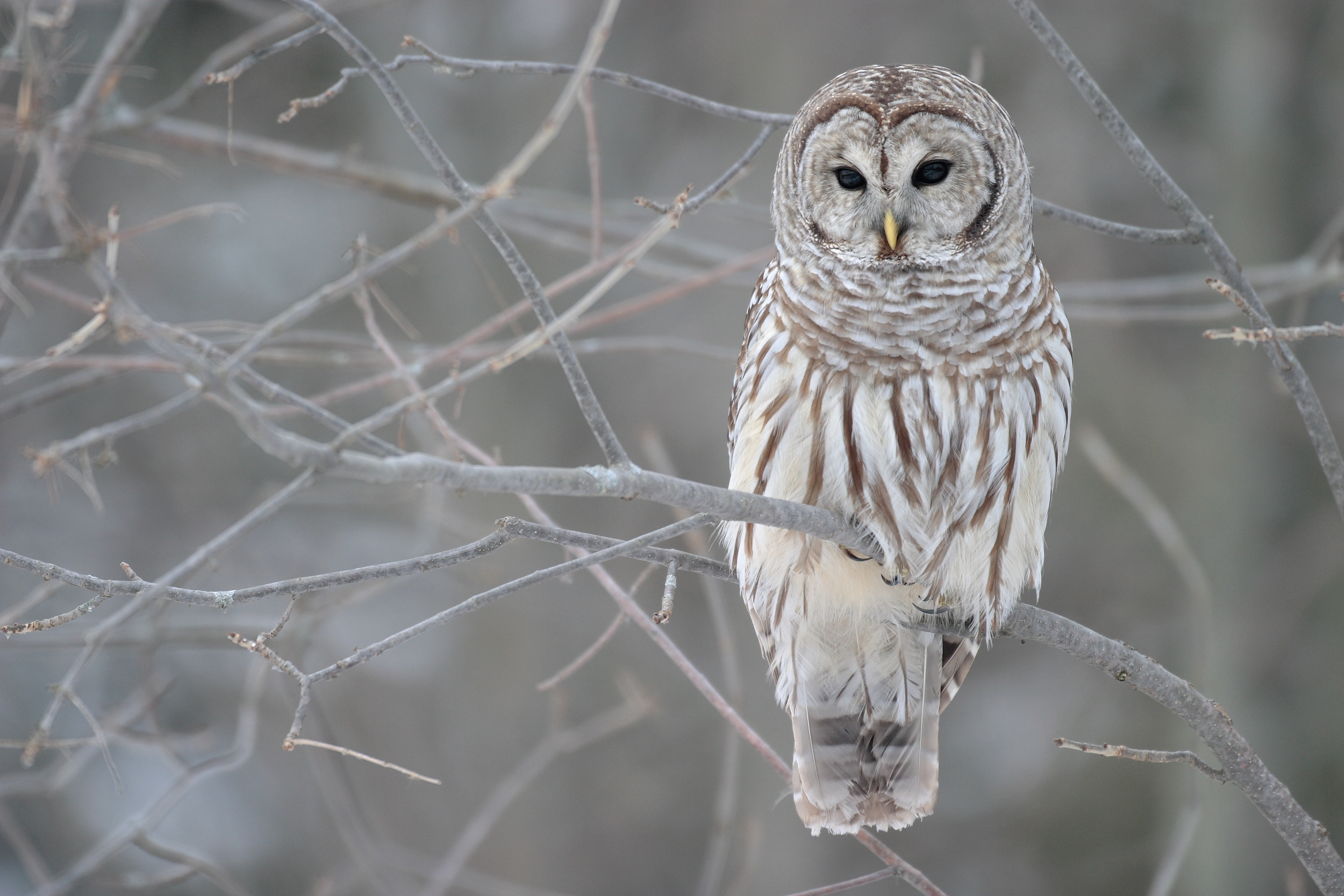
Where to see Barred Owl
The parks with the most verified sightings, out of 51 safari areas where it has been recorded.
- 1Bayview Escarpment Provincial Nature ReserveRarePark
Great Lakes & Southern Ontario, Canada · Rare
- 2Hope Bay Forest Provincial Nature ReserveRarePark
Great Lakes & Southern Ontario, Canada · Rare
- 3Lion's Head Provincial Nature ReserveRareLodges
Great Lakes & Southern Ontario, Canada · Rare
- 4Portage Sandhills Wildlife Management AreaRarePark
Prairie & Boreal Plains, Canada · Rare
- 5Shubenacadie Provincial Wildlife ParkRarePark
Atlantic Canada & Eastern Arctic, Canada · Rare
Common: 500+ verified sightings. Occasional: 50 to 499. Rare: under 50.
Barred Owl: FAQs
Where can you see Barred Owl on safari?
The parks with the most research-grade GBIF and iNaturalist records of Barred Owl are Bayview Escarpment Provincial Nature Reserve, Hope Bay Forest Provincial Nature Reserve and Lion's Head Provincial Nature Reserve. It is recorded in 51 safari areas in all.
Is the barred owl endangered?
The IUCN Red List assesses the barred owl as Least Concern.
Spotted something wrong? Suggest a correction
About the barred owl
The barred owl, also known as the northern barred owl, striped owl or, more informally, hoot owl or eight-hooter owl, is a North American large species of owl. A member of the true owl family, Strigidae, they belong to the genus Strix, which is also the origin of the family's name under Linnaean taxonomy. Barred owls are largely native to eastern North America, but have expanded their range to the west coast of North America where they are considered invasive. Mature forests are their preferred habitat, but they can also acclimatise to various gradients of open woodlands. Their diet consists mainly of small mammals, but this species is an opportunistic predator and is known to prey upon other small vertebrates such as birds, reptiles, and amphibians, as well as a variety of invertebrates.
Adapted from Wikipedia, CC BY-SA 4.0.