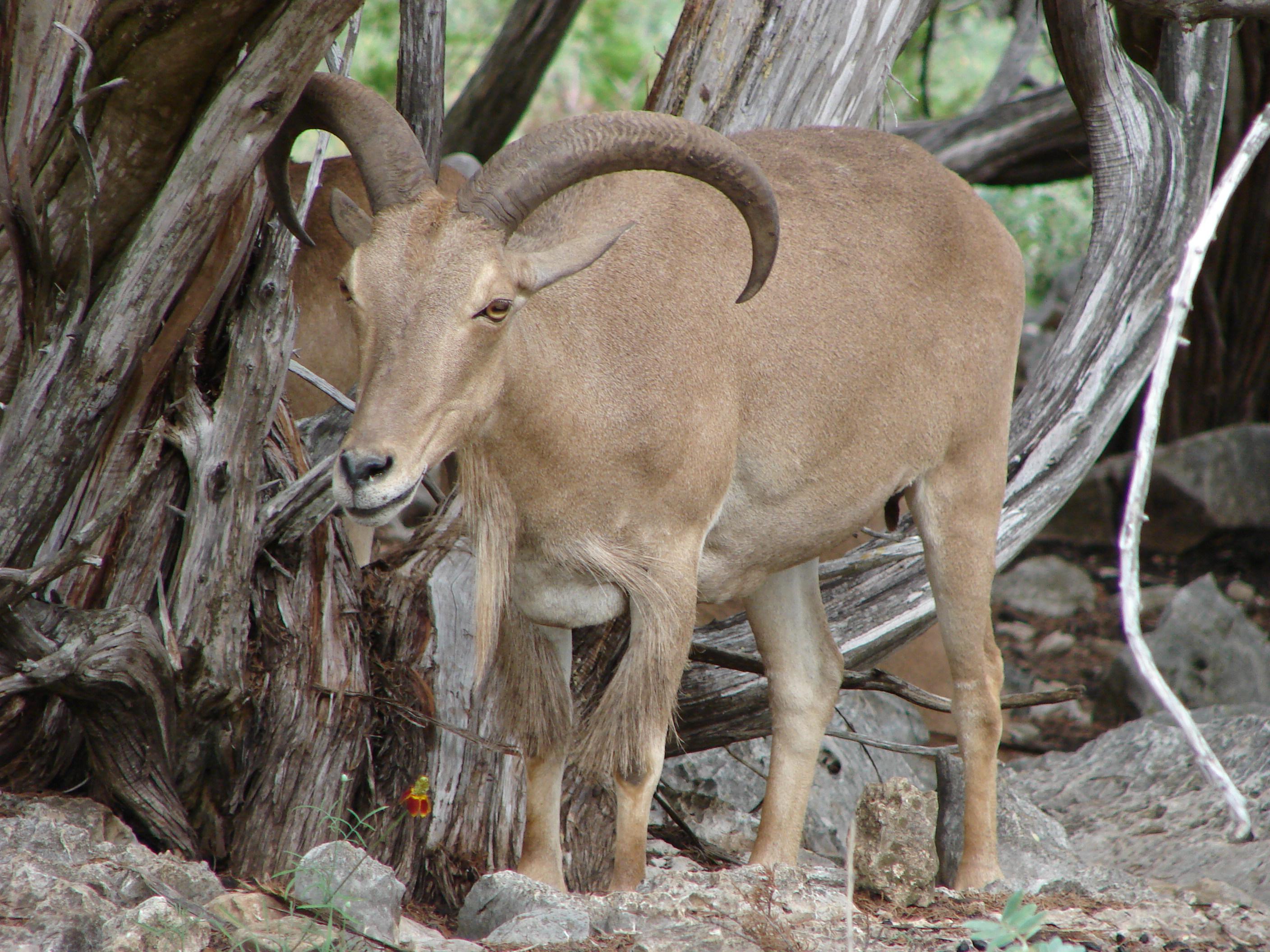
Where to see Aoudad
The parks with the most verified sightings, out of 2 safari areas where it has been recorded.
- 1Embouchure de la MoulouyaRareLodges
Northern Rif & Mediterranean Coast, Morocco · Rare
- 2L’Olivier de Oued El AkaritRareLodges
Tunisia, Tunisia · Rare
Common: 500+ verified sightings. Occasional: 50 to 499. Rare: under 50.
Aoudad facts
Quick facts
Facts sourced from Wikidata (CC0).
Best months to spot
Most sightings recorded in Mar, Apr, May, Sep. Data from GBIF - a global database of verified wildlife observations by researchers and citizen scientists.
Conservation status
Faces a high risk of extinction in the wild.
Aoudad populations are declining due to habitat loss, hunting, and competition with domestic livestock. While there are no widespread recovery programs, conservation efforts in some areas focus on habitat protection and regulated hunting. Responsible safari tourism can help by supporting local economies and funding anti-poaching initiatives, providing a direct incentive for communities to protect these animals and their habitats.
Conservation hubAoudad: FAQs
Where can you see Aoudad on safari?
The parks with the most research-grade GBIF and iNaturalist records of Aoudad are Embouchure de la Moulouya and L’Olivier de Oued El Akarit. It is recorded in 2 safari areas in all.
Is the aoudad endangered?
The IUCN Red List assesses the aoudad as Vulnerable.
When is the best time to see Aoudad?
Most sightings of Aoudad are logged in Mar, Apr, May, Sep, going by the months of research-grade records; it can be seen year-round where it lives.
Spotted something wrong? Suggest a correction
About the aoudad
The Barbary sheep, also known as aoudad, is a species of caprine native to rocky mountains in North Africa and parts of West Africa. While this is the only species in genus Ammotragus, six subspecies have been described. Although it is rare in its native North Africa, it has been introduced to North America, southern Europe, and elsewhere. It is also known in Berber languages as waddan or arwi, and in former French territories as the mouflon.
Adapted from Wikipedia, CC BY-SA 4.0.