Mount Kilimanjaro: The Complete Safari Planning Guide
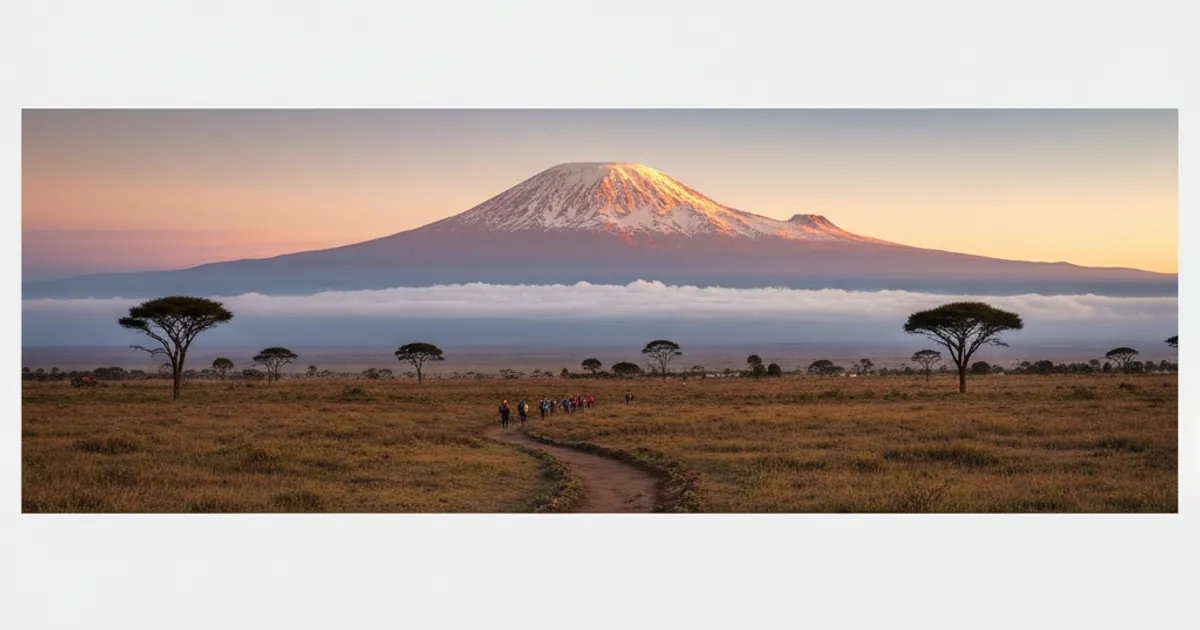
Rising 5,895 metres above the East African plains, Mount Kilimanjaro is the highest point on the African continent and the tallest freestanding mountain in the world. What makes Kilimanjaro unique among the world's great peaks is that it requires no technical climbing expertise - with determination, proper acclimatisation, and a good guide, the summit is within reach of anyone with reasonable fitness. The mountain traverses five distinct climate zones from base to peak, taking you from tropical rainforest through alpine desert to arctic glaciers in a matter of days.
Geographic Overview and Significance
Mount Kilimanjaro is a dormant stratovolcano located in northeastern Tanzania, just 330 km south of the equator and approximately 60 km from the Kenyan border. The mountain has three volcanic cones: Kibo (the highest, with the Uhuru Peak summit), Mawenzi (5,149 m), and Shira (4,005 m). The summit, Uhuru Peak, sits at 5,895 metres - the roof of Africa.
Kilimanjaro is protected within Kilimanjaro National Park, a UNESCO World Heritage Site established in 1973. The park covers 1,688 square kilometres and encompasses the entire mountain above 2,700 metres, plus a surrounding forest belt. The mountain is of immense ecological importance, with its forests providing water to millions of people in the surrounding lowlands and its glaciers - though rapidly shrinking - serving as a barometer of global climate change.
The mountain dominates the skyline of northern Tanzania, visible on clear days from over 160 kilometres away. Its snow-capped peak rising above the savanna is one of the most iconic images in African travel, and the mountain serves as a spectacular backdrop to safaris in Amboseli National Park (Kenya) and the wider northern Tanzania safari circuit.
Best Time to Climb
Primary Dry Season (January to mid-March)
This is an excellent window with generally clear skies, moderate temperatures, and lower rainfall on the upper slopes. The mountain is slightly less crowded than the July-October peak. January and February offer some of the best summit-night conditions with clear views and relatively warm temperatures. Late March sees the beginning of the long rains, so aim for early-to-mid March if booking during this period.
Peak Season (July to October)
The driest and most popular period for climbing. July and August are the busiest months, particularly on the Machame and Marangu routes. September and October offer excellent conditions with thinner crowds. Nights are colder than during the January-March window, particularly at high camps. Book well in advance for this period - popular routes and good operators fill up months ahead.
Shoulder Seasons (June and November)
June marks the tail end of the long rains but upper slopes are often dry. November is between the short and long rains and can offer surprisingly good conditions with fewer climbers. These months suit flexible travellers willing to accept some weather uncertainty in exchange for quieter trails.
Wet Seasons (April-May and November-December)
The long rains (April-May) make climbing uncomfortable and potentially hazardous, with slippery trails, poor visibility, and cold, wet conditions at altitude. The short rains (November-December) are less intense and some operators still run trips, but conditions are unpredictable. Check our guide to the best time to visit Tanzania for a full seasonal overview.
Choosing a Route
Kilimanjaro has seven official routes, each with different characteristics. Choosing the right route is one of the most important decisions in your climb planning.
Machame Route (6-7 days)
The most popular route, known as the 'Whiskey Route' for its challenging terrain. It approaches from the south and offers stunning scenery through rainforest, moorland, and the Shira Plateau. The route follows a 'climb high, sleep low' profile that aids acclimatisation. Steep sections include the Barranco Wall, a hands-on scramble that is exhilarating rather than dangerous. Recommended for fit first-timers who want scenery and a challenge.
Lemosho Route (7-8 days)
Widely considered the best overall route for its scenery, low traffic, and excellent acclimatisation profile. It begins on the western side with a walk through pristine rainforest, crosses the Shira Plateau, and joins the Machame route for the summit approach. The extra day compared to Machame significantly improves summit success rates. Recommended for those prioritising scenery and success rate.
Marangu Route (5-6 days)
The only route with hut accommodation (no camping), earning it the nickname 'Coca-Cola Route'. It is the most direct path to the summit and the only route that ascends and descends the same way. Often perceived as easy, but its shorter duration and less favourable acclimatisation profile actually give it one of the lower summit success rates. Adding a sixth day (extra acclimatisation day at Horombo Hut) is strongly recommended.
Rongai Route (6-7 days)
The only route approaching from the north (Kenyan border side). It is drier, less crowded, and offers a different perspective of the mountain. The terrain is less dramatic than the southern routes but the remoteness and quiet trails appeal to many climbers. Good choice for the wet season as the north side receives less rainfall.
Northern Circuit (8-9 days)
The longest route, circumnavigating the mountain and offering views from every angle. The extended duration provides the best acclimatisation of any route, with summit success rates above 90%. It is the least crowded route on the mountain. Recommended for those who want the highest chance of summiting and don't mind extra days.
How to Get There
By Air
Kilimanjaro International Airport (JRO) is the primary gateway, receiving direct flights from Amsterdam (KLM), Istanbul (Turkish Airlines), Doha (Qatar Airways), Nairobi, and Dar es Salaam. The airport is about 45 km from Moshi and 50 km from Arusha, the two main base towns for Kilimanjaro climbs. Transfers take approximately 45 minutes to Moshi or 1 hour to Arusha.
From Nairobi
Many climbers combine Kilimanjaro with a Kenyan safari. The drive from Nairobi to Moshi via the Namanga border crossing takes approximately 5-6 hours. Shuttle bus services run daily and are affordable and reliable. Flying from Nairobi's Wilson Airport to JRO takes 45 minutes.
Base Towns
Moshi is the closer town to the mountain and the traditional base for Kilimanjaro expeditions. It is smaller, quieter, and more affordable than Arusha, with a good selection of hotels and gear shops. Arusha is the safari capital of northern Tanzania and the base for Serengeti and Ngorongoro trips - ideal if combining a climb with a safari.
Key Activities and Experiences
- The Climb Itself: The multi-day trek through five climate zones - cultivated farmland, montane rainforest, heather and moorland, alpine desert, and arctic summit - is a journey through virtually every ecosystem on Earth compressed into a few vertical kilometres.
- Summit Night: The final push typically begins around midnight from high camp. You climb by headlamp through the coldest, most demanding hours, arriving at Stella Point on the crater rim for sunrise, then continuing to Uhuru Peak. Standing on the roof of Africa as the sun rises over the clouds below is a life-defining moment.
- Glaciers and Crater: Though rapidly retreating, Kilimanjaro's glaciers - the Furtwangler Glacier, Southern Icefield, and Northern Icefield - remain visible from the summit area. The ash pit at the centre of the Kibo crater is a stark reminder of the mountain's volcanic origins.
- Rainforest Zone: The lower slopes of Kilimanjaro are covered in lush montane rainforest teeming with colobus monkeys, blue monkeys, and over 170 bird species. The first day of most routes passes through this zone.
- Combine with Safari: Most operators offer packages combining a Kilimanjaro climb with a northern Tanzania safari - Serengeti, Ngorongoro Crater, Tarangire, and Lake Manyara are all within easy reach of Arusha. A 5-day safari plus 7-day climb makes for an unforgettable two-week trip.
Wildlife You Will Encounter
Kilimanjaro's lower slopes support rich biodiversity. The rainforest zone (1,800-2,800 m) is home to black-and-white colobus monkeys, blue monkeys, bushbuck, duiker, and occasionally elephants and buffalo on the lower trails. Birdlife in the forest is exceptional, with turacos, hornbills, sunbirds, and the striking Hartlaub's turaco among the highlights.
The moorland zone (2,800-4,000 m) features distinctive giant groundsels and giant lobelias - alien-looking plants found only on East Africa's high mountains. Eland - Africa's largest antelope - are occasionally spotted in this zone, along with white-necked ravens that follow climbers hoping for food scraps.
Above 4,000 metres, life becomes sparse. The alpine desert and summit zones support only lichens, mosses, and a few hardy insect species. White-necked ravens and augur buzzards are the only birds regularly seen at high altitude. The four-striped grass mouse is one of the few mammals recorded above 4,000 metres.
The broader Kilimanjaro ecosystem extends into the surrounding plains, where lions, cheetahs, and large herds of herbivores roam. Amboseli National Park in Kenya, directly north, offers the classic postcard view of elephants with Kilimanjaro in the background.
Accommodation Options
On the mountain, the Marangu route uses shared huts (bunk beds, basic facilities), while all other routes use camping with tents provided by your operator. Quality varies enormously between operators - good companies provide spacious sleeping tents, a mess tent with tables and chairs, and a toilet tent. Ask your operator exactly what they provide before booking.
In Moshi, pre- and post-climb accommodation ranges from budget guesthouses (Kilimanjaro Backpackers, Moshi Hostel) to mid-range hotels (Bristol Cottages, Ameg Lodge) and luxury options (Aishi Machame Hotel, Weru Weru River Lodge). Most operators include one night before and one night after the climb in their packages.
In Arusha, options include The Arusha Hotel (historic colonial building), Onsea House (boutique), and numerous safari lodges. Arusha is the better base if continuing to a safari after your climb.
Photography Tips
- Protect your batteries. Cold temperatures at high altitude drain batteries rapidly. Carry at least two spares and sleep with them inside your sleeping bag to keep them warm. On summit night, keep your camera battery in an inside pocket close to your body until you need it.
- Keep it light. You are carrying your camera for 6-9 days of trekking at altitude. A mirrorless body with a versatile zoom (24-105mm or 24-200mm) is the ideal compromise between quality and weight. Leave the tripod at base - a beanbag or rock works for the few shots that need stability.
- Summit sunrise is the money shot. The view from Stella Point or Uhuru Peak at sunrise - glaciers glowing gold, clouds far below, the shadow of Kilimanjaro stretching across the African plains - is extraordinary. Pre-set your camera the night before so you can operate it with gloves on and minimal cognitive function at altitude.
- The rainforest zone demands wide and fast glass. Light in the forest canopy is dim, so a fast lens (f/2.8) helps. A wide-angle captures the towering trees and atmospheric mist. Look for colobus monkeys silhouetted against the canopy - their long white tails are dramatic in backlit conditions.
- Altitude affects you more than you expect. At 5,000+ metres, even simple tasks like operating a camera become difficult. Simplify your setup, use auto modes if needed, and focus on capturing the experience rather than technical perfection. Your best summit photos may come from a smartphone operated with one frozen hand - and they will still be among your most treasured images.
- Bring your equipment in a protective case inside your daypack. Dust on the lower slopes and moisture in the rainforest zone can both damage gear. A simple dry bag works well.
Practical Tips - Fitness and Preparation
- Fitness: Kilimanjaro does not require technical climbing skills, but it is a serious physical undertaking. You will walk 5-9 hours per day for up to 9 days, often at altitude where every step is harder. Begin training at least 8-12 weeks before your climb with regular hiking, cardiovascular exercise, and stair climbing. Long walks with a loaded daypack are the best specific preparation.
- Acclimatisation: Altitude sickness is the number one reason people fail to summit. Choose a route with at least 7 days (6 minimum). Follow the 'pole pole' (slowly, slowly) mantra. Stay hydrated - aim for 3-4 litres per day. Diamox (acetazolamide) can help with acclimatisation - consult your doctor before the trip. See our Tanzania safety guide for more on health preparation.
- What to pack: Layering is critical. You need moisture-wicking base layers, insulating mid-layers (fleece and/or down jacket), and a waterproof outer shell. A warm sleeping bag rated to -15°C or below is essential. Good hiking boots that have been broken in, gaiters for scree slopes, trekking poles, a headlamp with spare batteries, and sunglasses with UV protection complete the essentials. Most operators provide a detailed packing list - follow it carefully.
- Choosing an operator: This is the most important decision you will make. A good operator pays fair wages to porters and guides, provides proper equipment, carries emergency oxygen, and has experienced guides who recognise altitude sickness symptoms. Expect to pay USD 2,000-4,000+ for a 7-day climb depending on route and service level. Avoid suspiciously cheap operators - they invariably cut corners on porter welfare and safety equipment.
- Porter welfare: Kilimanjaro's porters carry your equipment up the mountain in often gruelling conditions. Choose operators that are members of the Kilimanjaro Porters Assistance Project (KPAP) or equivalent organisations that ensure fair wages, proper equipment, and reasonable load limits. Tip your porters and guides generously - guidelines are typically USD 15-25 per day for guides and USD 8-15 per day for porters.
- Malaria: Moshi and Arusha are in malaria zones. Take prophylaxis as recommended by your travel doctor. On the mountain itself, mosquitoes are not present above approximately 2,500 metres.
Nearby Parks and Side Trips
- Serengeti National Park: The world's most famous safari destination, home to the Great Migration. A 5-day Serengeti and Ngorongoro safari combines perfectly with a Kilimanjaro climb.
- Ngorongoro Crater: A vast volcanic caldera with some of the densest wildlife concentrations in Africa - lions, hippos, elephants, and the endangered black rhino.
- Amboseli National Park (Kenya): The classic 'elephants with Kilimanjaro' view. Just across the border, Amboseli offers superb elephant photography with the mountain as a backdrop.
- Tarangire National Park: Famous for its baobab trees and large elephant herds. Less visited than the Serengeti but equally rewarding, particularly in the dry season (June-October).
- Zanzibar: Many climbers reward themselves with a few days on Zanzibar's beaches after the climb. Direct flights from JRO to Zanzibar take about an hour.
Conservation and Environmental Notes
Kilimanjaro's glaciers have lost over 80% of their ice cover since they were first surveyed in 1912, and current projections suggest they could disappear entirely within the next two decades. While the glaciers are not critical to the mountain's water supply (that comes from the forest belt), their loss is a powerful symbol of global climate change and its impact on African ecosystems.
The montane forest belt is the mountain's most ecologically critical zone. It acts as a giant sponge, absorbing rainfall and releasing it slowly into the rivers that supply water to over a million people in the surrounding lowlands. Deforestation and fire on the lower slopes threaten this vital function. Several major fires in recent years have destroyed significant areas of the heath and moorland zones.
Kilimanjaro National Park has implemented regulations to manage waste on the mountain - all rubbish must be carried down, and park rangers weigh bags at the gate. However, enforcement varies, and some less scrupulous operators still leave waste behind. Choose an operator with a clear environmental policy and hold them accountable. The best operators go beyond the regulations, packing out all waste and using eco-friendly toilet systems at camps.
The estimated 35,000-50,000 climbers per year bring significant economic benefits to the Moshi and Arusha communities, supporting thousands of jobs as guides, porters, cooks, and support staff. Responsible tourism on Kilimanjaro means not just reaching the summit but ensuring that the people and environment that make the experience possible are treated with respect and dignity.
Key Takeaways
- 1Choose a route with at least 7 days for the best acclimatisation and summit success rate — the Lemosho (7-8 days) and Northern Circuit (8-9 days) have the highest success rates
- 2Start fitness training 8-12 weeks before your climb with hiking, cardio, and stair climbing with a loaded pack
- 3Select an operator that is a member of KPAP (Kilimanjaro Porters Assistance Project) to ensure fair treatment of porters
- 4January to March and July to October are the best climbing windows, with July-August being the busiest period
- 5No technical climbing is required but altitude sickness is a serious risk — hydrate heavily, ascend slowly, and know the symptoms
- 6Budget USD 2,000-4,000+ for a reputable operator on a 7-day route, plus tips for guides and porters
- 7Combine your climb with a northern Tanzania safari (Serengeti, Ngorongoro) or beach time in Zanzibar for the ultimate trip
Frequently Asked Questions
How difficult is it to climb Kilimanjaro?
Kilimanjaro requires no technical climbing skills - it is a trek, not a climb. However, it is physically demanding: you walk 5-9 hours per day for up to 9 days, with the final summit push lasting 12-15 hours. The main challenge is altitude, not terrain. With reasonable fitness, proper acclimatisation (choose a 7+ day route), and a good operator, most healthy adults can reach the summit. Overall summit success rates are around 65%, but on longer routes like Lemosho and Northern Circuit, they exceed 85-90%.
Which Kilimanjaro route is best for beginners?
The Lemosho Route (7-8 days) is widely considered the best all-round choice. It offers excellent scenery, a good acclimatisation profile, lower traffic than Machame, and high summit success rates. The Marangu Route has hut accommodation (no camping) which some prefer, but its shorter duration gives it lower success rates. The Northern Circuit (8-9 days) has the highest success rate but requires more time and budget.
How much does it cost to climb Kilimanjaro?
Expect to pay USD 2,000-4,000+ per person for a 7-day climb with a reputable operator, including park fees (which alone are approximately USD 700-800), guide and porter wages, food, camping equipment, and transfers. Budget operators charging under USD 1,500 typically cut corners on porter welfare and safety equipment. Tips for your crew (guides, porters, cook) add approximately USD 200-300. Flights, gear purchases, and pre/post-climb accommodation are additional costs.
What is the best time of year to climb Kilimanjaro?
The two main climbing windows are January to mid-March and July to October. Both offer dry conditions and clear skies on the upper mountain. January-March is slightly warmer and less crowded. July-August is peak season with the highest demand. September-October offers excellent conditions with fewer climbers. Avoid the long rains (April-May) when trails are slippery and visibility is poor.
Can I combine Kilimanjaro with a safari?
Absolutely - this is one of the most popular trip combinations in East Africa. Northern Tanzania's top parks (Serengeti, Ngorongoro Crater, Tarangire, Lake Manyara) are all accessible from Arusha, the same base town used for Kilimanjaro. Most operators offer combined packages. A typical itinerary is 7 days climbing plus 4-5 days on safari. Many travellers also add 3-4 days in Zanzibar for beach recovery after the climb.