20 Facts About the African Lion: The King of the Safari
Published 26 February 2026
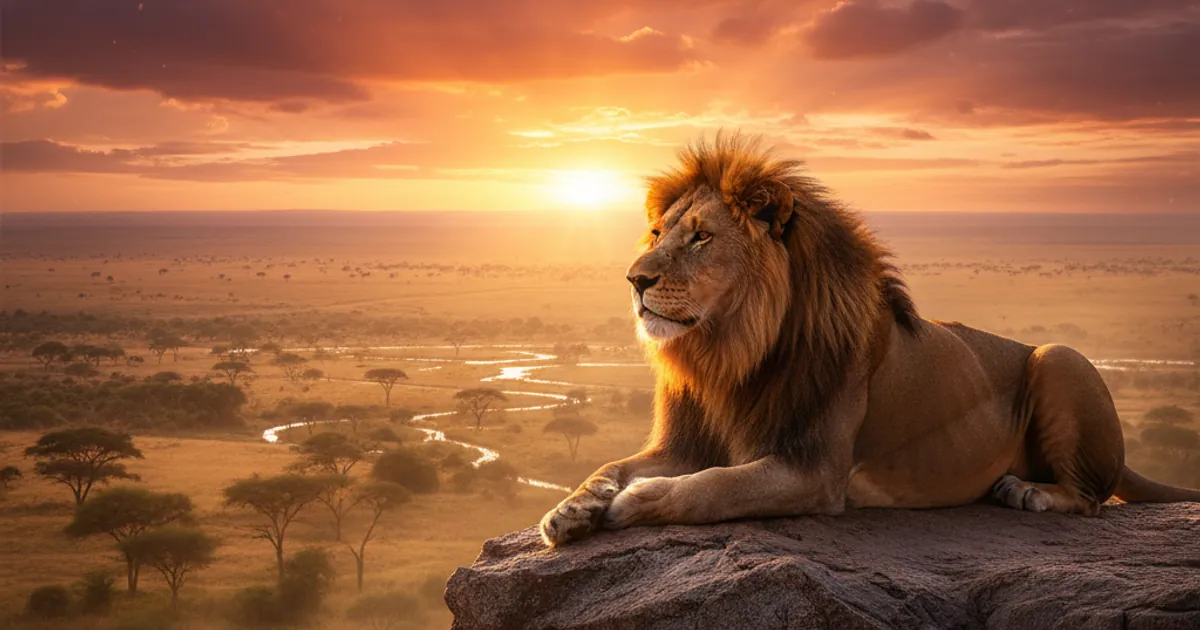
Africa's Most Iconic Predator
The African lion (Panthera leo) needs no introduction. As the only truly social cat species and one of Africa's Big Five, the lion has captivated human imagination for millennia. Yet behind the familiar image lies an animal facing serious conservation challenges - wild lion populations have declined by approximately 43% over the past two decades, and the species is now classified as Endangered by the IUCN.
Today an estimated 23,000 to 39,000 wild lions remain, concentrated in East and Southern Africa. The Masai Mara and Ngorongoro Crater in Tanzania, and Kruger National Park in South Africa, remain the most reliable places to see them.
1. They're the Only Social Cat
Lions are unique among the 38 cat species in forming permanent social groups called prides. A typical pride consists of 2 to 4 adult males, 5 to 15 related females, and their cubs. This social structure provides enormous advantages for hunting large prey, defending territory, and protecting cubs from infanticidal males and other predators.
2. Females Do Most of the Hunting
Lionesses are the primary hunters, working together in coordinated ambush strategies. They fan out to surround prey, with some lionesses driving animals towards others lying in wait. This cooperative technique allows lions to take down prey much larger than themselves, including buffalo, zebra, and even young elephants and giraffes. Males occasionally hunt, particularly when targeting large, dangerous prey like buffalo.
3. A Male's Mane Signals Fitness
The lion's mane - unique among cat species - serves as an honest signal of genetic quality and fighting ability. Darker, fuller manes indicate higher testosterone levels, better nutrition, and greater combat experience. Research in the Serengeti has shown that females prefer males with darker manes, and rival males are more reluctant to challenge them. Mane colour deepens with age and testosterone levels.
4. They Sleep Up to 20 Hours a Day
Lions are champion sleepers, spending 16 to 20 hours per day resting. This extraordinary laziness is actually energy conservation - hunting is physically demanding and often unsuccessful (lions succeed in only about 25-30% of hunts), so conserving energy between meals is critical. Dawn and dusk are their most active periods, making early morning and late afternoon game drives the best times for sightings.
5. Their Roar Carries 8 Kilometres
A lion's roar is the loudest of any big cat, reaching 114 decibels - louder than a rock concert. The roar can be heard from up to 8 kilometres away and serves to establish territory, communicate with pride members, and intimidate rivals. Lions typically roar most frequently at dawn, just before sunrise, creating one of the most iconic soundscapes of the African bush.
6. Cubs Face Brutal Odds
Only about 1 in 5 lion cubs survives to adulthood. The threats are numerous: starvation during lean periods, predation by hyenas, leopards, and other lions, and - most devastatingly - infanticide by incoming males. When new males take over a pride, they typically kill all existing cubs to bring the females back into oestrus. This brutal behaviour drives the rapid cycle of male coalition turnover.
7. Male Coalitions Are Formidable
Young males are expelled from their birth pride at 2 to 3 years old. Brothers and cousins form coalitions - alliances of 2 to 6 males that roam together, build strength, and eventually challenge resident pride males. Larger coalitions hold territories for longer (up to 6-8 years versus 2-3 years for pairs or lone males), giving their cubs a better chance of reaching independence.
8. They Can Eat 40 kg in a Single Sitting
After a successful hunt, a lion can consume up to 40 kilograms of meat in a single meal - roughly a quarter of its body weight. Following a large meal, lions may not eat again for several days. The feeding hierarchy is strict: adult males eat first, followed by females, then cubs. This hierarchy means that during periods of prey scarcity, cubs are the first to starve.
9. White Lions Are Real
White lions are not albinos but carry a recessive gene called leucism that produces a pale cream to white coat. They occur naturally in the Greater Timbavati region of South Africa and are considered sacred by local Shangaan communities. While their pale colouring may seem like a disadvantage for hunting, research suggests that white lions in the wild hunt as effectively as tawny lions.
10. They Once Ranged Across Three Continents
Lions historically inhabited Africa, southern Europe, the Middle East, and the Indian subcontinent. The European cave lion was one of the largest predators of the Pleistocene. Today, the only wild population outside Africa is the Asiatic lion (Panthera leo persica), restricted to India's Gir Forest. This tiny population of around 674 individuals represents the last remnant of lions' former pan-continental range.
11. Night Vision Gives Them an Edge
Lions have excellent night vision - roughly six times more sensitive to light than human eyes. A reflective layer behind the retina called the tapetum lucidum bounces light back through the photoreceptors, maximising light capture. This adaptation makes lions formidable nocturnal hunters, and many kills occur in complete darkness.
12. They Mark Territory Obsessively
Lions maintain territories of 20 to 400 square kilometres, depending on prey availability. They mark boundaries with urine, faeces, and scrape marks on the ground and trees. Both sexes patrol territory borders regularly, and territorial disputes between neighbouring prides can escalate into lethal combat.
13. Hybridisation Threatens Some Populations
In some regions, particularly in captivity, lions have been crossed with tigers (producing "ligers" and "tigons"). More concerning for conservation is genetic erosion in small, isolated wild populations where inbreeding reduces genetic diversity. The Ngorongoro Crater lion population, for example, has experienced significant inbreeding effects including reduced fertility and increased disease susceptibility.
14. They Form Unlikely Alliances
Lions and spotted hyenas are famous rivals, but their relationship is more nuanced than simple enmity. In some ecosystems, lions rely on hyenas as inadvertent prey scouts - following the sound of hyena kills to steal their food (kleptoparasitism). Hyenas, in turn, mob and harass lone lions. The balance of power depends on numbers: a large hyena clan can drive off even a male lion.
15. Conservation Success Stories Exist
Despite the overall population decline, some lion populations are recovering thanks to intensive conservation efforts. The Greater Limpopo Transfrontier Conservation Area, the Serengeti-Mara ecosystem, and several private conservancies in Kenya have shown population increases. Community-based conservation programmes that share tourism revenue with local communities have been particularly effective at reducing human-lion conflict.
Where to See Lions on Safari
The best parks for lion sightings include:
- Masai Mara National Reserve - famous for its large, habituated prides and the annual wildebeest migration
- Ngorongoro Crater - enclosed ecosystem with one of the densest lion populations in Africa
- Kruger National Park, South Africa - approximately 1,600 lions across 2 million hectares
- Manyeleti Game Reserve, South Africa - excellent sightings with fewer vehicles
- Chobe & Linyanti, Botswana - prides specialising in buffalo and elephant hunting
Explore our Best Parks for Lions guide, or browse the full Wildlife Directory for more species encounters.