10 Facts About the Greater Kudu: Africa's Most Elegant Antelope
Published 19 April 2026
The Spiral-Horned Ghost
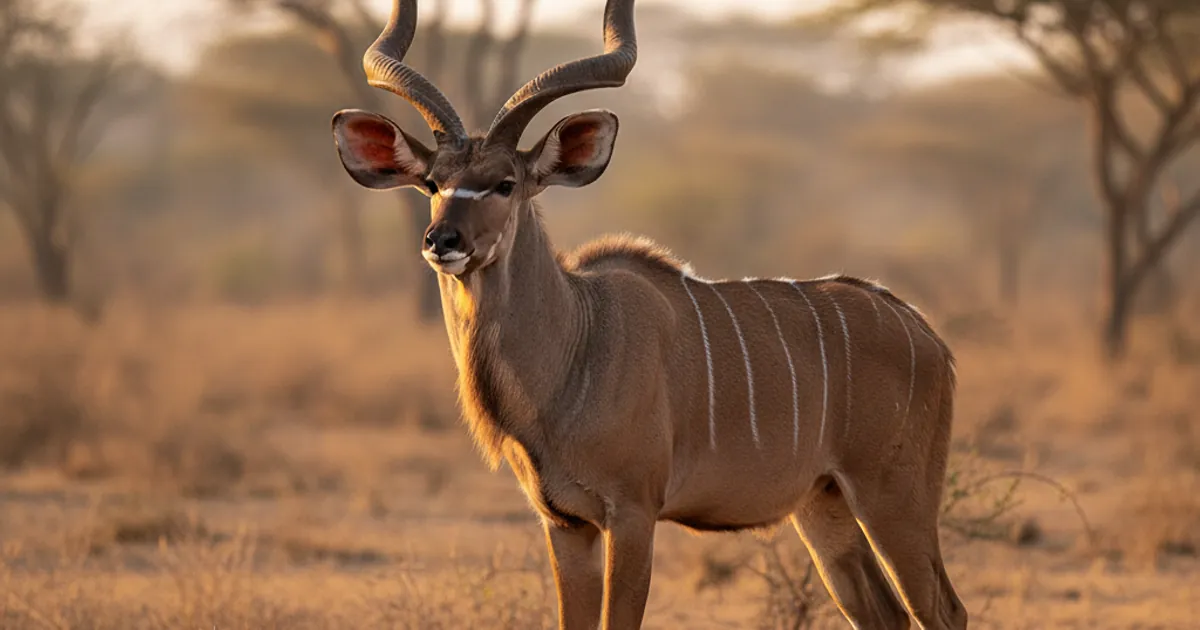
The greater kudu (Tragelaphus strepsiceros) is widely considered the most handsome of all African antelopes. Bulls stand up to 1.5 metres at the shoulder and carry spectacular spiralling horns that can reach 1.8 metres along the curve - the longest of any antelope. Their grey-brown coat, marked with 6 to 10 vertical white stripes, provides exceptional camouflage in the woodland habitats they prefer.
Addo Elephant National Park in South Africa's Eastern Cape hosts one of the densest populations, where these elegant animals are a regular highlight.
1. Their Horns Take Six Years to Complete
Male greater kudu horns begin growing at around 6 months of age and take approximately six years to reach their full 2.5 turns. The growth rate is about one twist per year. Only males carry horns; females are hornless. A bull with a full set of horns is typically at least 6 to 7 years old, and the impressiveness of the horns plays a role in both female mate choice and male-male competition.
2. They're Extraordinary Jumpers
Despite their size - bulls can weigh up to 315 kilograms - greater kudus are phenomenal jumpers. They can clear fences up to 2.5 metres high from a standing start. This jumping ability evolved as an adaptation for navigating the rocky, hilly terrain and dense thickets of their preferred woodland habitat. Tragically, it also means they frequently attempt to jump farm fences and sometimes become entangled.
3. Males Are Solitary, Females Are Social
Greater kudu society is segregated by sex for most of the year. Females and their young form small herds of 3 to 10 individuals, while adult males are typically solitary or form loose bachelor groups. Males join female herds only during the breeding season (April to June in southern Africa), when they compete for mating rights through horn-locking contests and displays of dominance.
4. They're Masters of Camouflage
Greater kudus are notoriously difficult to spot despite their large size. Their vertical white stripes break up their body outline in dappled woodland light, and they freeze motionless when they detect danger. A kudu standing still in a thicket of mopane woodland can be virtually invisible at 10 metres. They are most active during dawn and dusk, spending the heat of the day resting in deep cover.
5. Their Bark Is a Warning
When alarmed, greater kudus emit a loud, sharp bark - one of the most distinctive sounds in the African bush. This alarm call alerts other kudus and nearby animals to potential danger. A barking kudu with its tail curled upward in a white flag of alarm is a classic bushveld scene and often indicates the presence of a leopard or other predator nearby.
6. They're Browsers, Not Grazers
Greater kudus are almost exclusively browsers, feeding on leaves, shoots, flowers, and fruits from over 100 different plant species. They are particularly fond of acacia leaves and wild fruits. Their long necks allow them to reach foliage up to 2 metres off the ground, and they sometimes stand on their hind legs to reach even higher. This browsing diet means they thrive in woodland and thicket habitats rather than open grassland.
7. Leopards Are Their Main Predator
Adult greater kudus are preyed upon by lions, leopards, spotted hyenas, and African wild dogs. Leopards are particularly effective kudu predators, using ambush tactics in the dense woodland where kudus shelter. Young calves are also vulnerable to eagles, pythons, and jackals. A male kudu's spiralling horns, while impressive, are primarily for display and male-male combat rather than predator defence.
8. Their Horns Have Cultural Significance
Greater kudu horns have deep cultural significance across southern Africa. The kudu horn - known as a shofar - is used as a traditional musical instrument in Jewish and some African ceremonies. In Southern African culture, kudu horns are prized as decorative items and symbols of the bush. The South African rugby team, the Springboks, uses a kudu horn to signal the start of matches at Loftus Versfeld.
9. They're Susceptible to Disease
Greater kudus are particularly susceptible to rabies - unusually so for a herbivore. Rabies outbreaks have caused significant population crashes in parts of southern Africa, particularly Namibia and the Eastern Cape of South Africa. Infected kudus become disorientated and lose their fear of humans, which is how the disease was first identified in the species.
10. Population Is Stable but Fragmented
The IUCN classifies the greater kudu as Near Threatened. Populations are generally stable within protected areas but declining in unprotected habitat due to hunting, habitat loss, and disease. The species has been successfully introduced to many private game reserves in southern Africa, where they thrive in managed woodland environments.
Where to See Greater Kudu
- Addo Elephant National Park, South Africa - one of the highest densities
- Kruger National Park, South Africa - common in woodland areas
- Etosha National Park, Namibia - around waterholes in the mopane woodland
- Hwange National Park, Zimbabwe - excellent populations in teak forest
Check Best Parks for Greater Kudu or explore more species in our Wildlife Directory.