10 Facts About the Gemsbok: The Desert Warrior of Southern Africa
Published 12 April 2026
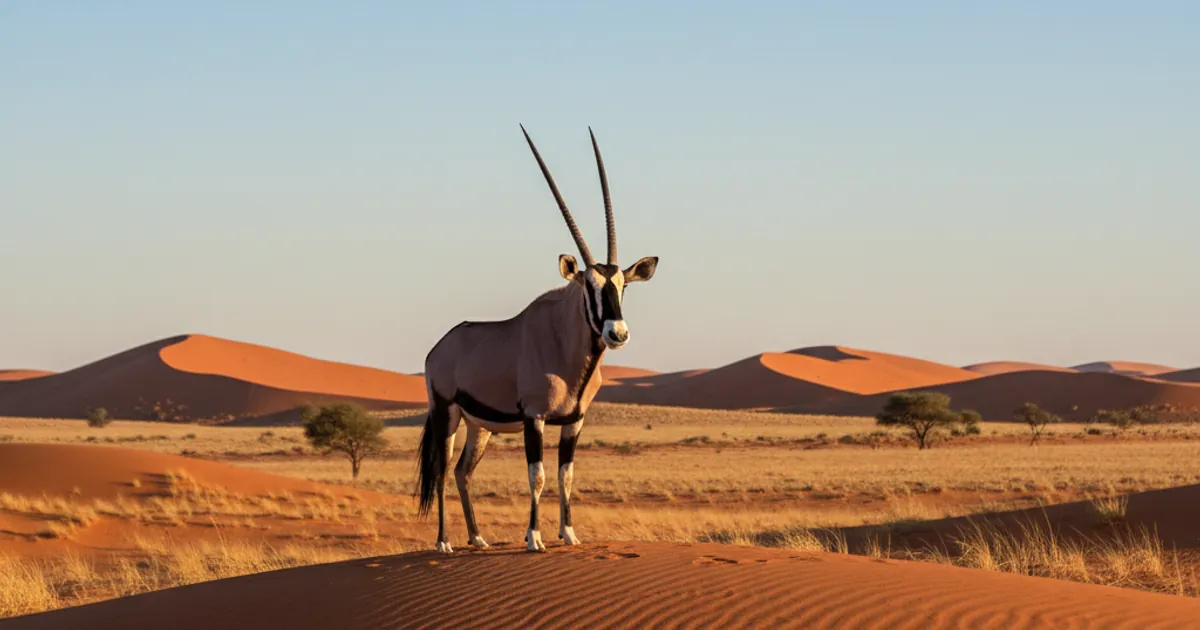
The Quintessential Desert Antelope
The gemsbok (Oryx gazella), also known as the South African oryx, is one of the most visually striking antelopes in Africa. Standing 1.2 metres at the shoulder with dramatic black-and-white facial markings and spear-straight horns that can reach 85 centimetres, the gemsbok is perfectly adapted to the harsh, arid landscapes of southern Africa - from the Namib Desert to the Kalahari.
The best places to see gemsbok include Etosha National Park and Namib-Naukluft National Park in Namibia, where herds of these magnificent animals are a common sight against the dramatic desert backdrop.
1. They Can Survive Without Drinking Water
Gemsbok have evolved to survive in environments where surface water is scarce or nonexistent. They obtain most of their moisture from the plants they eat, including wild tsamma melons, tubers, and succulent roots. They also feed during the cooler hours of night and early morning when plants have higher moisture content. Some gemsbok populations go their entire lives without drinking free water.
2. Their Blood Cooling System Is Unique
Gemsbok possess a remarkable physiological adaptation called a carotid rete - a network of fine blood vessels in the nasal passages that cools blood before it reaches the brain. This allows their core body temperature to rise to 45°C (which would be fatal for most mammals) while keeping the brain several degrees cooler. This heat tolerance enables them to remain active during the hottest part of the day when predators are resting.
3. Their Horns Are Lethal Weapons
Both male and female gemsbok carry long, straight horns - females' horns are actually slightly longer and thinner than males'. These horns are effective defensive weapons; gemsbok have been known to kill lions and leopards by impaling them during defensive stands. When attacked, a gemsbok lowers its head and sweeps its horns in lethal arcs. Predators treat them with considerable respect.
4. They're the National Animal of Namibia
The gemsbok holds the distinction of being Namibia's national animal, featured on the country's coat of arms. This status reflects the gemsbok's deep cultural significance in southern African society and its embodiment of the region's arid wilderness. The animal appears on Namibian currency and official documents.
5. They Form Both Herds and Solitary Groups
Gemsbok social structure is flexible. They form mixed herds of 10 to 40 individuals, bachelor groups, and sometimes gather in larger aggregations of several hundred around food sources. Dominant males maintain territories but are not aggressively exclusive. Old bulls sometimes become solitary, roaming the desert fringes alone - a dramatic sight in the Namib's vast landscapes.
6. Calves Can Run Within Hours of Birth
Gemsbok calves are precocial - able to stand and run within hours of birth. The mother leaves the herd to give birth in seclusion, and the calf remains hidden for several weeks, with the mother returning periodically to nurse. This hiding strategy reduces predation risk from hyenas, jackals, and eagles during the vulnerable first weeks.
7. They Were Successfully Introduced to North America
In 1969, 93 gemsbok were released in the White Sands Missile Range in New Mexico, USA. The population thrived in the similar desert environment and grew to several thousand animals. This introduction - while controversial from an ecological perspective - demonstrated the gemsbok's extraordinary adaptability to arid conditions worldwide.
8. Their Diet Changes With the Seasons
Gemsbok are primarily grazers during the wet season, feeding on grasses that sprout after rains. During the dry season, they switch to browsing - eating shrubs, seeds, pods, and roots. They also dig for tubers and bulbs using their hooves, accessing moisture and nutrients unavailable to less resourceful species. This dietary flexibility is key to their desert survival.
9. They Have Exceptional Endurance
Gemsbok can travel vast distances across desert landscapes in search of food and water, covering 20 to 30 kilometres per day. Their efficient thermoregulation means they can move during the heat of the day when other animals are sheltering. This endurance allows them to exploit ephemeral food sources - patches of vegetation that appear after isolated rain events - before they dry out.
10. Conservation Status Is Near Threatened
The IUCN classifies the gemsbok as Near Threatened. While populations in Namibia, Botswana, and South Africa remain relatively healthy - protected by extensive national parks and game reserves - they have been extirpated from much of their former range in Zimbabwe and Mozambique. Trophy hunting, when well-managed, actually generates significant conservation funding for gemsbok habitat in Namibia.
Where to See Gemsbok on Safari
- Etosha National Park, Namibia - large herds around waterholes, especially in the dry season
- Namib-Naukluft National Park, Namibia - iconic desert landscapes with gemsbok silhouettes
- Ongava Private Game Reserve, Namibia - excellent sightings in an exclusive setting
- Kgalagadi Transfrontier Park, South Africa/Botswana - desert populations in the Kalahari
Browse our Best Parks for Gemsbok or explore the full Wildlife Directory.