Namib Desert: The Complete Safari Planning Guide
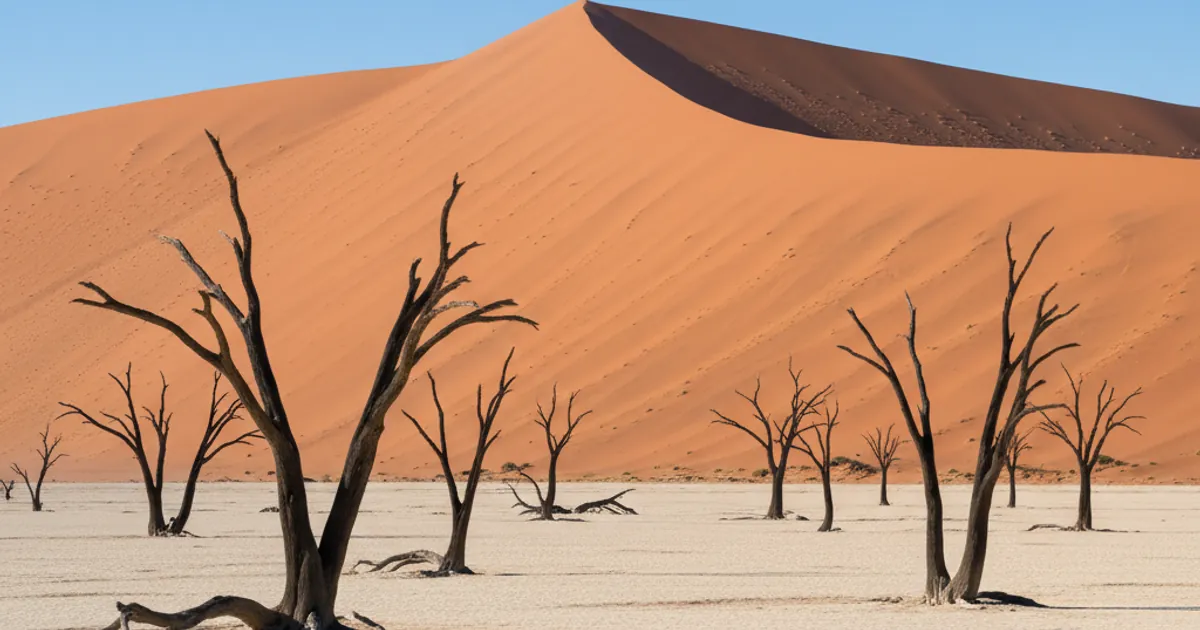
The Namib is the oldest desert on Earth, a place where towering apricot dunes meet the crashing Atlantic surf, where fog-drinking beetles have evolved ingenious survival strategies, and where the skeletal trees of Deadvlei stand frozen against a sky of impossible blue. Stretching over 2,000 kilometres along Namibia's entire Atlantic coastline, the Namib is a landscape of extremes - starkly beautiful, eerily quiet, and utterly unforgettable.
Geographic Overview and Significance
The Namib Desert extends along the entire Atlantic coast of Namibia, from the Orange River in the south to the Kunene River bordering Angola in the north - a distance of over 2,000 kilometres. It stretches inland between 80 and 200 kilometres, covering an area of approximately 81,000 square kilometres. At an estimated 55-80 million years old, the Namib is considered the oldest desert in the world, and its age has allowed extraordinary evolutionary adaptations to develop among its plants and animals.
The desert's most famous feature is the Sossusvlei dune field, where some of the tallest sand dunes on Earth rise over 300 metres. These dunes get their distinctive apricot-to-deep-red colour from iron oxide that has slowly coated the sand grains over millions of years. The older the sand, the deeper the colour - a visual timeline of geological history.
The Namib also encompasses the Skeleton Coast, a forbidding stretch of coastline littered with shipwrecks and bleached whale bones, where the cold Benguela Current meets the scorching desert air to produce thick fog banks. This fog is the Namib's lifeline - many organisms, from beetles to lichens, depend on fog moisture as their primary water source.
The Namib-Naukluft National Park, at nearly 50,000 square kilometres, is one of the largest conservation areas in Africa and protects the heart of the Sossusvlei dune system along with the rugged Naukluft Mountains.
Best Time to Visit
Cooler Months (April to October)
This is the optimal window for visiting the Namib. Daytime temperatures are pleasant (20-25°C), mornings are crisp and cold (sometimes below 5°C in the desert interior), and rainfall is virtually nonexistent. The light during this period is exceptional - warm and golden, with long shadows that accentuate the dune textures. June to August is peak tourist season at Sossusvlei, so book accommodation well ahead. See our guide on when to visit Namibia for a full seasonal breakdown.
Transitional Months (March and November)
March offers post-summer landscapes that may still have traces of green from any late rains, combined with quieter conditions. November marks the start of the hot season but is not yet at peak temperatures - it can be a good compromise for those wanting to avoid crowds. Light conditions remain excellent for photography.
Hot Season (December to February)
Summer temperatures in the Namib interior regularly exceed 40°C, and the dune surfaces can reach 70°C - hot enough to cause burns. Climbing Big Daddy or Dune 45 in these conditions is genuinely dangerous. However, rare summer rains can temporarily fill the Sossusvlei pan and the Tsauchab River, creating a stunning ephemeral lake surrounded by dunes - a rare and remarkable sight. The Skeleton Coast is cooler year-round due to the cold Benguela Current.
How to Get There
Sossusvlei and Central Namib
Windhoek, Namibia's capital, is the main international gateway, with flights from Johannesburg, Cape Town, Frankfurt, and Addis Ababa arriving at Hosea Kutako International Airport. From Windhoek, Sossusvlei is approximately 350 km southwest - a 4.5-hour drive on well-maintained gravel roads. The route via the Spreetshoogte Pass offers dramatic scenery as you descend from the central plateau into the desert basin.
Charter flights from Windhoek to Sossusvlei-area airstrips take about an hour and are offered by several operators, including those running luxury lodges. Walvis Bay also has a domestic airport and is a good base for accessing the northern Namib, dune fields at Sandwich Harbour, and the Skeleton Coast.
Self-Driving
Namibia is one of Africa's best self-drive destinations. The road network is extensive, well-signposted, and the gravel roads are generally in good condition. A 2WD with high clearance is sufficient for most routes in the central Namib, though 4x4 is required for Sandwich Harbour, the Skeleton Coast interior, and some remote lodge access roads. Hire a vehicle in Windhoek - several reputable companies cater specifically to overlanders and safari travellers.
Skeleton Coast
The southern Skeleton Coast between Swakopmund and Terrace Bay is accessible by road (C34/C35), with fuel available at Henties Bay and Torra Bay. The northern Skeleton Coast is a restricted wilderness area accessible only by fly-in safari.
Key Activities and Experiences
- Climb Dune 45 or Big Daddy: Dune 45, a 170-metre star dune, is the most accessible and popular sunrise climb - about 20 minutes to the crest. Big Daddy (over 300 metres) is a serious 1-2 hour climb but rewards with views over Deadvlei. Start before dawn and carry plenty of water.
- Deadvlei: This white clay pan surrounded by towering orange dunes contains the skeletal remains of 900-year-old camel thorn trees that died when the river changed course. The contrast of white pan, dark trees, orange dunes, and blue sky is one of the most photographed scenes in Africa.
- Sandwich Harbour: A lagoon where the Namib's dunes tumble directly into the Atlantic Ocean. Accessible only by 4x4 with a guide, this is a breathtaking collision of desert and sea. Day trips run from Walvis Bay.
- Skeleton Coast: Explore shipwrecks half-buried in sand, visit Cape Cross seal colony (home to 80,000-100,000 Cape fur seals), and drive through landscapes that feel genuinely otherworldly.
- Hot Air Ballooning: Sunrise balloon flights over the Sossusvlei dune field offer a perspective that cannot be matched from the ground - the patterns, shadows, and scale of the dunes are mesmerising from altitude.
- Swakopmund Adventure Activities: This charming German colonial-era coastal town is the adventure capital of Namibia - sandboarding, quad biking, skydiving, kayaking with seals, and dolphin cruises are all on offer.
- NamibRand Nature Reserve: A private 2,000 square kilometre reserve on the edge of the dune sea, NamibRand is a Gold Tier International Dark Sky Reserve - one of the least light-polluted places on Earth. Stargazing here is extraordinary.
Wildlife You Will Encounter
The Namib's wildlife has evolved remarkable adaptations to survive in one of the harshest environments on Earth. The desert-adapted elephants of the northern Namib (Damaraland and the Skeleton Coast hinterland) traverse vast distances between water sources, surviving on the sparse vegetation of dry riverbeds. These are not a separate subspecies but African elephants that have learned unique behavioural adaptations over generations.
The gemsbok (oryx) is the quintessential Namib animal - its ability to survive without drinking water (raising its body temperature to avoid sweating) makes it perfectly suited to this environment. Springbok, Hartmann's mountain zebra, and kudu are found in the more vegetated areas. The Namib is also home to the brown hyena, which patrols the Skeleton Coast feeding on seal carcasses and whatever the Atlantic washes ashore.
Smaller desert specialists are fascinating: the Namaqua chameleon changes colour to regulate its body temperature; the fog-basking beetle (Onymacris unguicularis) stands on its head on dune crests to collect fog droplets that trickle down into its mouth; sidewinding adders move across the dunes in their distinctive lateral locomotion, partly burying themselves in sand to ambush prey.
Bird life includes Ludwig's bustard, the tractrac chat (a Namib endemic), and raptors such as the lappet-faced vulture and martial eagle. The coastal lagoons at Walvis Bay and Sandwich Harbour support enormous flamingo populations - both greater and lesser species feed in the nutrient-rich shallows.
Accommodation Options
The Sossusvlei area offers accommodation for every budget. Luxury options include &Beyond Sossusvlei Desert Lodge (with private observatory and star suite), Little Kulala, and Kwessi Dunes in the NamibRand. Mid-range lodges such as Sossusvlei Lodge and Le Mirage provide comfortable bases with pool areas and restaurant facilities. Budget travellers can stay at the NWR campsite at Sesriem (inside the park gate, allowing early morning access to the dunes) or the well-run Sossus Oasis campsite outside the gate.
Along the Skeleton Coast, Shipwreck Lodge offers a unique design-forward experience with cabins shaped like grounded ships. In Swakopmund, options range from the historical Strand Hotel to numerous guesthouses and backpacker hostels. For the northern Namib and desert-adapted elephants, lodges in Damaraland such as Damaraland Camp and Mowani Mountain Camp provide access to this remote region.
Photography Tips
- Arrive at Dune 45 before sunrise. The pre-dawn blue hour followed by the first golden rays hitting the dune crests is the Namib's most iconic light. The shadows cast by the dune ridges create graphic patterns that change by the minute.
- Deadvlei demands patience. The classic shot - dark tree silhouettes against the orange dune and blue sky - works best between 8am and 10am when the sun illuminates the dune behind while the pan floor remains partly shaded. A wide-angle lens (16-35mm) captures the full scene; a telephoto (70-200mm) isolates individual trees for more intimate compositions.
- Aerial perspective transforms the Namib. Hot air balloon flights and light aircraft charters reveal the dune patterns, star dune formations, and the meeting point of desert and ocean in ways invisible from ground level. Shoot at fast shutter speeds (1/1000s+) to counter movement.
- Protect your gear from sand. Fine Namib sand is abrasive and insidious. Use a dust-proof bag, avoid changing lenses on the dunes if possible, and carry a blower brush. Weather-sealed camera bodies and lenses earn their premium here. See our equipment guide for recommended gear.
- Skeleton Coast fog creates moody, atmospheric conditions. Use the low contrast and soft light to photograph shipwrecks, seal colonies, and the barren coastline. A telephoto lens is essential for the Cape Cross seal colony.
- Stars at NamibRand: The Gold Tier Dark Sky Reserve offers Milky Way photography that rivals anywhere on Earth. Use a fast wide-angle lens (f/2.8 or wider), a sturdy tripod, and exposures of 15-25 seconds at ISO 3200-6400.
Practical Tips
- Sesriem Gate timing: The gate into the Sossusvlei area opens at sunrise and closes at sunset. Staying inside the park (Sesriem NWR campsite or the exclusive-use Dead Valley Lodge) allows you to enter an hour before sunrise - a massive advantage for photography at Dune 45.
- Water and fuel: Carry more water than you think you need - at least 3-4 litres per person per day. Fuel stations are spaced far apart (Sesriem, Solitaire, Bethanie). Top up at every opportunity. Solitaire's filling station and famous apple pie are a Namibian road trip institution.
- Sun protection: The Namib's clear skies and reflective sand mean intense UV exposure. Wear high-SPF sunscreen, a wide-brimmed hat, and UV-protective sunglasses. Lip balm with SPF is essential - cracked lips are the most common minor ailment among Namib visitors.
- Footwear: Lightweight hiking boots or trail shoes are ideal. Sandals work for short walks but the sand on dune surfaces can be extremely hot by mid-morning. In the Naukluft Mountains, proper hiking boots with ankle support are necessary.
- Malaria: The Namib Desert is malaria-free. However, if combining with northern Namibia (Etosha, Caprivi Strip), prophylaxis is required for those regions. See our Namibia safety guide for details.
- Road conditions: Namibia's gravel roads are generally excellent but require attention. Drive at moderate speeds (80 km/h maximum), watch for soft sand patches, and be cautious on corrugated surfaces. Tyre blowouts are the most common road mishap - know how to change a tyre before setting off.
Nearby Parks and Side Trips
- Etosha National Park: Namibia's premier Big Five destination, about 4-5 hours north of Windhoek. The salt pan and surrounding waterholes offer outstanding game viewing, particularly in the dry season.
- Damaraland: Home to desert-adapted elephants, ancient rock engravings at Twyfelfontein (UNESCO World Heritage Site), and the Petrified Forest. A natural stop between the coast and Etosha.
- Fish River Canyon: The second-largest canyon in the world (after the Grand Canyon), located in southern Namibia. The five-day hiking trail along the canyon floor is one of Africa's classic treks.
- Kalahari Desert: Eastern Namibia's red sand dunes and acacia woodlands offer a completely different desert landscape. The Kalahari is greener, wilder, and home to different adapted species.
- Spitzkoppe: A dramatic granite inselberg rising from the plains between Swakopmund and Etosha. Excellent camping, rock climbing, and photography - particularly at sunset when the rock glows orange.
Conservation and Environmental Notes
Namibia is a global leader in community-based conservation. The country's communal conservancy system gives local communities ownership over wildlife on their land, creating economic incentives for conservation. This model has led to remarkable recoveries of desert-adapted elephants, black rhinos, and lions in the Namib's hinterland. Namibia is one of the few African countries where wildlife populations are increasing.
The Namib's fragile desert ecosystem is vulnerable to off-road driving, which destroys biological soil crusts that take decades to recover. Always stay on designated tracks. The iconic Deadvlei trees are estimated to be 600-900 years old - treat them with respect and never touch, climb, or lean against them.
Water is the Namib's most precious resource. Underground aquifers that supply towns and lodges are being depleted faster than they recharge. Choose accommodation providers that practise responsible water management - many lodges now use greywater recycling and solar desalination. Your water conservation habits as a visitor make a real difference in this environment.
Key Takeaways
- 1Stay inside the Sesriem Gate (NWR campsite) to access the dunes an hour before sunrise — essential for photography at Dune 45 and Deadvlei
- 2April to October offers the best weather and light, with June to August being peak season — book accommodation months in advance
- 3The Namib is malaria-free, making it an excellent choice for families and travellers who want to avoid antimalarials
- 4Self-driving is straightforward with a 2WD high-clearance vehicle for most routes, though 4x4 is needed for Sandwich Harbour and remote areas
- 5NamibRand Nature Reserve is a Gold Tier Dark Sky Reserve — some of the best stargazing on Earth
- 6Protect camera gear from fine abrasive sand — weather-sealed bodies and lenses are worth the investment here
- 7Namibia's community conservancy model means your tourism spend directly supports wildlife conservation and local communities
Frequently Asked Questions
How long should I spend in the Namib Desert?
Allow a minimum of two nights at Sossusvlei to see the dunes at both sunrise and during the day, plus visit Deadvlei. If including Swakopmund and the Skeleton Coast, budget four to five nights for the Namib portion of your trip. Most Namibia itineraries are 10-14 days and combine the Namib with Etosha, Damaraland, and the coast.
Is it safe to drive in the Namib Desert?
Yes, Namibia is one of Africa's safest and easiest self-drive destinations. Roads are well-signposted and gravel roads are generally well-maintained. The main risks are tyre blowouts on gravel, soft sand patches, and long distances between fuel stations. Drive at sensible speeds, carry two spare tyres, and top up fuel at every opportunity. Wildlife on the road (especially at dawn and dusk) is another hazard.
Can you visit Sossusvlei without a 4x4?
Yes. The road from Sesriem Gate to the 2WD parking area (60 km) is tarred. The final 5 km to Sossusvlei vlei itself is deep sand requiring 4x4, but a shuttle service runs between the parking area and the vlei. You can also walk the last 5 km - it takes about an hour. So a 2WD vehicle is perfectly adequate.
What is Deadvlei and how do I get there?
Deadvlei is a white clay pan surrounded by some of the highest sand dunes in the world, containing the skeletons of camel thorn trees that died approximately 600-900 years ago when the Tsauchab River changed course. It is located about 1 km from the Sossusvlei parking area - a flat walk across sand. The contrast of white pan, black trees, orange dunes, and blue sky makes it one of the most photographed landscapes in Africa.
When can you see flamingos in the Namib?
Flamingos are present at Walvis Bay Lagoon year-round, with numbers peaking between September and March when both greater and lesser flamingos gather in the tens of thousands. Sandwich Harbour also supports flamingo populations. The lagoon at Walvis Bay is easily accessible from the town and Swakopmund (30 minutes away).