The Great Wildebeest Migration: Complete Month-by-Month Guide
Published 12 July 2026
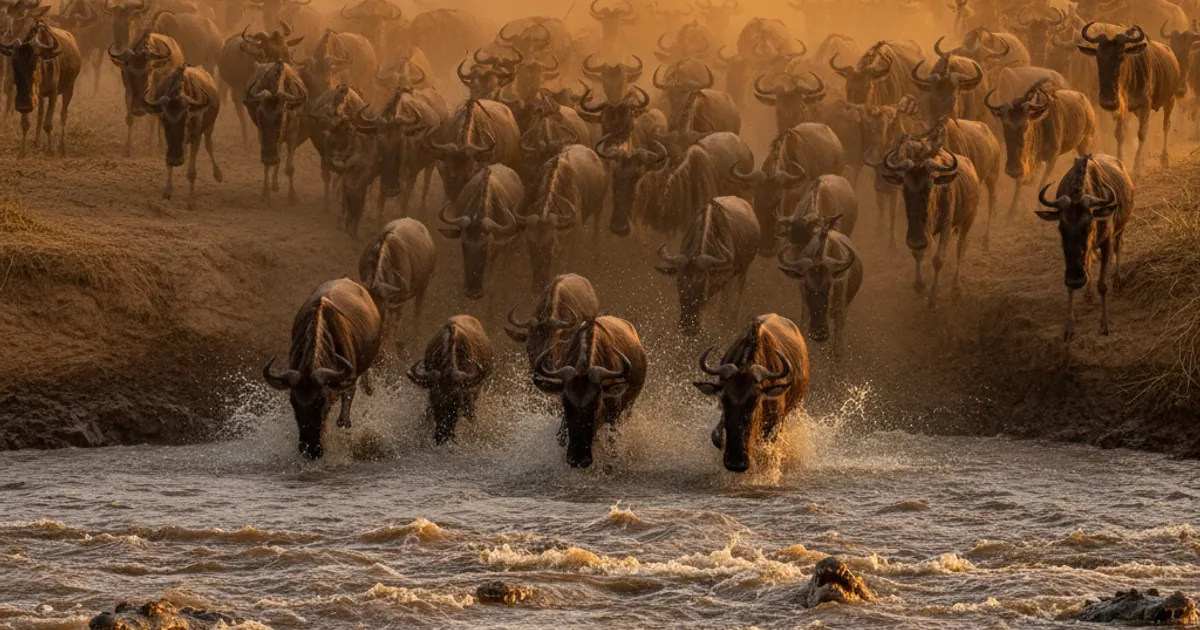
Africa's Greatest Wildlife Spectacle
The Great Wildebeest Migration is the largest overland animal movement on Earth. Approximately 1.5 million wildebeest, joined by 200,000 plains zebra and tens of thousands of gazelles, travel a roughly circular route through the Serengeti (Tanzania) and Masai Mara (Kenya), following the rains and fresh grazing. It is relentless, dramatic, and - despite what some tour operators suggest - visible somewhere in the ecosystem year-round. There is no "wrong" time to see the migration; there are only different chapters of the same extraordinary story.
Understanding the Circuit
The migration is not a single event but a continuous cycle. The herds move clockwise through the Serengeti-Mara ecosystem, driven by rainfall patterns. Exact timing varies each year by 2–4 weeks depending on the rains, but the general pattern is remarkably consistent:
- Southern Serengeti (Dec–Mar): Calving and grazing on the short-grass plains
- Central and Western Serengeti (Apr–Jun): Long rains push herds north and west
- Grumeti River area (Jun–Jul): First major river crossings
- Northern Serengeti and Masai Mara (Jul–Oct): The famous Mara River crossings
- Eastern Serengeti and return south (Nov–Dec): Short rains trigger the journey back
Month-by-Month Guide
January - Calving Begins (Southern Serengeti)
The herds are spread across the southern Serengeti's short-grass plains around Ndutu and the Ngorongoro Conservation Area border. The nutrient-rich volcanic soils produce the best grazing, and wildebeest mothers know it. Calving has begun, with hundreds of babies born each day. The predator action is extraordinary - lions, hyenas, cheetahs, and jackals all exploit the abundance of vulnerable newborns.
Where to stay: Ndutu Safari Lodge, mobile camps on the southern plains, or lodges near Lake Ndutu.
February - Peak Calving (Southern Serengeti)
February is the peak of calving season. In an astonishing synchronisation, an estimated 8,000 calves are born per day over a 2–3 week window. This "predator swamping" strategy ensures that despite losses, the sheer numbers of newborns overwhelm predator capacity. The plains are alive with wobbly-legged calves, and the concentration of animals - predators and prey alike - is among the highest wildlife densities anywhere on Earth.
Why February is underrated: Most tourists chase the famous river crossings (Jul–Oct), leaving the calving season comparatively uncrowded. Yet the wildlife action is arguably more intense and more varied. You'll see cheetah hunts, lion ambushes, and hyena clan battles - all in the golden light of the southern Serengeti. Calving season is also significantly cheaper than peak-season rates.
Where to stay: Mobile camps that position themselves on the calving grounds, Ndutu area lodges.
March - Rains and Movement (Southern/Central Serengeti)
The long rains begin, and the herds start to shift. The southern plains can become waterlogged, and the wildebeest begin drifting westward and northward toward the central Serengeti's woodland areas. Calving continues but at a reduced pace. The landscape is lush and green - beautiful for photography, though rain showers are frequent in the afternoons.
Where to stay: Central Serengeti (Seronera area) or mobile camps tracking the herds' movement.
April - Western Drift (Central/Western Serengeti)
Heavy rains make some areas difficult to access, and a few camps close for the season. The herds are moving through the central Serengeti toward the western corridor, forming long columns that stretch across the plains. This is the quietest month for tourism - lodges that remain open offer their lowest rates. Wildlife viewing is still excellent, with fewer vehicles and a wild, untamed atmosphere.
Where to stay: Central Serengeti lodges that remain open year-round, or western Serengeti camps beginning to open for the approaching herds.
May - Western Corridor Arrival (Western Serengeti)
The mega-herds reach the western Serengeti corridor, a strip of woodland and grassland between rocky kopjes. Mating season begins - aggressive territorial males chase females, and the air rings with the distinctive "gnu" call that gives the wildebeest its alternative name. The Grumeti River lies ahead, and the herds begin to mass on its southern bank.
Where to stay: Western Corridor camps (Grumeti Serengeti Tented Camp, Singita Grumeti).
June - Grumeti River Crossings (Western Serengeti)
The first major river crossings of the year. The Grumeti River is smaller than the Mara, but its resident Nile crocodiles are among the largest in Africa - monsters exceeding 5 metres that have waited months for this feast. The crossings are chaotic and violent, and they offer a preview of the Mara River drama to come. Not every year produces big Grumeti crossings (if water levels are low, herds simply walk across), but when they happen, they're spectacular.
Where to stay: Grumeti area camps. Singita's concession offers exclusive access to some of the best crossing points.
July - The Push North (Northern Serengeti)
The herds have crossed the Grumeti and are streaming northward through the Ikorongo and Grumeti Game Reserves toward the northern Serengeti. Some early arrivals reach the Mara River by late July. The landscape becomes hillier, more wooded, and less visited - the northern Serengeti is one of the most remote areas in the ecosystem. Early Mara River crossings can begin in late July if the rains cooperate.
Where to stay: Northern Serengeti camps (Lamai, Sayari, Mara River Tented Camp on the Tanzanian side).
August - Mara River Crossings Peak (Northern Serengeti / Masai Mara)
This is what most people picture when they think of the migration. Thousands of wildebeest gather on the banks of the Mara River, their nerve building until one leader plunges in and the rest follow in a surging, chaotic mass. Crocodiles launch from the shallows. Animals scramble up the steep far bank, some falling back. Lions and hyenas wait at the top. It is raw, visceral, and utterly unforgettable.
Crossings happen at multiple points along the Mara River, on both the Tanzanian (northern Serengeti) and Kenyan (Masai Mara) sides. Timing is unpredictable - herds may gather at a crossing point for hours or even days before crossing, or they may turn around and walk away. Patience is essential.
Where to stay: Northern Serengeti river camps or Masai Mara camps/conservancies near the Mara River.
September - Peak Mara Season (Masai Mara)
September is typically the best month for migration viewing in the Masai Mara. The herds have spread across the Mara and its conservancies, grazing heavily. Crossings continue - sometimes multiple crossings in a single day. The density of wildebeest in the Mara at this time is staggering, and the predator activity matches it. This is peak season for both wildlife and tourism, so book far in advance (9–12 months).
Where to stay: Masai Mara conservancies (Olare Motorogi, Naboisho, Mara North) for exclusive access, or camps along the Mara River for crossing front-row seats.
October - Last Crossings and Return (Masai Mara / Northern Serengeti)
The herds begin their return journey southward. Late crossings of the Mara River can be some of the most dramatic - smaller groups crossing in both directions, sometimes colliding mid-river. By late October, the bulk of the herds have left the Mara and are moving back through the northern and eastern Serengeti. This is a transition month - still excellent viewing, often with fewer vehicles than August–September.
Where to stay: Northern Serengeti or Masai Mara (early October). Central/eastern Serengeti (late October).
November - Heading Home (Eastern Serengeti)
The short rains begin, and the herds accelerate southward through the eastern Serengeti. The Loliondo area and eastern plains see massive herds passing through. Green shoots appear on the southern plains, pulling the wildebeest back toward their calving grounds. This is a quiet, beautiful time - the Serengeti is turning green, thunderstorms build dramatically each afternoon, and the herds are on the move.
Where to stay: Eastern Serengeti camps, or begin positioning at central Serengeti lodges.
December - Full Circle (Southern Serengeti)
The herds arrive back on the southern short-grass plains, completing the cycle. Pregnant females are heavy with the next generation. The plains are green and vast, visibility is excellent, and the first calves of the new season may begin to appear by late December. The cycle begins again.
Where to stay: Southern Serengeti (Ndutu, southern plains mobile camps).
River Crossing Tips
- Patience is mandatory: You may wait 4–6 hours at a crossing point before anything happens. Bring snacks, water, sunscreen, and a book. When it happens, it happens fast.
- Listen to your guide: Experienced guides read the herds' body language and know which crossing points are most active.
- Don't crowd the bank: Vehicles too close to the edge can spook the herds and prevent a crossing entirely. Keep your distance.
- Shoot continuously: Set your camera to burst mode and don't stop shooting. Crossings last 5–30 minutes, and the best moments - mid-river chaos, crocodile strikes, the scramble up the bank - happen in seconds.
Hot Air Balloon Safaris
A dawn balloon flight over the Serengeti or Masai Mara during the migration is one of Africa's most extraordinary experiences. You'll float silently over the herds, watching thousands of wildebeest from above, before landing on the plains for a champagne breakfast. Cost: $450–600 per person. Book well ahead during peak season - balloon flights sell out months in advance.
Predator Action
The migration is not just about wildebeest - it's about the predators that depend on them. The concentration of prey supports some of the densest predator populations in Africa:
- Lions: Mara and Serengeti prides feast during crossing season. River-bank ambushes are common.
- Nile crocodiles: The Grumeti and Mara rivers host enormous crocodiles that can take adult wildebeest.
- Spotted hyenas: Clan sizes swell during migration season. Hyena-lion conflicts over kills are frequent.
- Cheetahs: The open plains during calving season are ideal cheetah hunting grounds.
- Wild dogs: Occasionally seen in the northern Serengeti, though rare in the core migration areas.
When to Book
Peak migration season (Jul–Oct) requires booking 9–12 months in advance, especially for riverside camps. Calving season (Jan–Mar) is less pressured but top camps still fill up 6–9 months ahead. The best availability and lowest prices are April–May and November, when the herds are between the headline locations.
Plan your migration safari: Explore the Serengeti and Masai Mara on SafariAtlas. Check the best time to visit Kenya and Tanzania for seasonal details. Read our Kenya vs Tanzania comparison to decide which side of the border suits you best, and browse the best safari experiences across Africa.